Please wait while we open this resource.


K

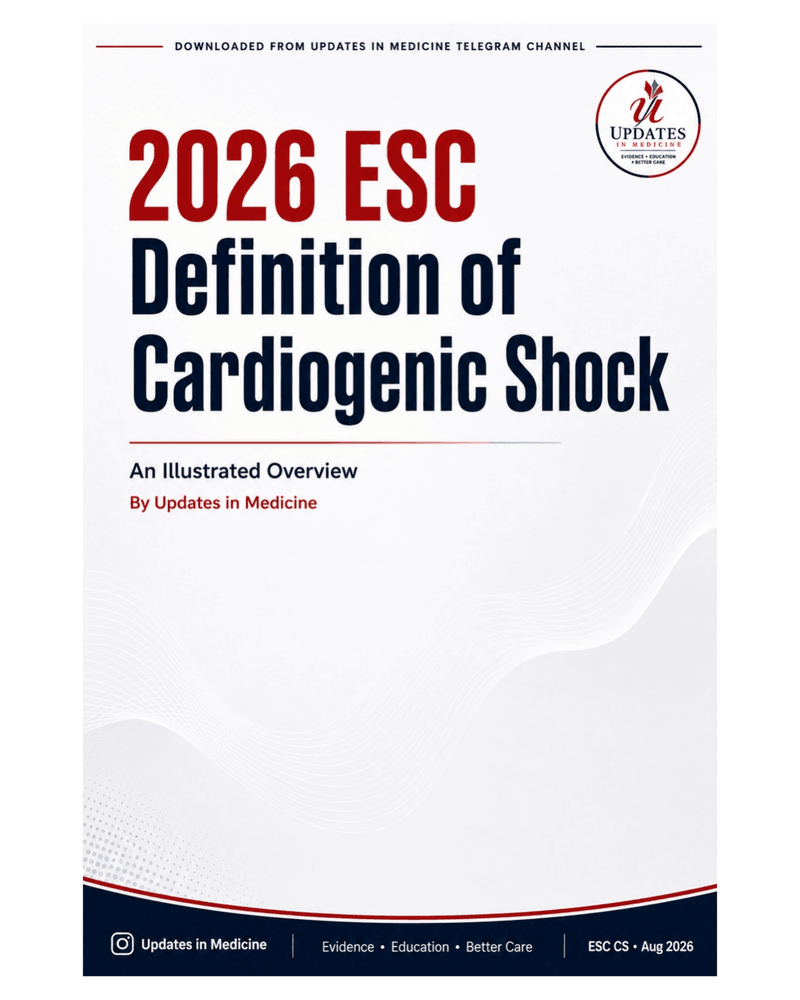
Clinical reviews
2026 ESC Definition of Cardiogenic Shock Updates in Medicine
Updates in Medicine
PDF20266 pages3.2 MB
The document defines cardiogenic shock by the presence of end‑organ hypoperfusion at rest, a hemodynamic abnormality, and cardiac dysfunction that matches the shock state. It details the clinical signs of hypoperfusion such as altered mental status, cold skin, prolonged capillary refill, and oliguria, as well as objective markers like lactate >2 mmol/L and low mixed venous oxygen saturation. Hemodynamic thresholds include systolic BP <90 mmHg or MAP <65 mmHg, elevated filling pressures, and a cardiac index <2.2 L/min/m². Cardiac dysfunction may involve severe left or right ventricular impairment, biventricular failure, or persistent ventricular arrhythmias, while emphasizing that reduced ejection fraction alone is insufficient for diagnosis. The guide also clarifies that normotensive or euvolemic presentations can still represent cardiogenic shock and that blood pressure must be interpreted alongside tissue perfusion and cardiac output.
Sign in to open
Ask this resource
Answers use this document only.
Your first question is free.
More like this
Resources from the same specialty and type. Curated links will replace these when added.
Clinical Resources
Documents that extend or complement this resource.

971125482 The Complete Nursing School Bundle Nurse in the Making
Same clinical topic · General Medicine
5-Minute Clinical Consult 31E 2023
Same clinical topic · General Medicine
Atlas of Medical Helminthology and Protozoology, 4e 2003 064821
Same clinical topic · General Medicine
ACCP 2026 Pharmacotherapy Prep Vol 1
Same clinical topic · General Medicine

Blueprints Obstetrics and Gyneco
Same clinical topic · General Medicine
Berne & Levy Physiology ( PDFDrive )
Same clinical topic · General Medicine

BIPOLAR DISORDERS (2)
Same clinical topic · General Medicine

APPROACH TO UNCONSCIOUS PATIENT (2)
Same clinical topic · General Medicine
ACCP 2026 Pharmacotherapy Vol 2
Same clinical topic · General Medicine