Please wait while we open this resource.


K

Clinical reviews
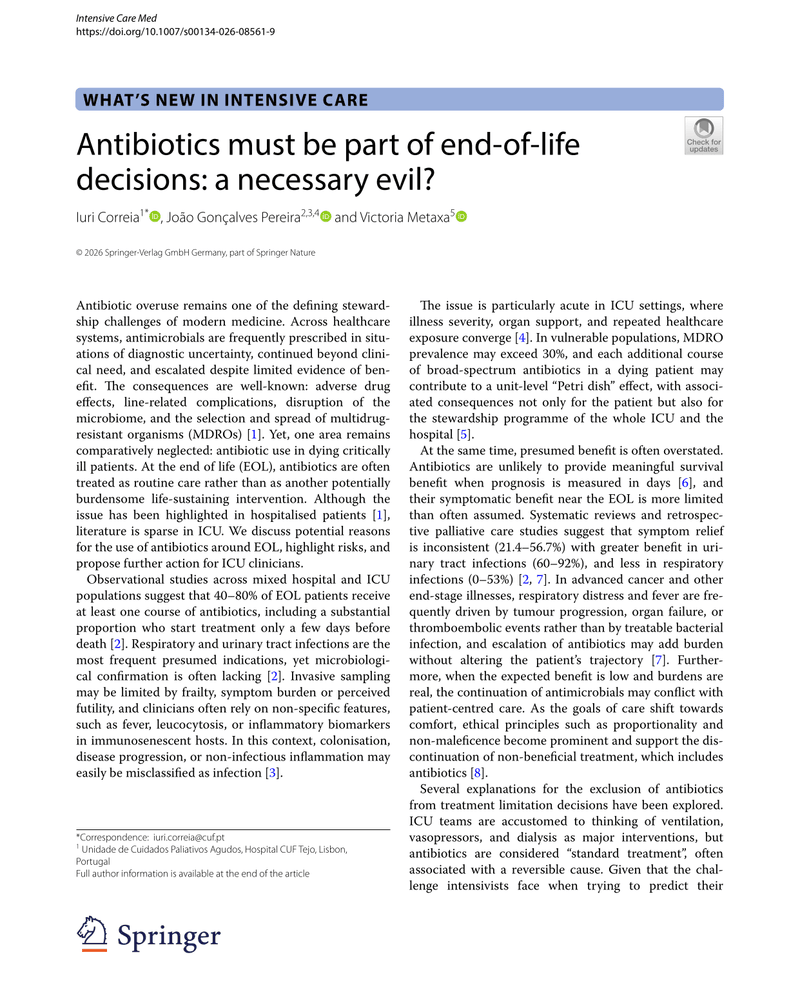
ANTIBIOTICS MUST BE PART OF END-OF-LIFE DECISIONS: A NECESSARY EVIL?
Iuri Correia, João Gonçalves Pereira, Victoria Metaxa
PDF20263 pages458 KB
Antibiotic overuse remains a significant challenge in modern medicine, particularly in end-of-life scenarios where antibiotics are often administered without sufficient clinical justification. The document emphasizes the importance of recognizing the limitations of traditional infection markers in critically ill patients and advocates for including antibiotic discussions in end-of-life care planning. It also suggests integrating palliative care approaches to better align treatment with patient goals and improve decision-making regarding antibiotic use.
Sign in to open
Ask this resource
Answers use this document only.
Your first question is free.
More like this
Resources from the same specialty and type. Curated links will replace these when added.
Clinical Resources
Documents that extend or complement this resource.
INTRAVENOUS FLUIDS IN CRITICALLY ILL PATIENTS: WHEN LESS IS BETTER
Same clinical topic · Intensive Care
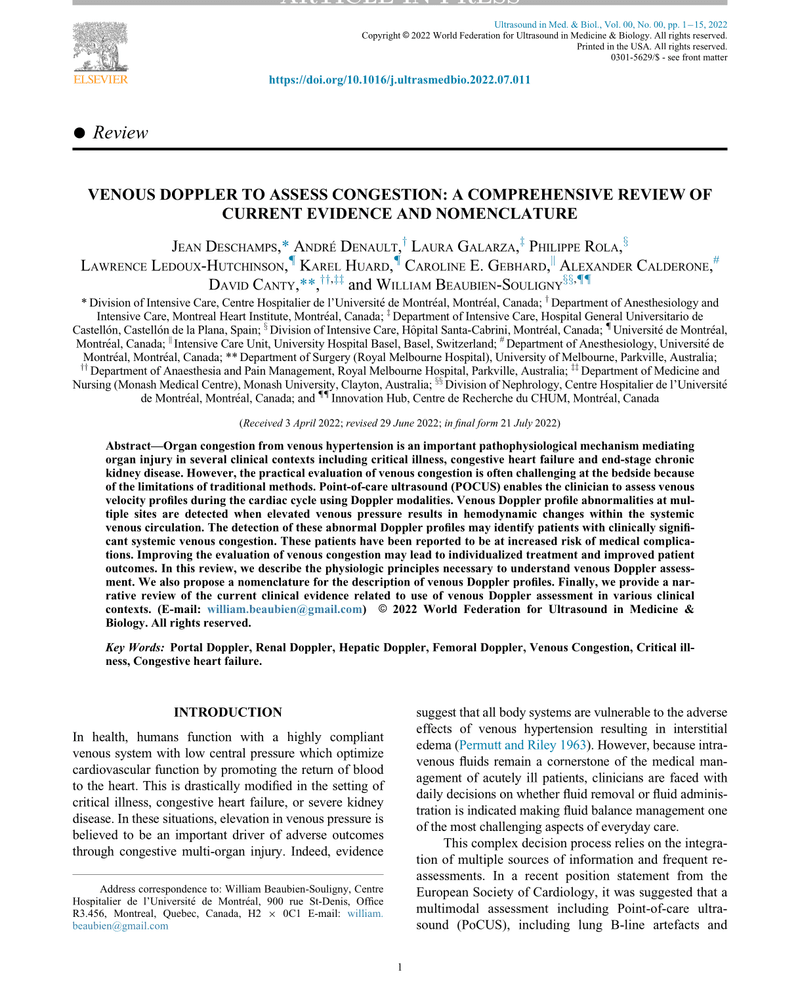
VENOUS DOPPLER TO ASSESS CONGESTION: A COMPREHENSIVE REVIEW OF CURRENT EVIDENCE AND NOMENCLATURE
Same clinical topic · Intensive Care
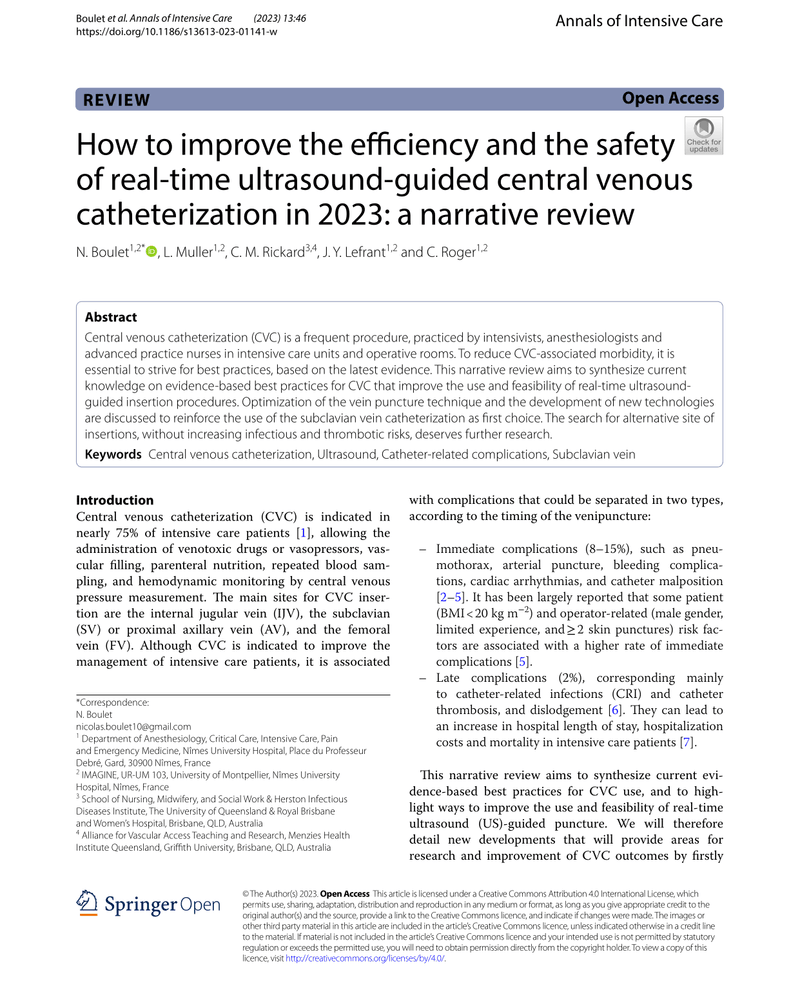
HOW TO IMPROVE THE EFFICIENCY AND THE SAFETY OF REAL - TIME ULTRASOUND - GUIDED CENTRAL VENOUS CATHETERIZATION IN 2023: A NARRATIVE REVIEW
Same clinical topic · Intensive Care
UPDATE ON SEPSIS TREATMENT
Same clinical topic · Intensive Care
WHAT'S NEW IN INTENSIVE CARE
Same clinical topic · Intensive Care
CURRENT PRACTICE AND EVOLVING CONCEPTS IN SEPTIC SHOCK RESUSCITATION
Same clinical topic · Intensive Care
Unnecessary fluid therapy in patients with shock Five classic fluid
Same clinical topic · Intensive Care
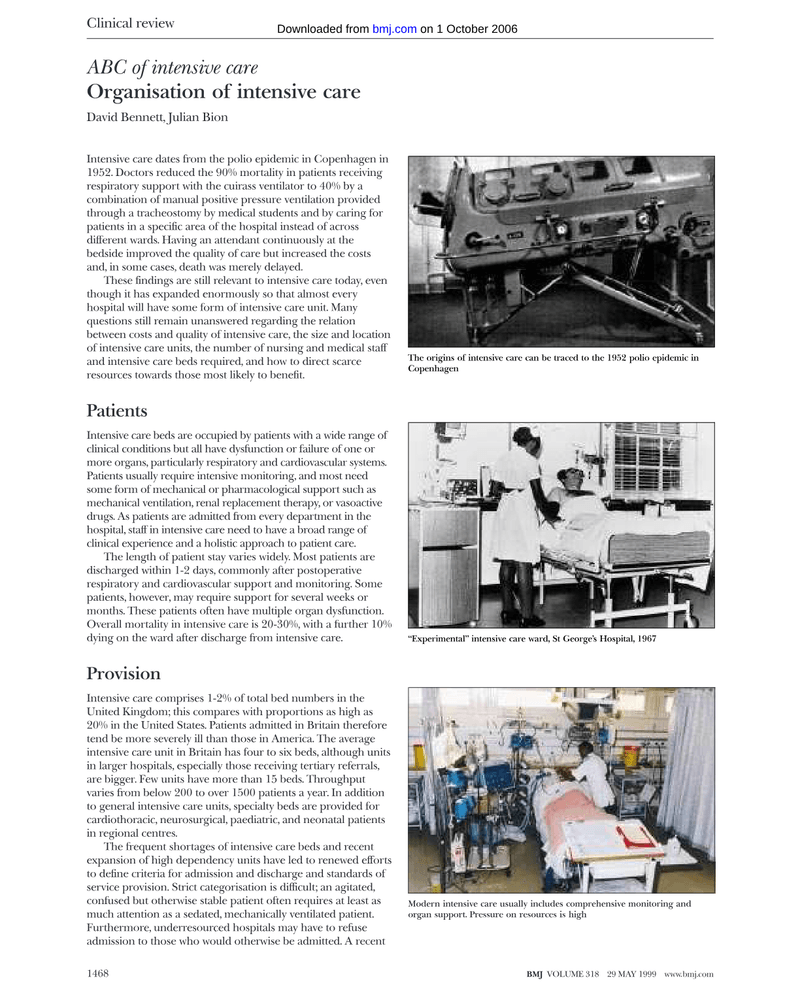
ABC of Intensive Care
Same clinical topic · Intensive Care

Traumatic Brain Injury
Same resource type · Neurology