Please wait while we open this resource.


K

Guidelines & protocols
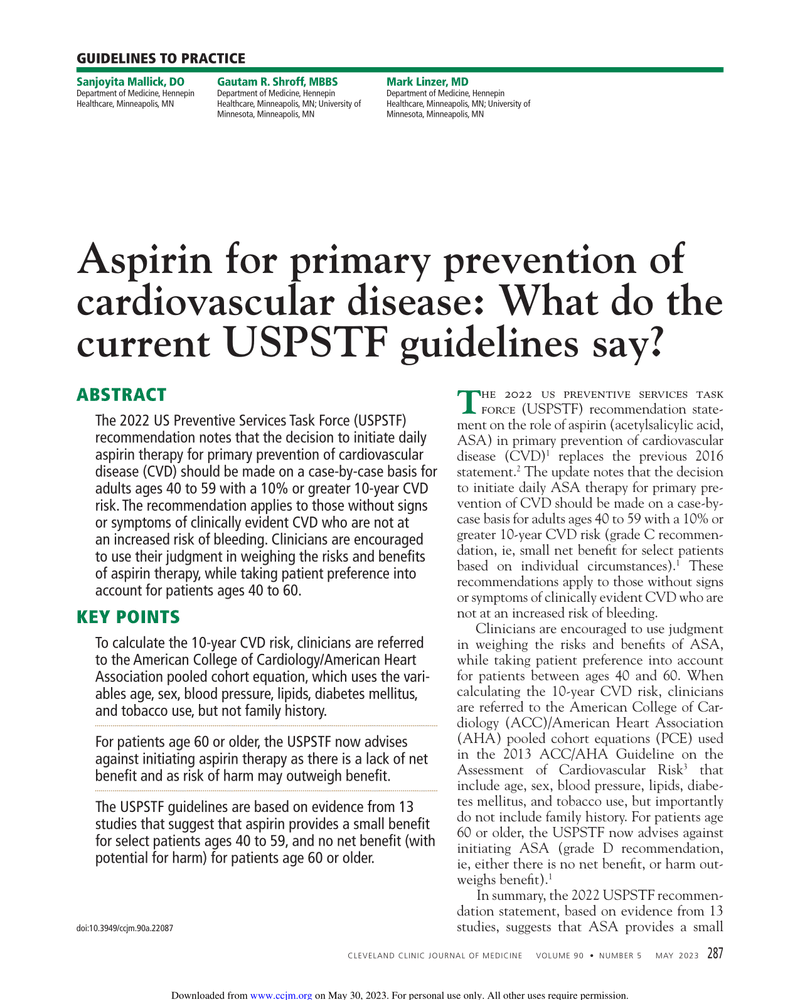
ASPIRIN FOR PRIMARY PREVENTION OF CARDIOVASCULAR DISEASE: WHAT DO THE CURRENT USPSTF GUIDELINES SAY?
Department of Medicine, Hennepin Healthcare
PDF20225 pages93 KB
The guidelines recommend that the decision to initiate daily aspirin therapy should be individualized, particularly for adults aged 40 to 59 who have a 10% or greater 10-year risk of cardiovascular disease. It highlights the importance of assessing bleeding risks and customizing treatment based on individual patient circumstances. The document also discusses the implications of recent trials and the need for clinicians to weigh the benefits against potential risks when considering aspirin therapy.
No account needed
Ask this resource
Answers use this document only.
More like this
Resources from the same specialty and type. Curated links will replace these when added.
Clinical Resources
Documents that extend or complement this resource.
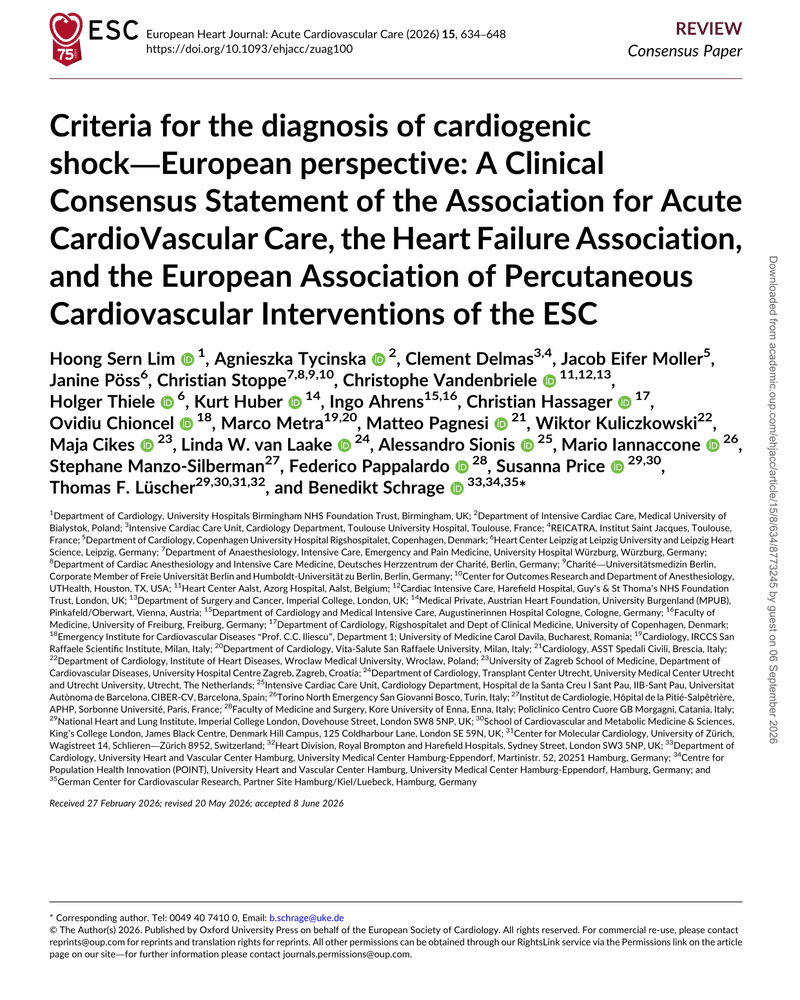
CRITERIA FOR THE DIAGNOSIS OF CARDIOGENIC SHOCK—EUROPEAN PERSPECTIVE: A CLINICAL CONSENSUS STATEMENT
Same clinical topic · Cardiology
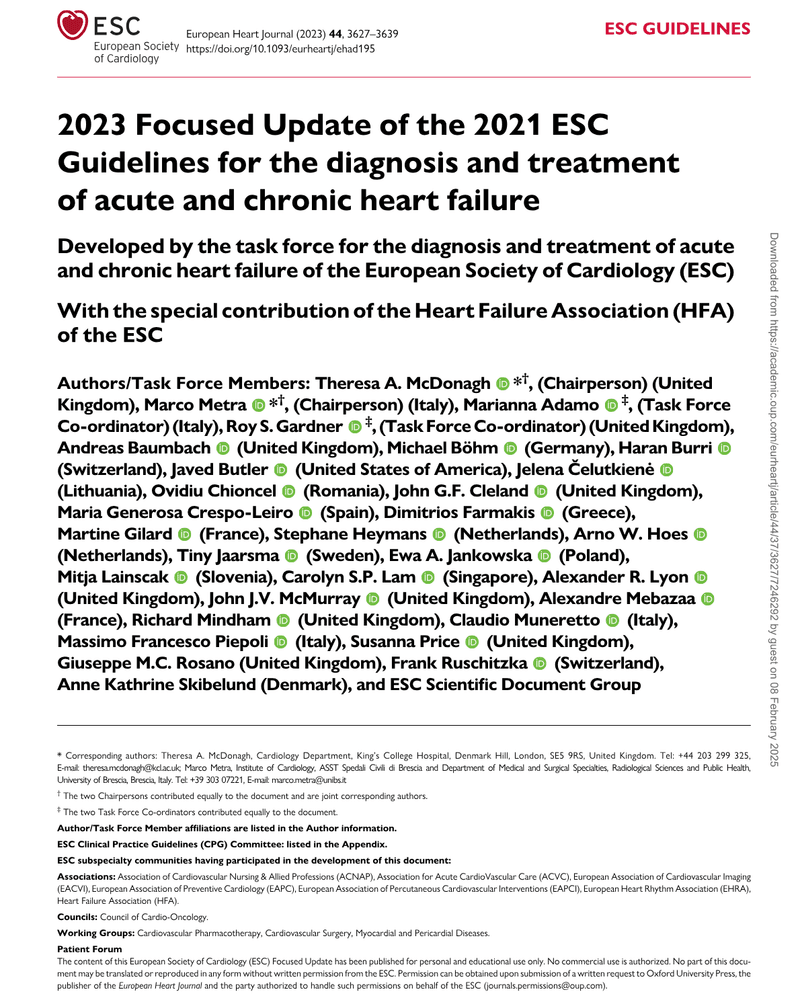
2023 Focused Update of the 2021 ESC Guidelines for the diagnosis and treatment of acute and chronic heart failure
Same clinical topic · Cardiology
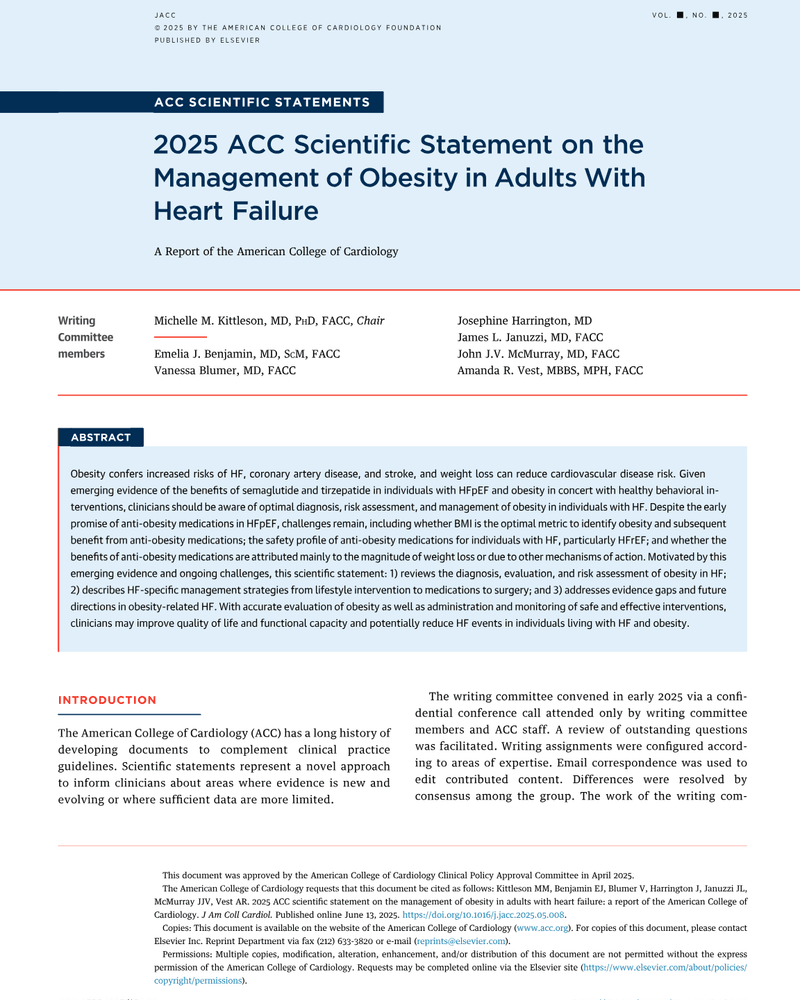
2025 ACC Scientific Statement on the Management of Obesity in Adults With Heart Failure
Same clinical topic · Cardiology
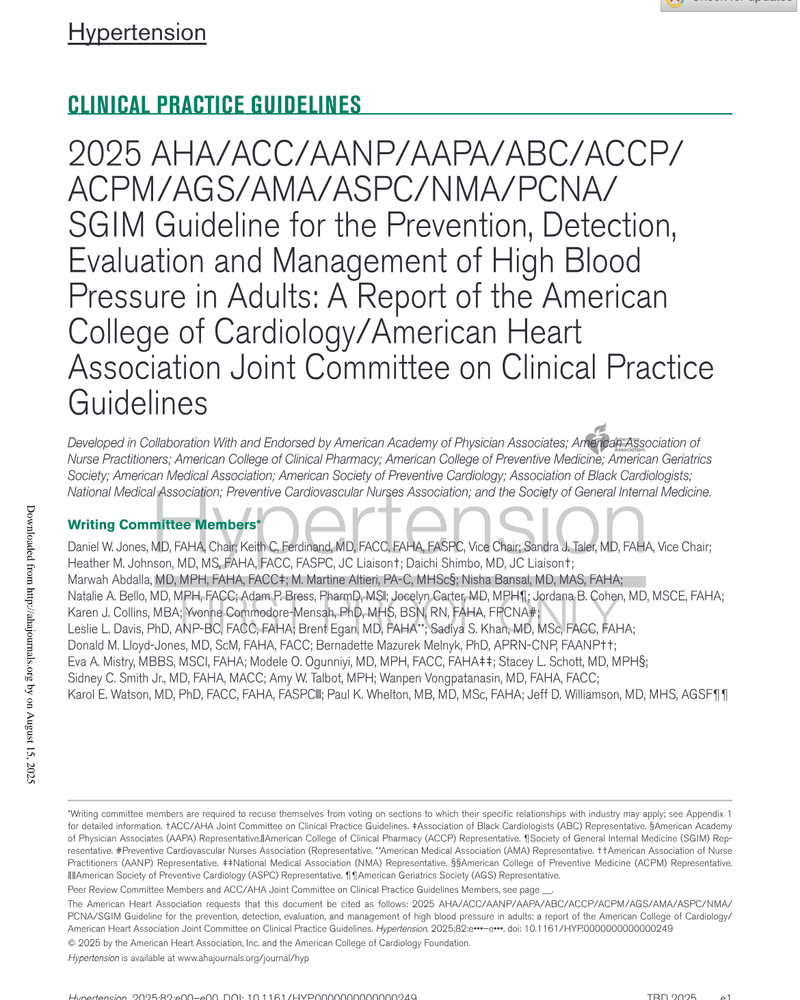
2025 AHA/ACC Guideline for the Management of High Blood Pressure in Adults
Same clinical topic · Cardiology
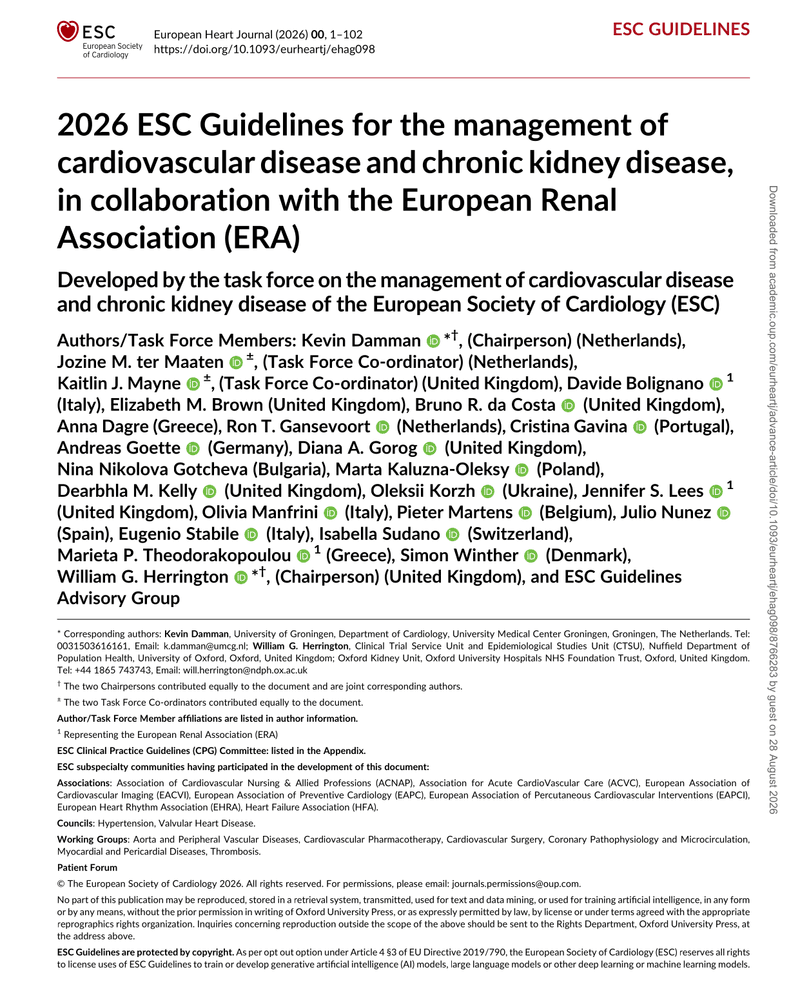
2026 ESC GUIDELINES FOR THE MANAGEMENT OF CARDIOVASCULAR DISEASE AND CHRONIC KIDNEY DISEASE
Same clinical topic · Cardiology
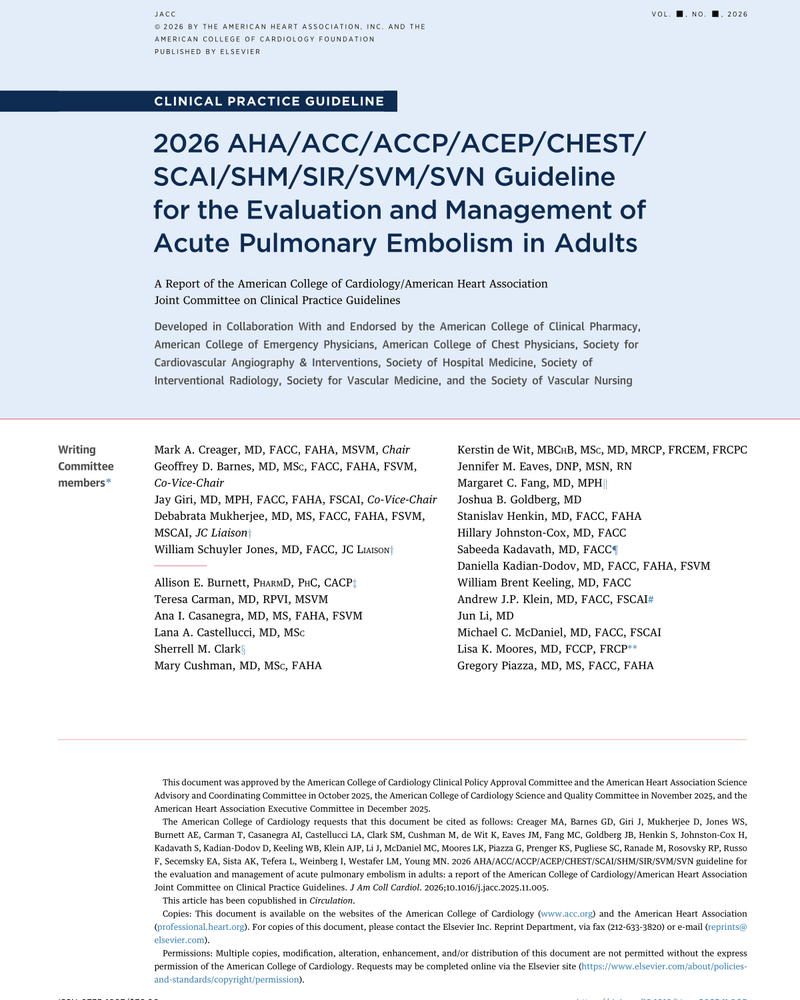
2026 AHA/ACC/ACCP/ACEP/CHEST/SCAI/SHM/SIR/SVM/SVN Guideline for the Evaluation and Management of Acute Pulmonary Embolism in Adults
Same clinical topic · Cardiology
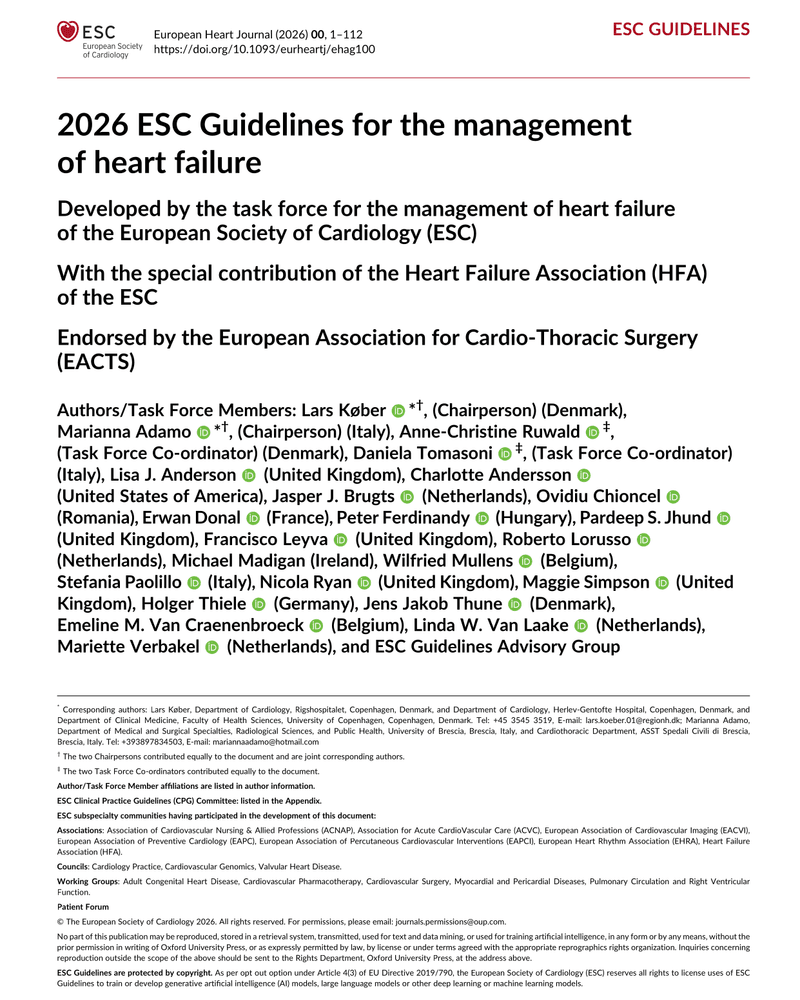
2026 ESC GUIDELINES FOR THE MANAGEMENT OF HEART FAILURE
Same clinical topic · Cardiology
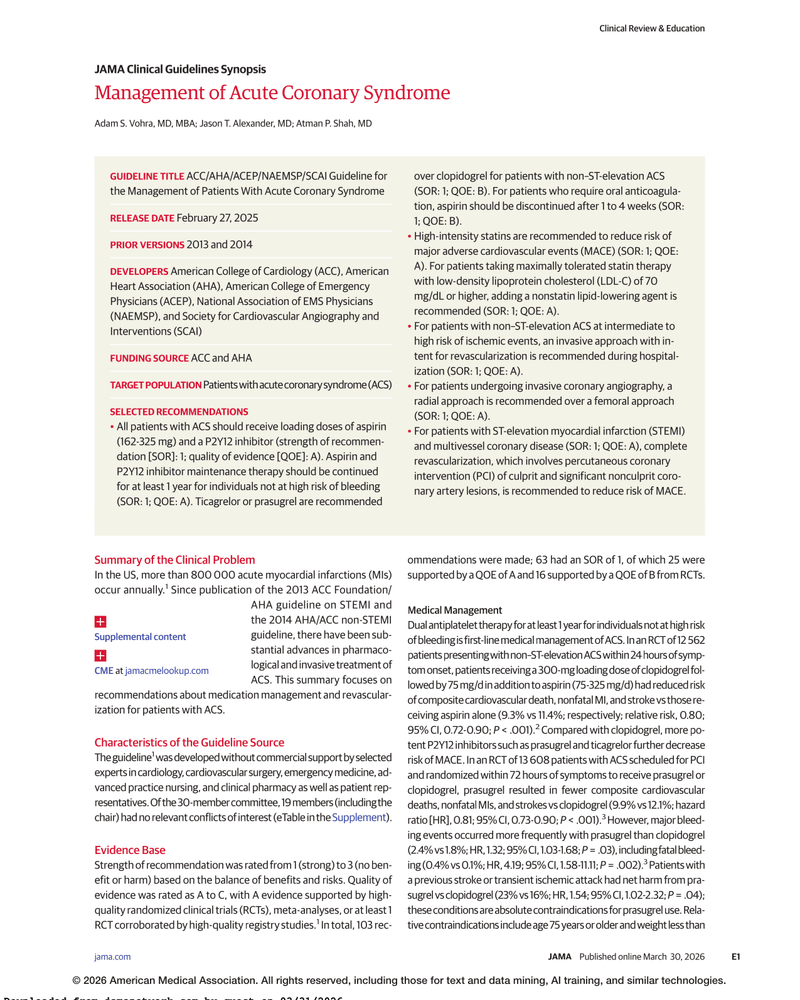
MANAGEMENT OF ACUTE CORONARY SYNDROME
Same clinical topic · Cardiology
Guidelinefor the Prevention, Detection,Evaluation, and Management
Same clinical topic · Cardiology