Please wait while we open this resource.


K

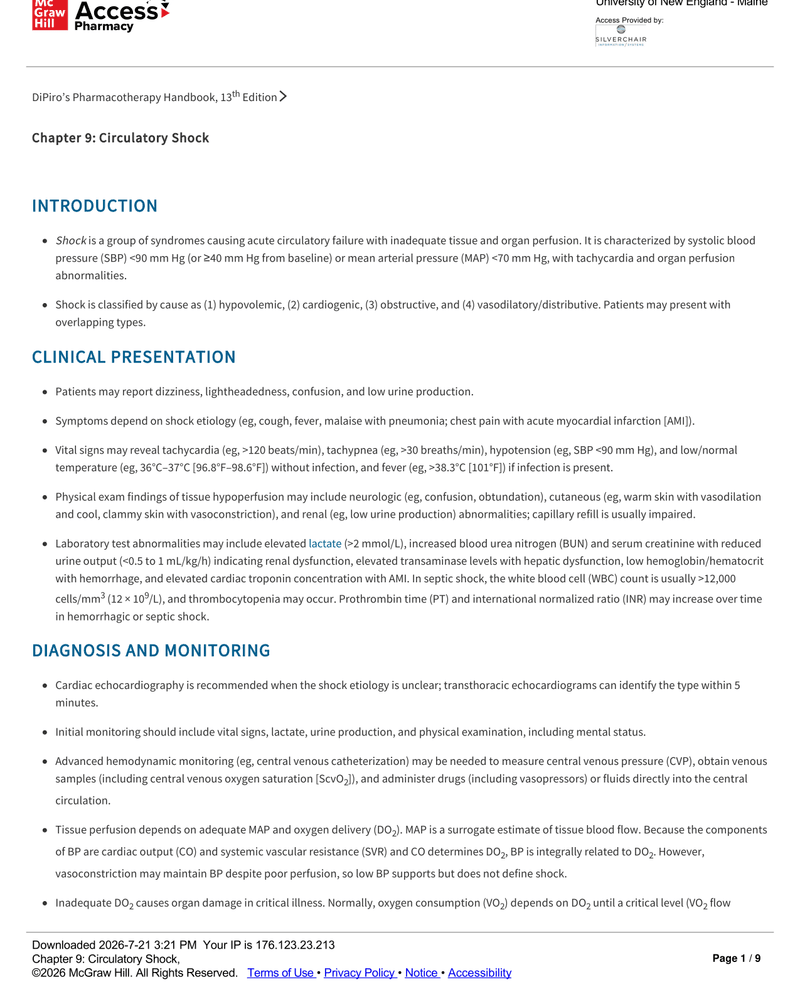
Clinical notes
CIRCULATORY SHOCK
Gretchen L. Sacha
PDF9 pages253 KB
Shock is a critical condition that can arise from various etiologies, including hypovolemic, cardiogenic, obstructive, and distributive causes. The chapter outlines the clinical signs and symptoms associated with shock, such as hypotension, tachycardia, and altered mental status. It emphasizes the importance of timely diagnosis and treatment, including the use of vasopressors and inotropes, and monitoring for therapeutic outcomes. The management strategies are tailored to the underlying cause of shock, with a focus on restoring hemodynamic stability and organ perfusion.
Sign in to open
Ask this resource
Answers use this document only.
Your first question is free.
More like this
Resources from the same specialty and type. Curated links will replace these when added.
Clinical Resources
Documents that extend or complement this resource.
03 Marinos The ICU Book, 4th Edition
Same clinical topic · Critical Care Medicine
ULTRASOUND IN THE CRITICALLY ILL: A PRACTICAL GUIDE
Same clinical topic · Critical Care Medicine
Mechanical Ventilation from Pathophysiology to Clinical Evidence
Same clinical topic · Critical Care Medicine

Evidence-Based Practice of Critical Care
Same clinical topic · Critical Care Medicine

Controversies in Critical Care (1)
Same clinical topic · Critical Care Medicine
Current diagnosis and treatment critical care 3rd
Same clinical topic · Critical Care Medicine
FCCS 7th edition
Same clinical topic · Critical Care Medicine
ICU Protocols A Step-wise Approach Vol II 2nd Ed (1)
Same clinical topic · Critical Care Medicine

Monitoring Mechanical Ventilation Using Ventilator Waveforms
Same clinical topic · Critical Care Medicine