Please wait while we open this resource.


K

Clinical reviews
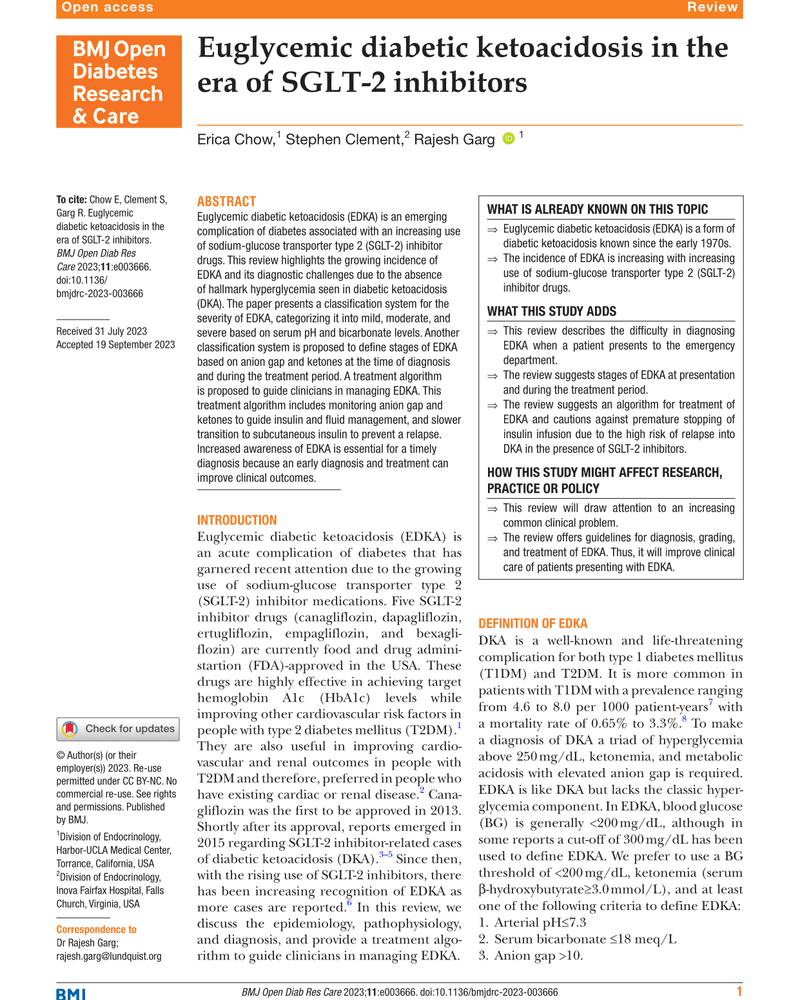
EUGLYCEMIC DIABETIC KETOACIDOSIS IN THE ERA OF SGLT-2 INHIBITORS
Harbor-UCLA Medical Center, Inova Fairfax Hospital
PDF20236 pages631 KB
Euglycemic diabetic ketoacidosis (EDKA) is an emerging complication of diabetes linked to the increasing use of sodium-glucose transporter type 2 (SGLT-2) inhibitors. The absence of hallmark hyperglycemia complicates its diagnosis, necessitating a classification system based on serum pH and bicarbonate levels. The paper proposes a treatment algorithm that emphasizes monitoring anion gap and ketones to guide insulin and fluid management. Increased awareness and timely diagnosis of EDKA are crucial for effective management.
Sign in to open
Ask this resource
Answers use this document only.
Your first question is free.
More like this
Resources from the same specialty and type. Curated links will replace these when added.
Clinical Resources
Documents that extend or complement this resource.
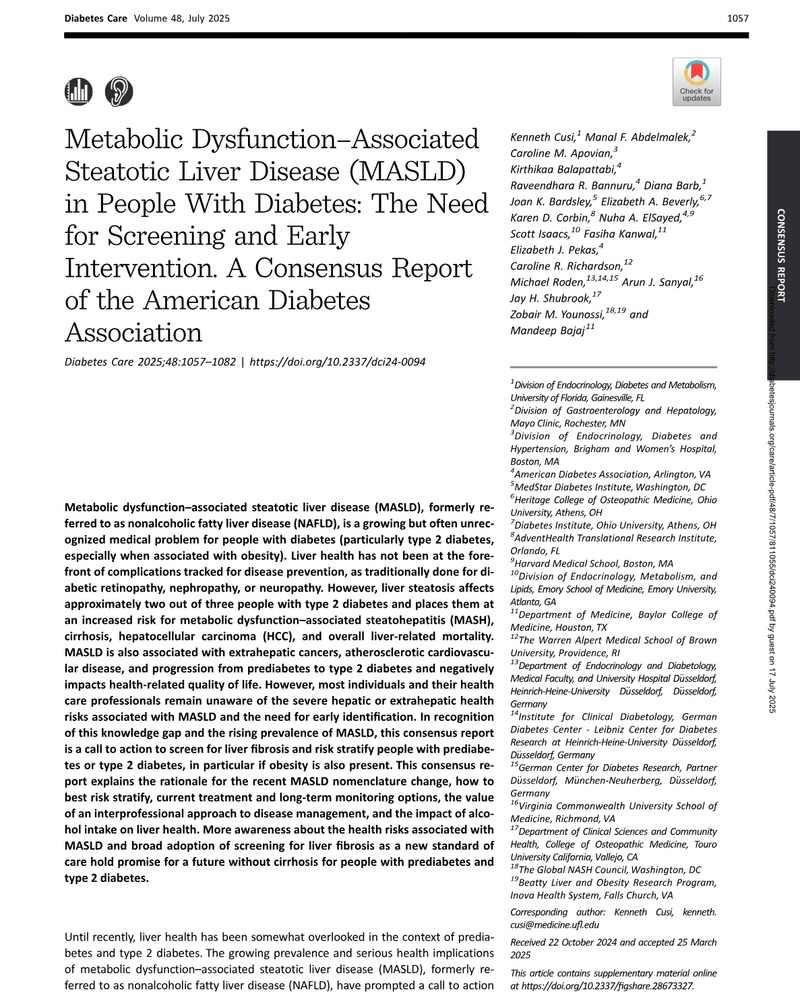
ADA Consensus Report: MASLD in People With Diabetes
Same clinical topic · Endocrinology
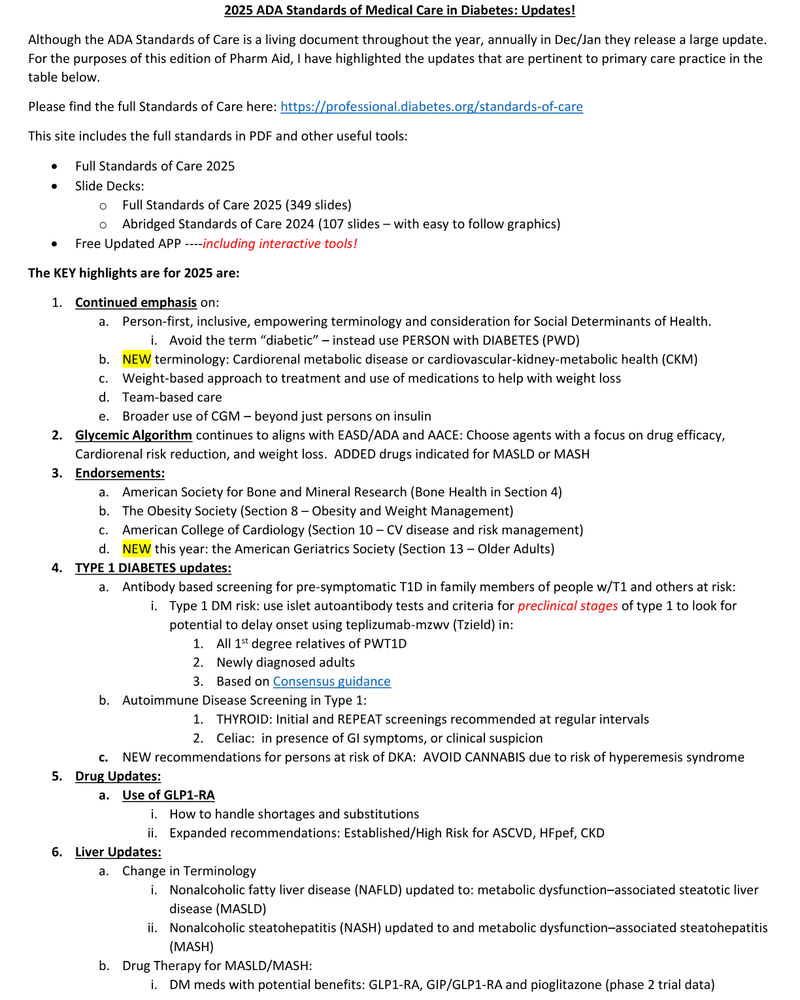
2025 ADA Diabetes Care Standards Updates
Same clinical topic · Endocrinology
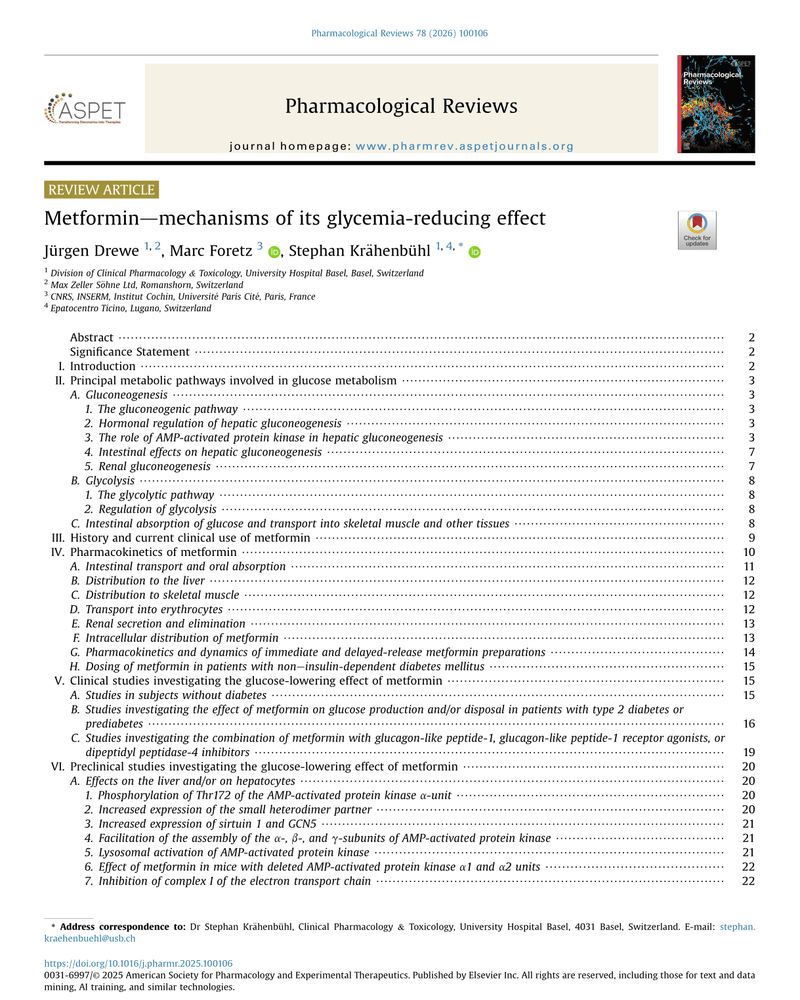
METFORMIN―MECHANISMS OF ITS GLYCEMIA-REDUCING EFFECT
Same clinical topic · Endocrinology
SYNDROME OF INAPPROPRIATE ANTIDIURESIS: FROM PATHOPHYSIOLOGY TO MANAGEMENT
Same clinical topic · Endocrinology
GLYCEMIC EMERGENCIES
Same clinical topic · Endocrinology
DIAGNOSIS AND MANAGEMENT OF CENTRAL DIABETES INSIPIDUS IN ADULTS
Same clinical topic · Endocrinology
ANTI-OBESITY DRUGS: COMPREHENSIVE REVIEW AND EMERGING THERAPIES
Same clinical topic · Endocrinology
DRUG DELIVERY SYSTEMS FOR THYROID DISEASE TREATMENT: A MINI REVIEW ON CURRENT THERAPIES AND ALTERNATIVE APPROACHES
Same clinical topic · Endocrinology

OTHER BENEFITS OF CONTROLLING CARBOHYDRATES
Same clinical topic · Endocrinology