Please wait while we open this resource.


K

Clinical reviews
MATERNAL CRITICAL CARE: PART II
Guys and St Thomas’ NHS Foundation Trust, Nottingham University Hospitals NHS Trust
PDF20218 pages307 KB
The document is a continuation of a previous article that covered general principles of management in critical care for pregnant patients. It highlights the specific conditions that may arise during critical illness, such as major obstetric hemorrhage, sepsis, and pre-eclampsia. The authors stress the importance of collaboration between critical care and maternity teams to ensure optimal care for these patients. The article also addresses the need for careful consideration of non-obstetric causes of deterioration in pregnant women.
Sign in to open
Ask this resource
Answers use this document only.
Your first question is free.
More like this
Resources from the same specialty and type. Curated links will replace these when added.
Clinical Resources
Documents that extend or complement this resource.

MEDICO-LEGAL ISSUES IN OBSTETRICS & GYNECOLOGY INCLUDING GBV
Same clinical topic · Obstetrics
COMPLEX CESAREAN SECTION: SURGICAL APPROACH TO REDUCE THE RISKS OF INTRAOPERATIVE COMPLICATIONS AND POSTPARTUM HEMORRHAGE
Same clinical topic · Obstetrics
IN WOMEN WITH CHRONIC HYPERTENSION, DOES FETAL GROWTH RESTRICTION INCREASE PROGRESSION TO MATERNAL PREECLAMPSIA?
Same clinical topic · Obstetrics
SOCIETY FOR MATERNAL-FETAL MEDICINE STATEMENT: ACETAMINOPHEN USE DURING PREGNANCY
Same clinical topic · Obstetrics
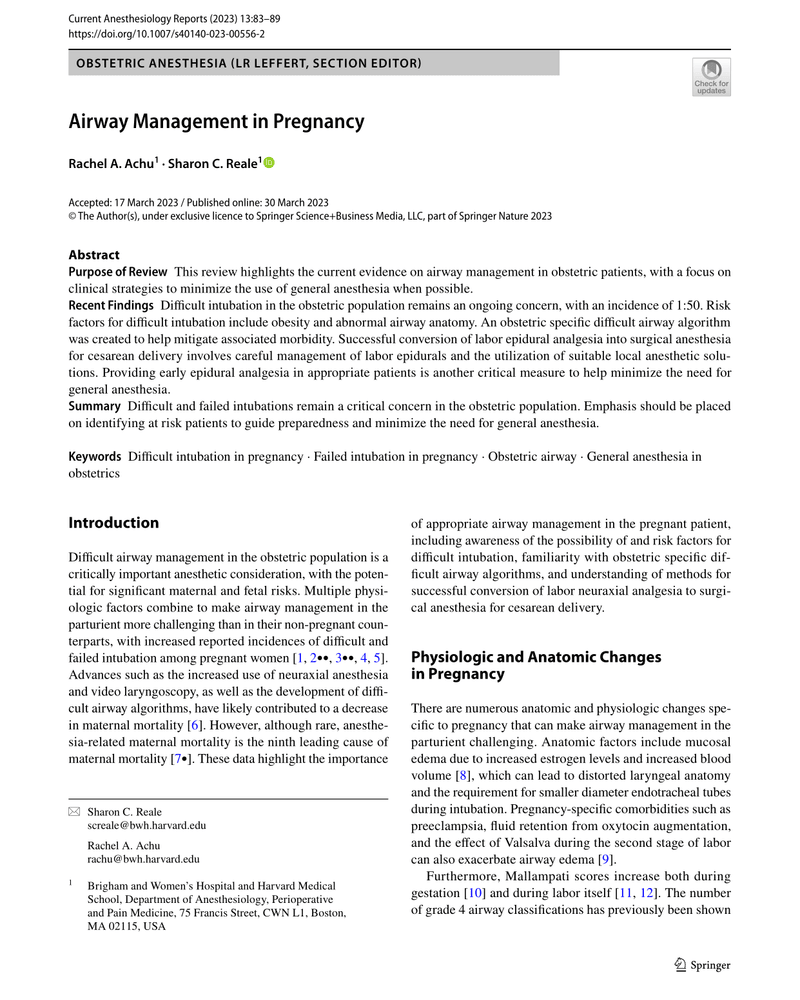
AIRWAY MANAGEMENT IN PREGNANCY
Same clinical topic · Obstetrics
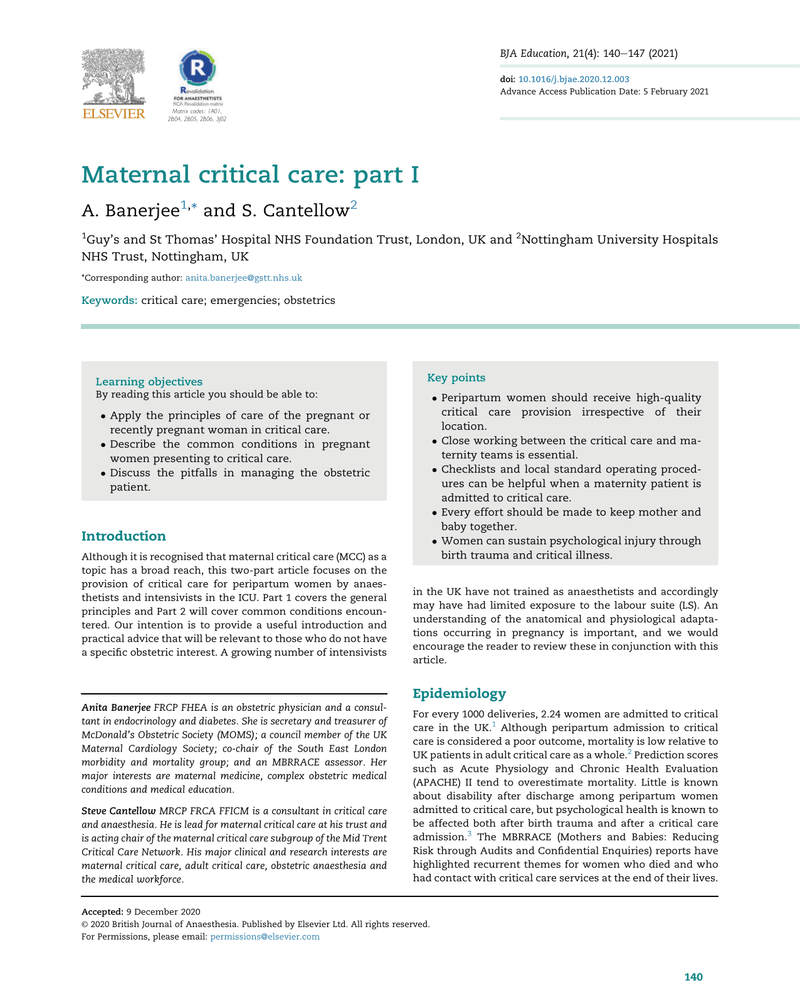
MATERNAL CRITICAL CARE: PART I
Same clinical topic · Obstetrics
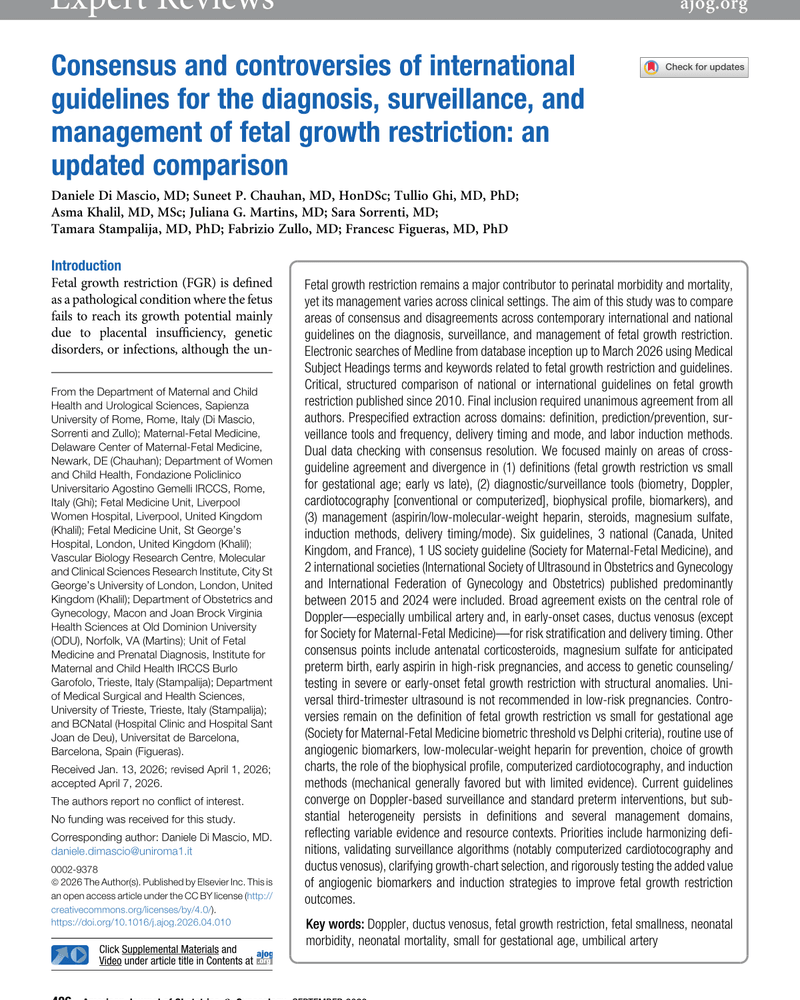
CONSENSUS AND CONTROVERSIES OF INTERNATIONAL GUIDELINES FOR THE DIAGNOSIS, SURVEILLANCE, AND MANAGEMENT OF FETAL GROWTH RESTRICTION: AN UPDATED COMPARISON
Same clinical topic · Obstetrics
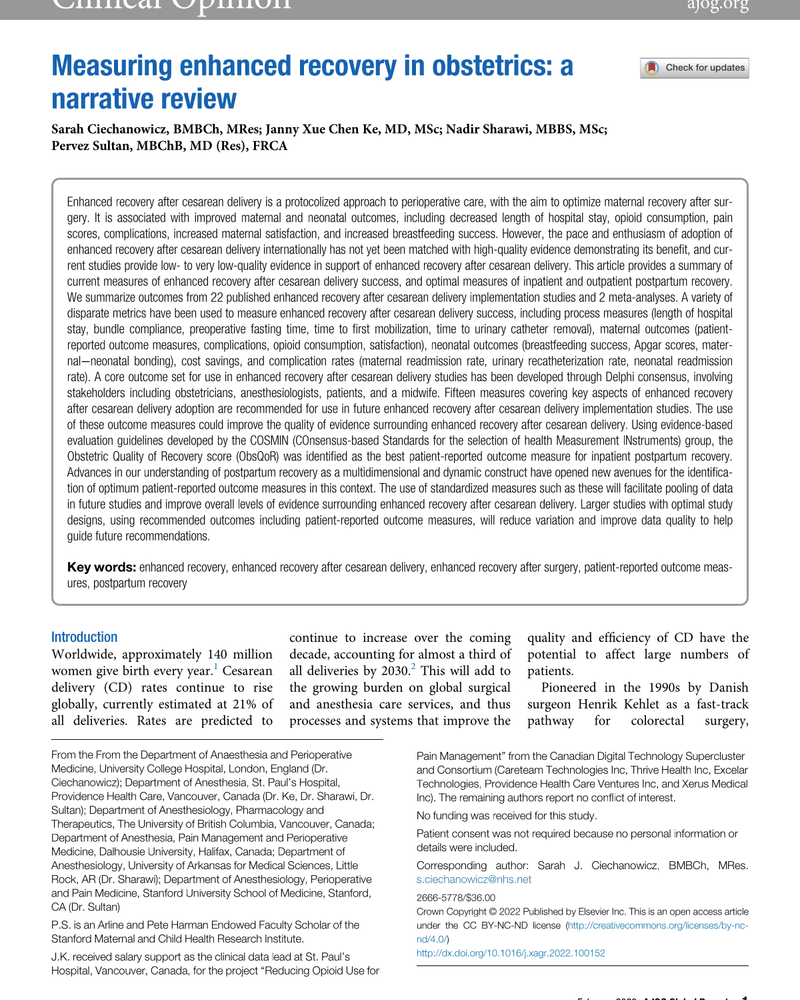
MEASURING ENHANCED RECOVERY IN OBSTETRICS: A NARRATIVE REVIEW
Same clinical topic · Obstetrics
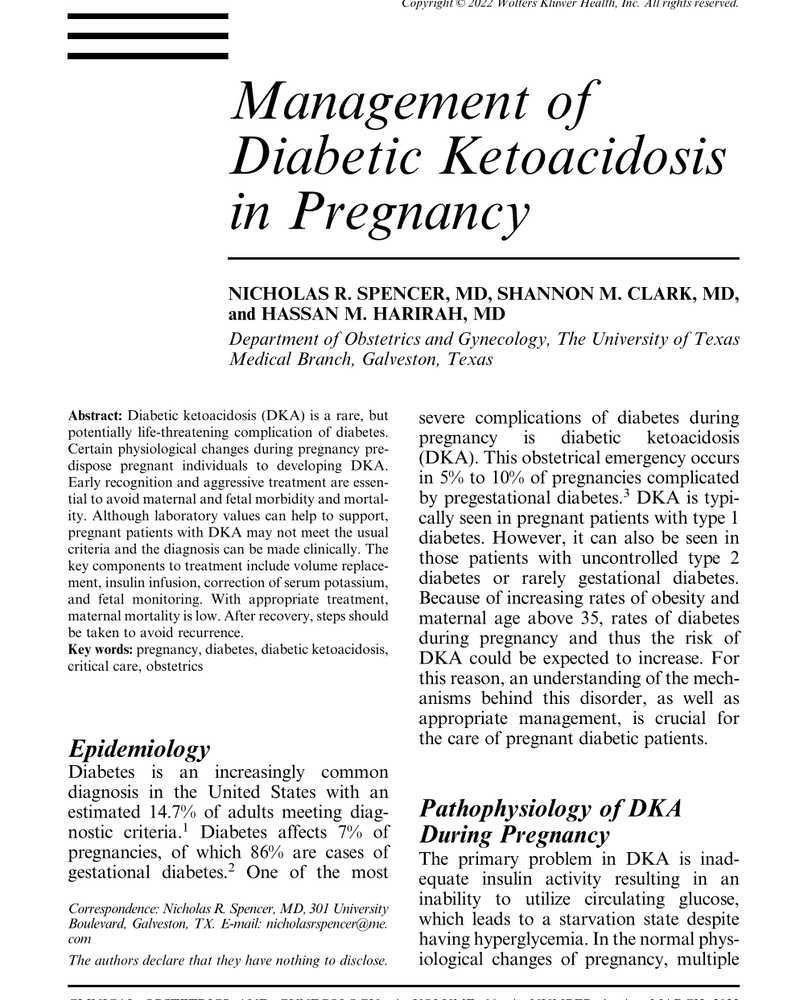
MANAGEMENT OF DIABETIC KETOACIDOSIS IN PREGNANCY
Same clinical topic · Obstetrics