Please wait while we open this resource.


K

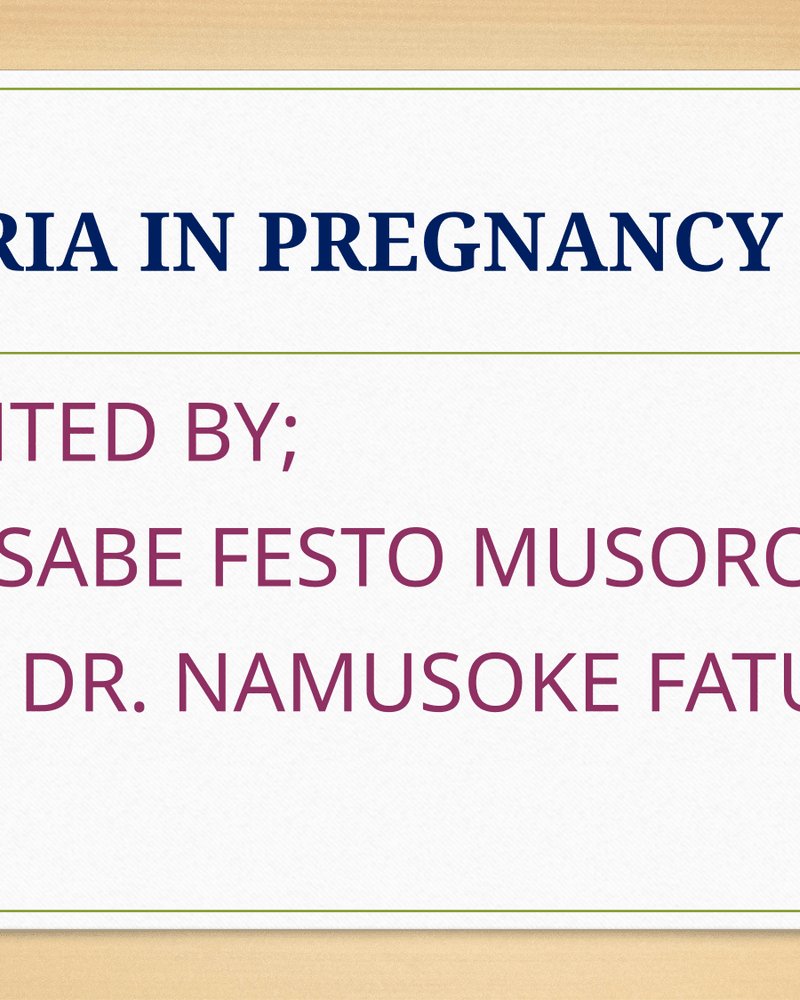
Lecture slides
MIP presentationfn (1)
MR MUSABE FESTO MUSORO
PPTX37 pages1.1 MB
Malaria in pregnancy (MIP) is a significant health concern, particularly in tropical regions like sub-Saharan Africa. Pregnant women are at increased risk due to altered immune responses, making them more susceptible to Plasmodium falciparum infections. MIP can lead to severe complications for both the mother and the fetus, including anemia, acute pulmonary edema, hypoglycemia, spontaneous abortion, preterm labor, low birth weight, and intrauterine fetal demise. Diagnosis relies on clinical features and confirmation via mRDT or blood slides, while management involves prompt treatment and prevention strategies like Intermittent Preventive Treatment of Malaria in Pregnancy (IPTp) and the use of insecticide-treated nets.
Sign in to open
Ask this resource
Answers use this document only.
Your first question is free.
More like this
Resources from the same specialty and type. Curated links will replace these when added.
Clinical Resources
Documents that extend or complement this resource.

VIA Cryo HPV Detection Module 2 Anatomy & Physiology
Same clinical topic · Obstetrics & Gynecology
Pueperal infection klmns (2)
Same clinical topic · Obstetrics & Gynecology
sickle-cell-disease-in-pregnancy- Final Slides
Same clinical topic · Obstetrics & Gynecology

RPL & IUFD
Same clinical topic · Obstetrics & Gynecology

From Dr Namagembe PPT slides MPDR related Expert session
Same clinical topic · Obstetrics & Gynecology
sickle cell in pregnancy
Same clinical topic · Obstetrics & Gynecology
pheochromocytoma
Same clinical topic · Obstetrics & Gynecology
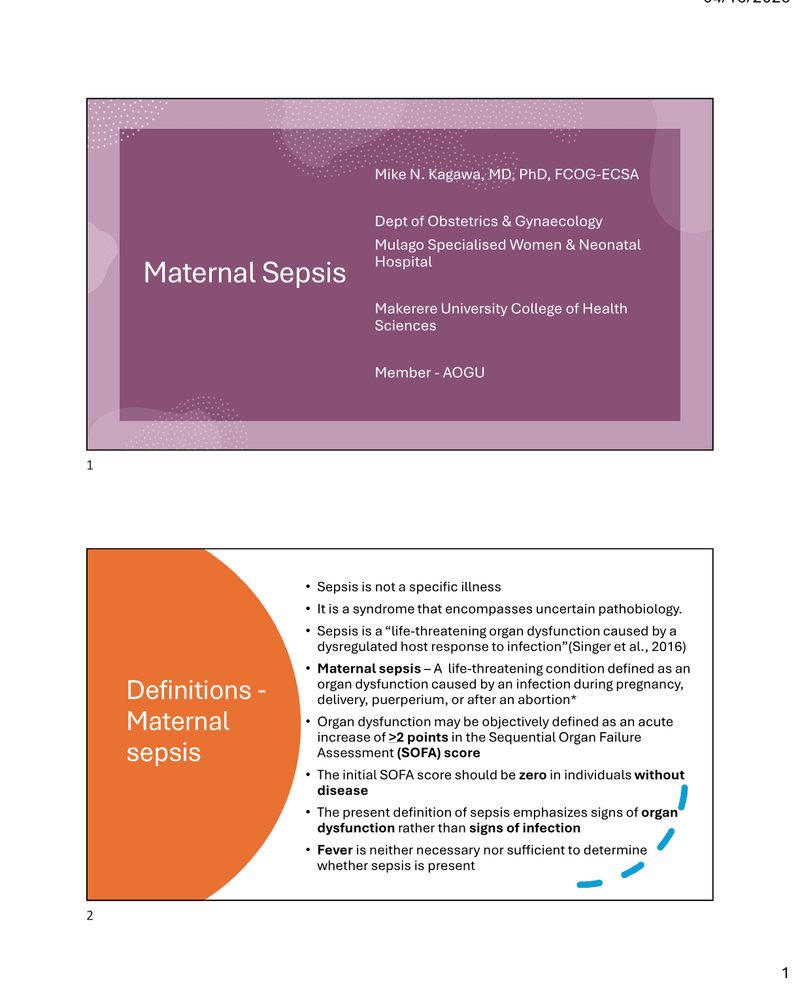
Maternal Sepsis
Same clinical topic · Obstetrics & Gynecology

Hacker Moore’s Essentials of Obstetrics and Gynecology 6th16 by
Same specialty · Obstetrics & Gynecology