Please wait while we open this resource.


K


Clinical notes
Radionuclide generators in medicine
Radiology
PPTX25 pages405 KB
Radionuclide generators are systems containing a parent radionuclide that decays to produce a shorter-lived daughter radionuclide, which can be extracted. This process, known as "milking," allows for on-site production of short-lived radioisotopes for medical use. The document differentiates between secular and transient equilibrium, explaining the conditions under which each is achieved and providing examples like the Mo-99/Tc-99m generator. It also touches upon properties of an ideal generator, such as long-lived granddaughters and effective shielding, and lists clinically useful generators for diagnostic nuclear medicine.
Sign in to open
Ask this resource
Answers use this document only.
Your first question is free.
More like this
Resources from the same specialty and type. Curated links will replace these when added.
Clinical Resources
Documents that extend or complement this resource.

MRI Brain: Atlas and Text
Same clinical topic · Radiology
2022 Emergency radiology of the head and spine (1)
Same clinical topic · Radiology
Radiology of Cardiovascular and Respiratory Systems
Same specialty · Radiology
RADIOLOGY OF CARDIOVASCULAR AND RESPIRATORY SYSTEM
Same specialty · Radiology
quality of chest x-ray 2
Same specialty · Radiology
RAD 4102 CASES AND RADIOLOGICAL IMAGES RELEVANT TO GENITOURINARY
Same specialty · Radiology
RAD 4102 REPRODUCTIVE AND URINARY SYSTEM DISORDERS
Same specialty · Radiology
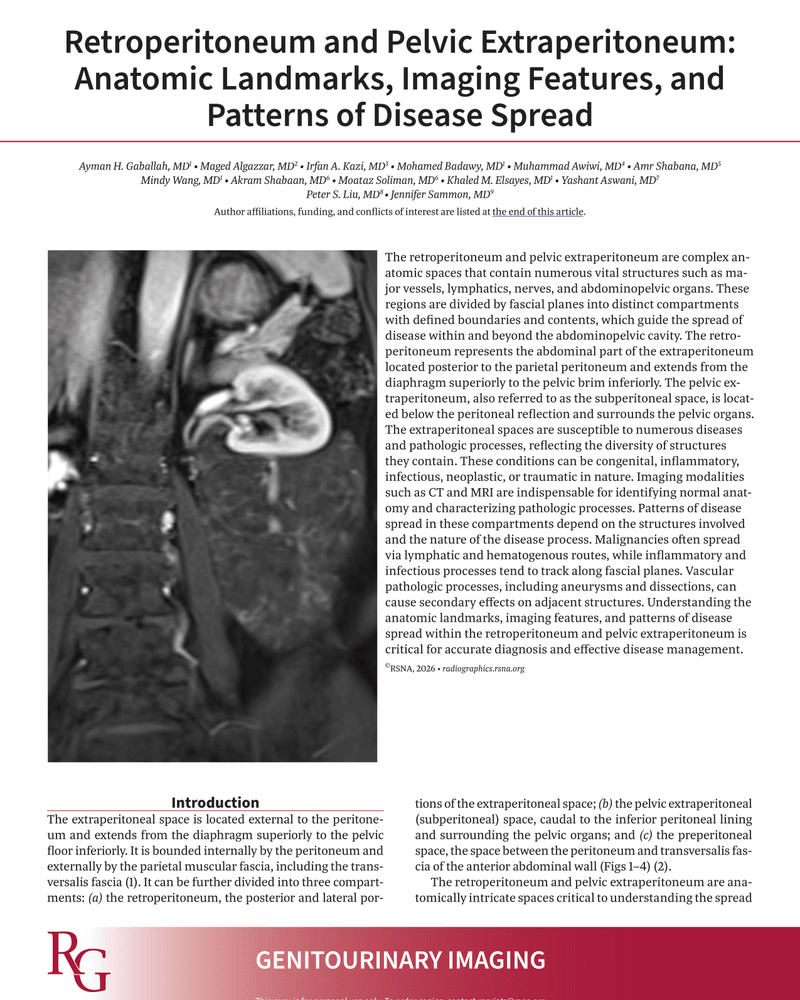
RETROPERITONEUM AND PELVIC EXTRAPERITONEUM: ANATOMIC LANDMARKS, IMAGING FEATURES, AND PATTERNS OF DISEASE SPREAD
Same specialty · Radiology
Radiology GIT
Same specialty · Radiology