Please wait while we open this resource.


K

Clinical notes
Sample size estimation, power & hypothesis testing 2024
Assoc Prof Joan Kalyango
PPTX48 pages2.4 MB
The document introduces the fundamentals of hypothesis testing, defining null and alternative hypotheses and distinguishing one‑sided from two‑sided tests. It outlines the steps for conducting hypothesis tests and explains the importance of sample size estimation for both descriptive and analytic studies. Various factors influencing sample size, such as study design, effect size, significance level, and power, are discussed. Practical examples illustrate calculations for estimating means, proportions, and differences between treatment groups. The material also covers considerations for equivalence studies, clustering, and design effects.
Sign in to open
Ask this resource
Answers use this document only.
Your first question is free.
More like this
Resources from the same specialty and type. Curated links will replace these when added.
Clinical Resources
Documents that extend or complement this resource.
Essentials Medical Statistics Second Edition by Betty R Kirkwood (2)
Same clinical topic · Epidemiology

RANDOMIZED CLINICAL TRIALS EPIDEMIOLOGY
Same clinical topic · Epidemiology

Cohort and case control design
Same clinical topic · Epidemiology
Medical Statistics from A to Z
Same specialty · Epidemiology
Introduction to Systematic Reviews and Meta-Analysis
Same specialty · Epidemiology
Sample size estimation, power & hypothesis testing 2025 (2)
Same specialty · Epidemiology
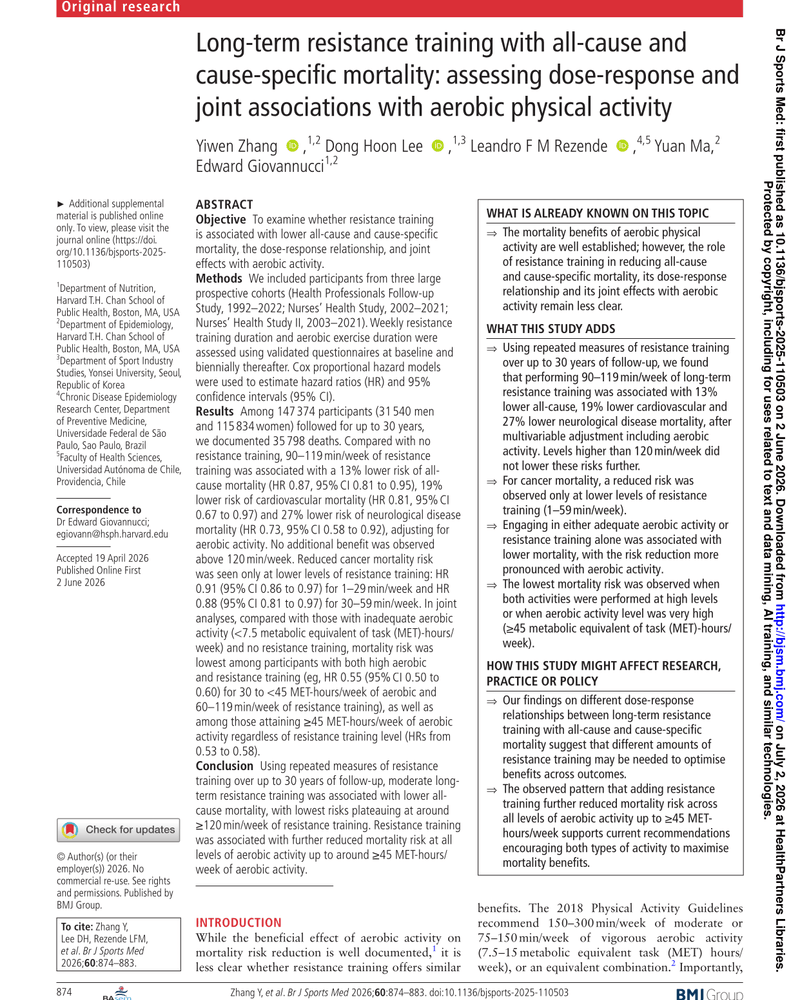
LONG- TERM RESISTANCE TRAINING WITH ALL- CAUSE AND CAUSE- SPECIFIC MORTALITY: ASSESSING DOSE- RESPONSE AND JOINT ASSOCIATIONS WITH AEROBIC PHYSICAL ACTIVITY
Same specialty · Epidemiology

t-Tests and z-Tests
Same specialty · Epidemiology

Bias, Confounding, and Effect Modification in Research
Same specialty · Epidemiology