Preparing your experience, please wait…


K


Guidelines & protocols
SICKLECELL GUIDELINES 2025 (2)
Ministry of Health, Uganda
PDF202560 pages31.6 MB
The guidelines detail the pathophysiology, clinical features, and diagnosis of Sickle Cell Disease, including clinical and laboratory approaches and Uganda's newborn screening program. Management strategies encompass initial assessment, use of hydroxyurea, treatment of acute and chronic complications, and health maintenance through education, nutrition, infection prevention, and monitoring. Special considerations for adolescents, pregnant individuals, and older persons are addressed, alongside prevention through genetic counseling and education.
No account needed
Discuss clinical evidence & guidelines
Examine in Ask OslerAsk this resource
Answers from this document onlySickle Cell Disease: Silent Infarcts May Impair Childhood Learning
“Stroke is the most common and severe neurological complication of SCD that occurs as a result of blood vessel damage and lack of adequate oxygen within the brain in both children and adults. PLSCD are at a much higher risk of developing stroke compared to people without sickle cell disease. The patient may sometimes not exhibit any obvious symptoms/signs of stroke but may be undergoing gradual brain damage due to silent cerebral infarcts causing cognitive (mental) impairment, and leading to learning difficulties in children.”
More like this
Resources from the same specialty and type. Curated links will replace these when added.
Clinical Resources
Documents that extend or complement this resource.
The National Guidelines for Management and Prevention of Sickle Cell Disease
Same clinical topic · Hematology
Guideline for SCD Management - Uganda (2)
Same clinical topic · Hematology
AMERICAN SOCIETY OF HEMATOLOGY 2026 GUIDELINES FOR IMMUNE THROMBOCYTOPENIA (ITP): INITIAL AND SECOND-LINE THERAPY IN ADULTS WITH PRIMARY ITP
Same clinical topic · Hematology
SICKLECELL GUIDELINES 2025-2030
Same clinical topic · Hematology
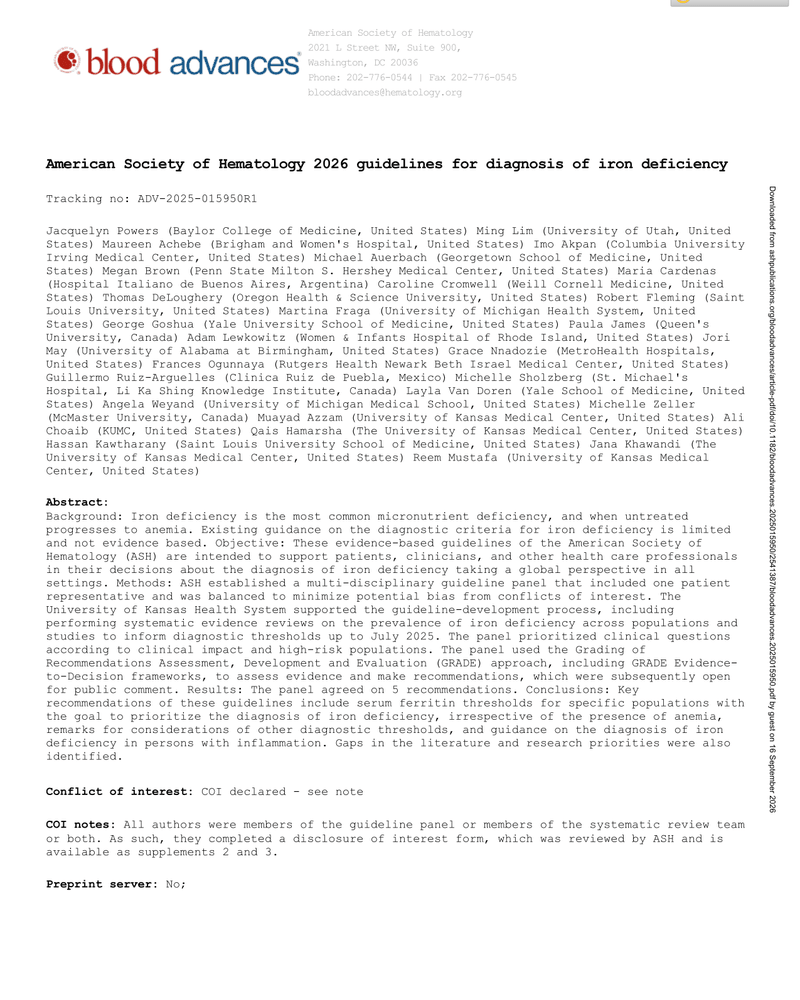
AMERICAN SOCIETY OF HEMATOLOGY 2026 GUIDELINES FOR DIAGNOSIS OF IRON DEFICIENCY
Same clinical topic · Hematology
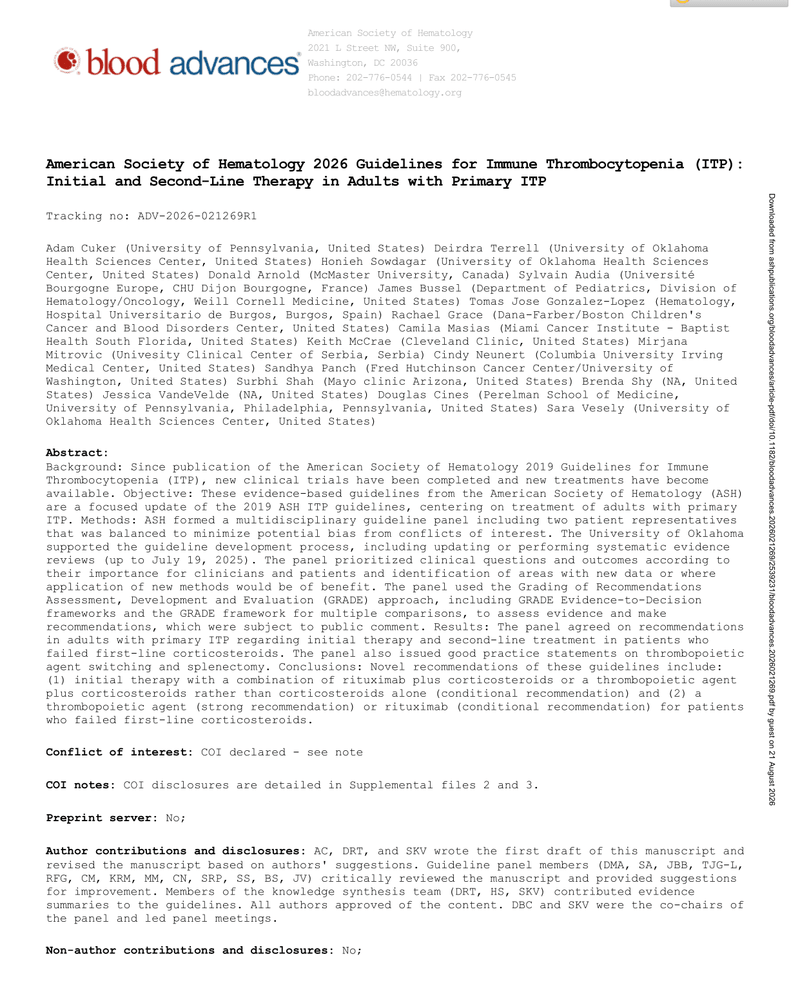
AMERICAN SOCIETY OF HEMATOLOGY 2026 GUIDELINES FOR IMMUNE THROMBOCYTOPENIA (ITP): INITIAL AND SECOND-LINE THERAPY IN ADULTS WITH PRIMARY ITP
Same clinical topic · Hematology
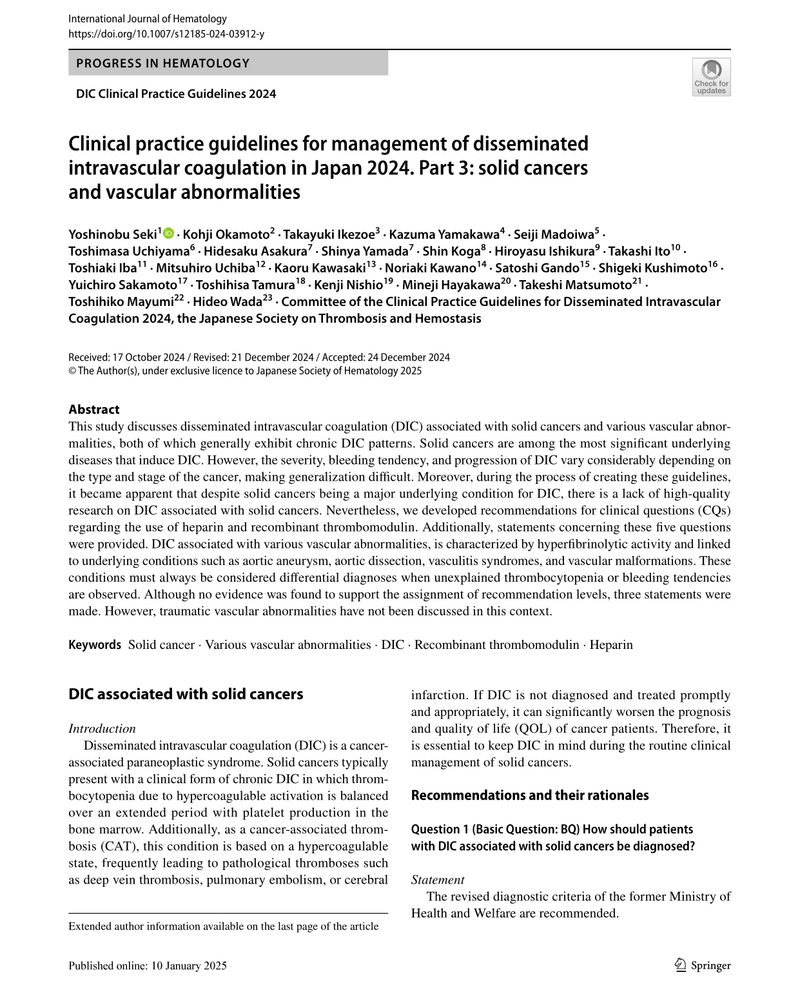
CLINICAL PRACTICE GUIDELINES FOR MANAGEMENT OF DISSEMINATED INTRAVASCULAR COAGULATION IN JAPAN 2024. PART 3: SOLID CANCERS AND VASCULAR ABNORMALITIES
Same clinical topic · Hematology
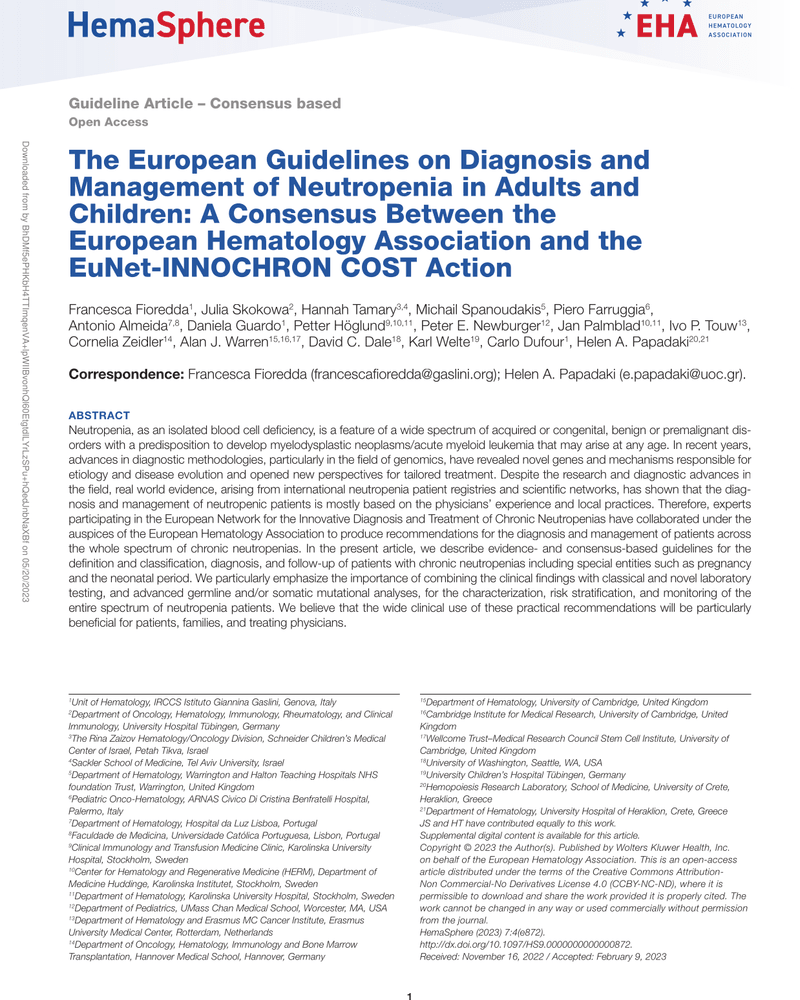
THE EUROPEAN GUIDELINES ON DIAGNOSIS AND MANAGEMENT OF NEUTROPENIA IN ADULTS AND CHILDREN: A CONSENSUS BETWEEN THE EUROPEAN HEMATOLOGY ASSOCIATION AND THE EUNET-INNOCHRON COST ACTION
Same clinical topic · Hematology
GUIDELINE ON HAEMOGLOBIN CUTOFFS TO DEFINE ANAEMIA IN INDIVIDUALS AND POPULATIONS
Same clinical topic · Hematology