Please wait while we open this resource.


K

Clinical reviews
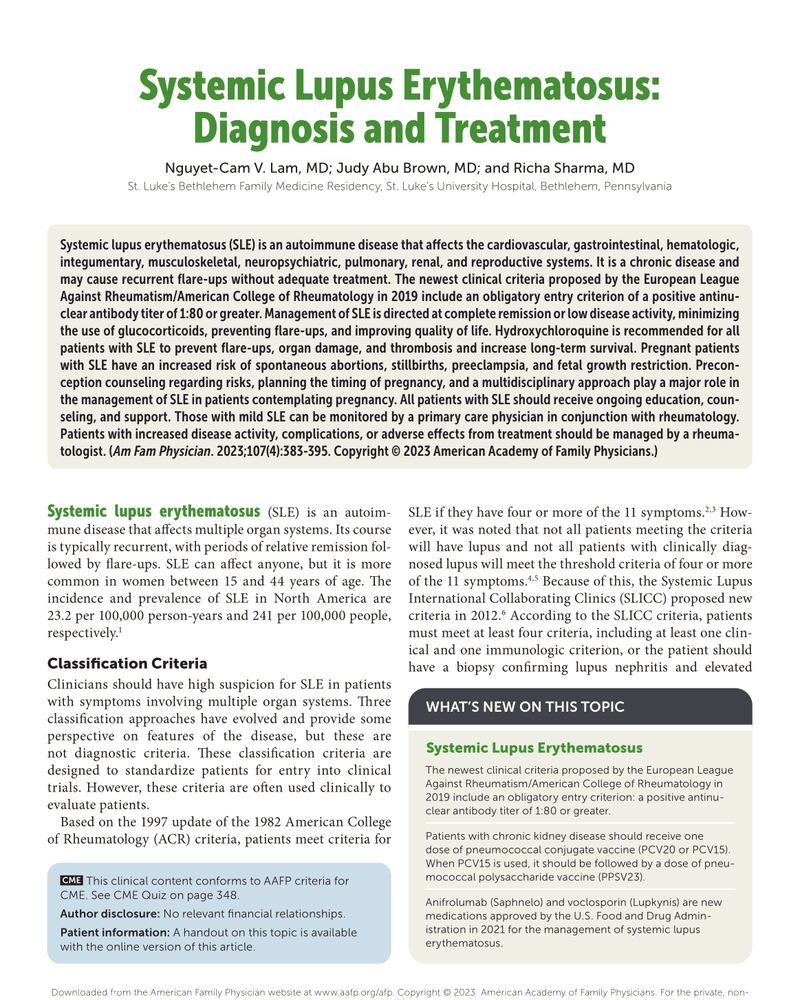
SYSTEMIC LUPUS ERYTHEMATOSUS: DIAGNOSIS AND TREATMENT
St. Luke's Bethlehem Family Medicine Residency, St. Luke's University Hospital
PDF202313 pages1010 KB
Systemic lupus erythematosus (SLE) is a chronic autoimmune disease that can lead to significant morbidity due to its effects on various organ systems. The document discusses the latest clinical criteria for diagnosis, including the importance of antinuclear antibody titers. It emphasizes the management of SLE to achieve remission or low disease activity, highlighting the role of hydroxychloroquine and the need for multidisciplinary care, especially in pregnant patients. The document also outlines specific management strategies for complications arising from SLE.
Sign in to open
Ask this resource
Answers use this document only.
Your first question is free.
More like this
Resources from the same specialty and type. Curated links will replace these when added.
Clinical Resources
Documents that extend or complement this resource.
Repurposing leflunomide and hydroxychloroquine to treat Sjögren's disease (RepurpSS-II): a randomised, double-blind, placebo-controlled, phase 2b trial
Same clinical topic · Rheumatology

EARLY TRAUMA AS THE ORIGIN OF CHRONIC INFLAMMATION: A PSYCHONEUROIMMUNOLOGICAL PERSPECTIVE
Same clinical topic · Rheumatology
IDIOPATHIC INFLAMMATORY MYOPATHIES
Same clinical topic · Rheumatology

MULTIFACTORIAL PATHOGENESIS OF RHEUMATOID ARTHRITIS
Same clinical topic · Rheumatology
SYSTEMIC LUPUS ERYTHEMATOSUS IN CRITICAL CARE: A SYSTEMATIC REVIEW OF ICU OUTCOMES AND MANAGEMENT
Same clinical topic · Rheumatology
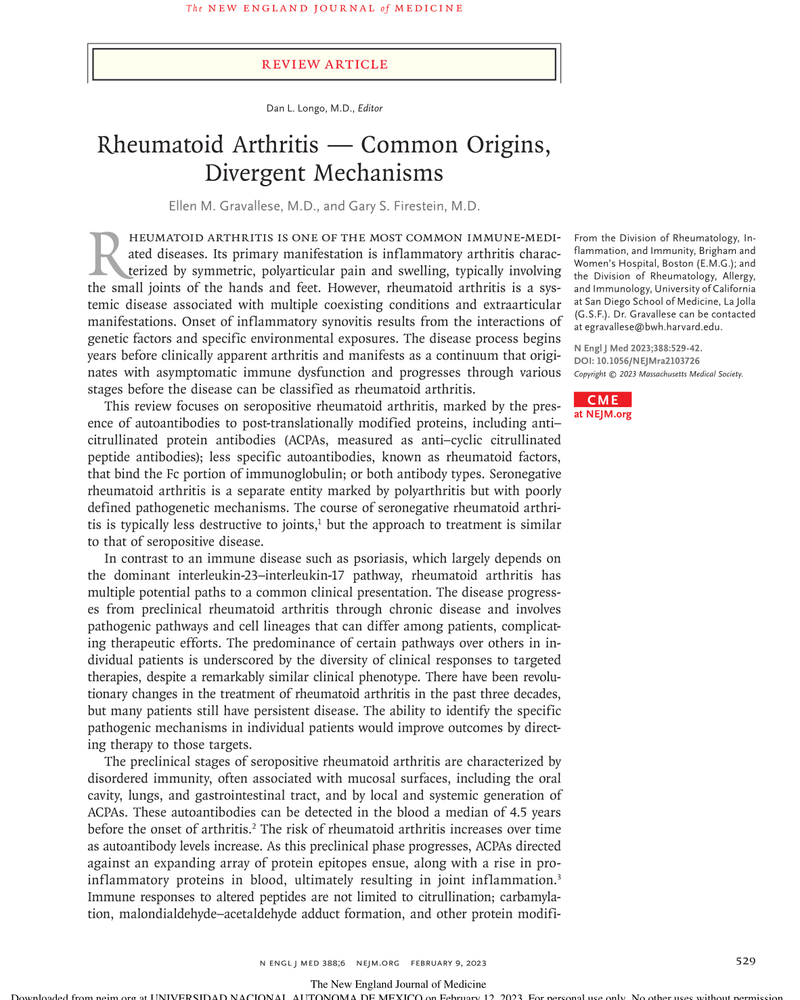
RHEUMATOID ARTHRITIS — COMMON ORIGINS, DIVERGENT MECHANISMS
Same clinical topic · Rheumatology
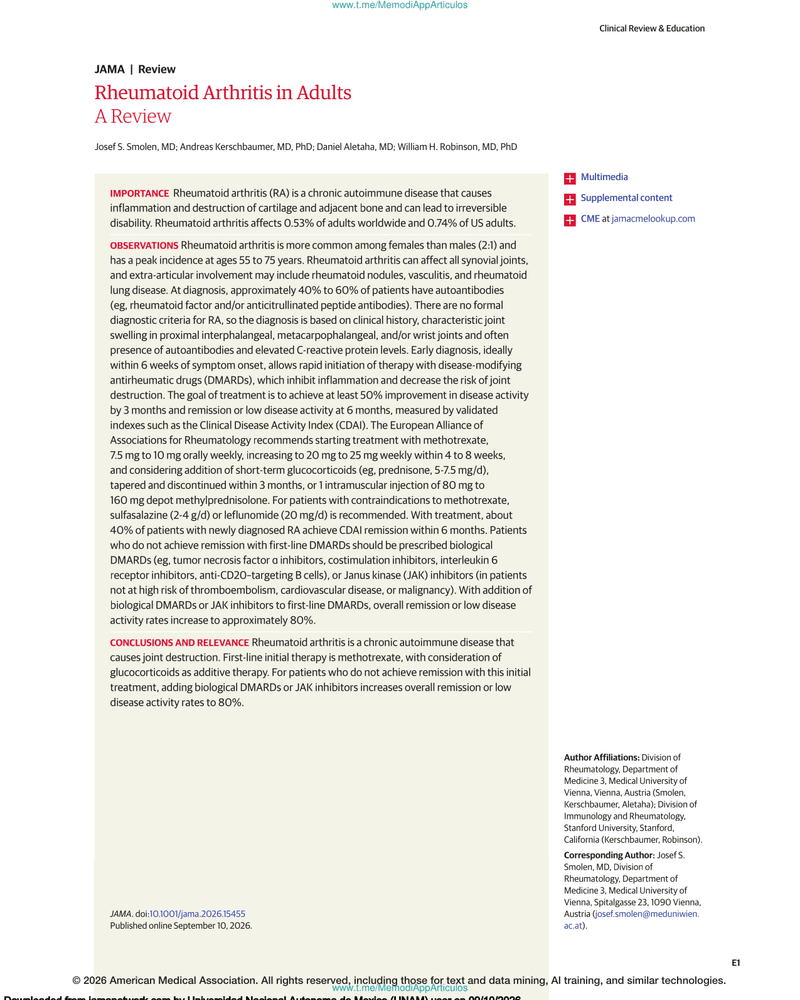
RHEUMATOID ARTHRITIS IN ADULTS
Same clinical topic · Rheumatology

BIOLOGICAL THERAPY IN SYSTEMIC LUPUS ERYTHEMATOSUS
Same clinical topic · Rheumatology
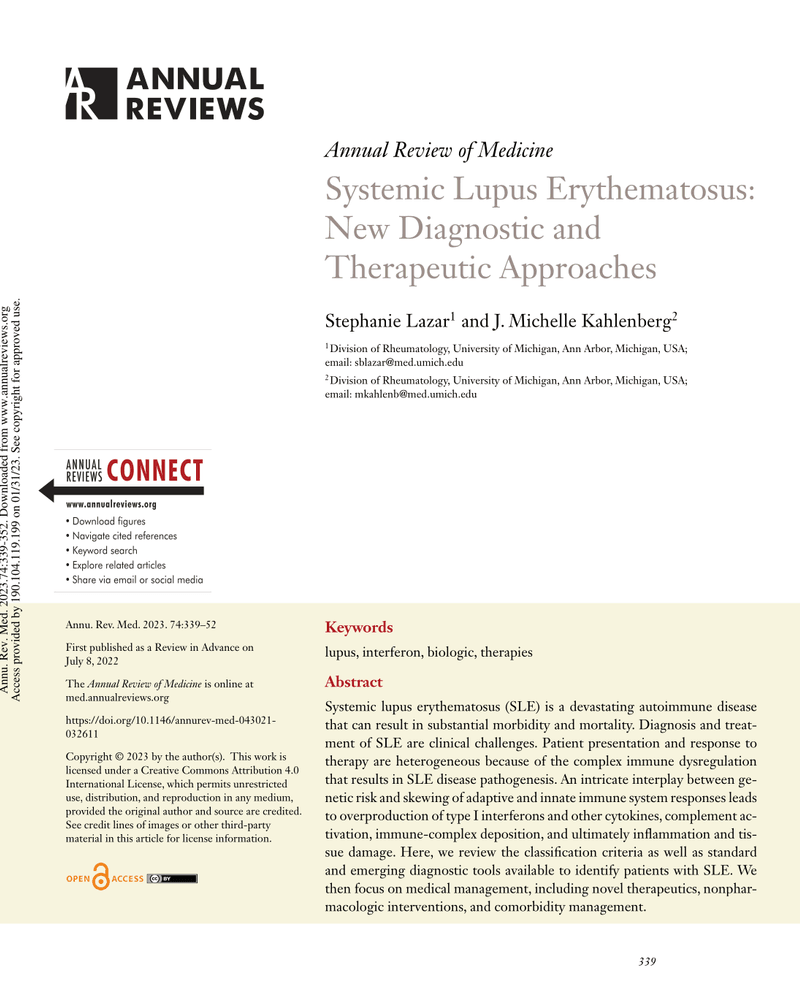
SYSTEMIC LUPUS ERYTHEMATOSUS: NEW DIAGNOSTIC AND THERAPEUTIC APPROACHES
Same clinical topic · Rheumatology