Please wait while we open this resource.


K

Clinical reviews
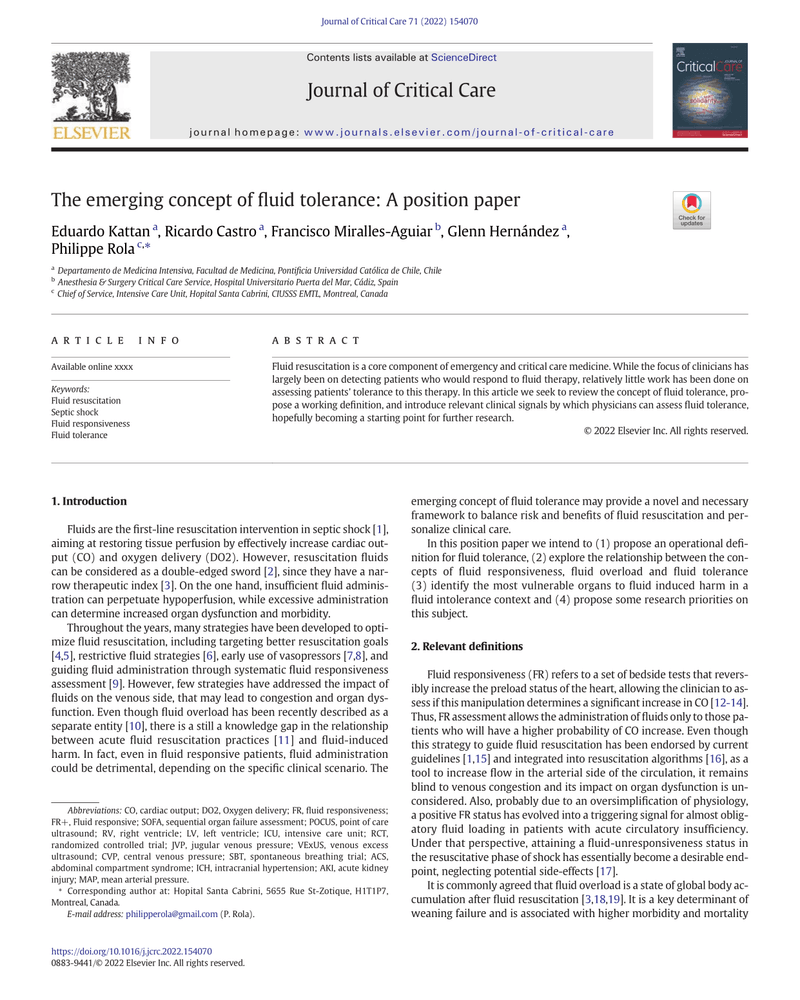
THE EMERGING CONCEPT OF FLUID TOLERANCE: A POSITION PAPER
Departamento de Medicina Intensiva, Facultad de Medicina, Pontificia Universidad Católica de Chile; Anesthesia & Surgery Critical Care Service, Hospital Universitario Puerta del Mar, Cádiz, Spain; Chief of Service, Intensive Care Unit, Hopital Santa
PDF20226 pages267 KB
Fluid resuscitation is essential in managing septic shock, aiming to restore tissue perfusion. However, the balance between insufficient and excessive fluid administration is critical, as both can lead to complications. This paper seeks to define fluid tolerance and highlight clinical indicators that can assist physicians in evaluating patients' responses to fluid therapy, paving the way for future research in this area.
Sign in to open
Ask this resource
Answers use this document only.
Your first question is free.
More like this
Resources from the same specialty and type. Curated links will replace these when added.
Clinical Resources
Documents that extend or complement this resource.
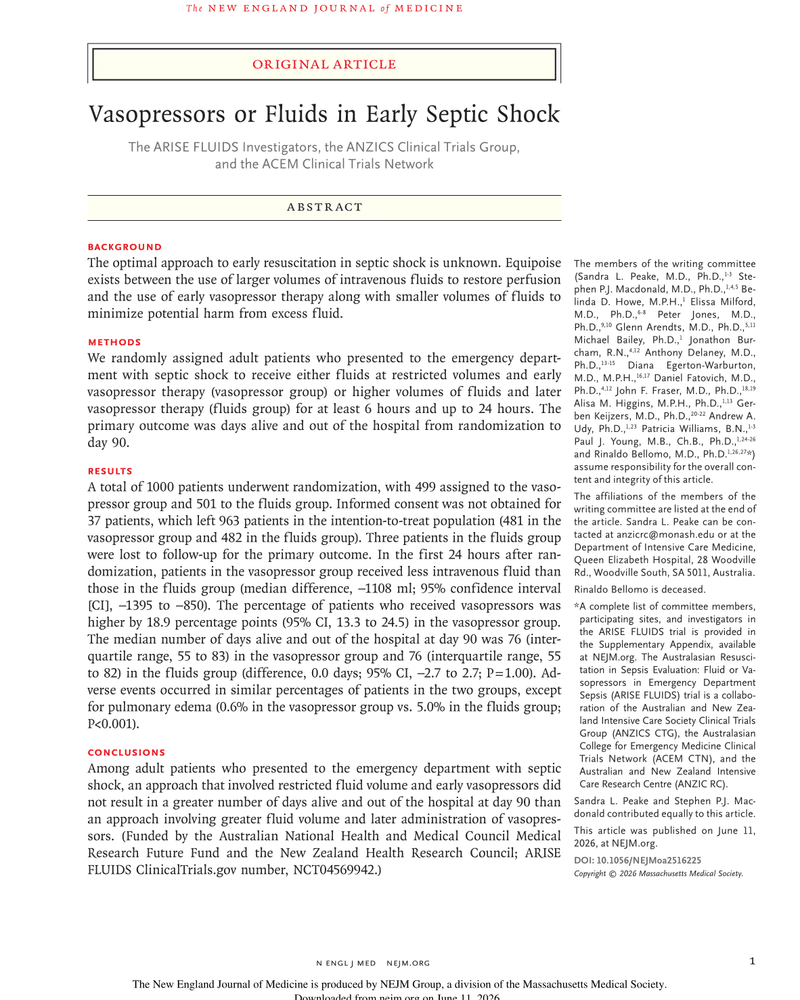
VASOPRESSORS OR FLUIDS IN EARLY SEPTIC SHOCK
Same clinical topic · Critical Care Medicine
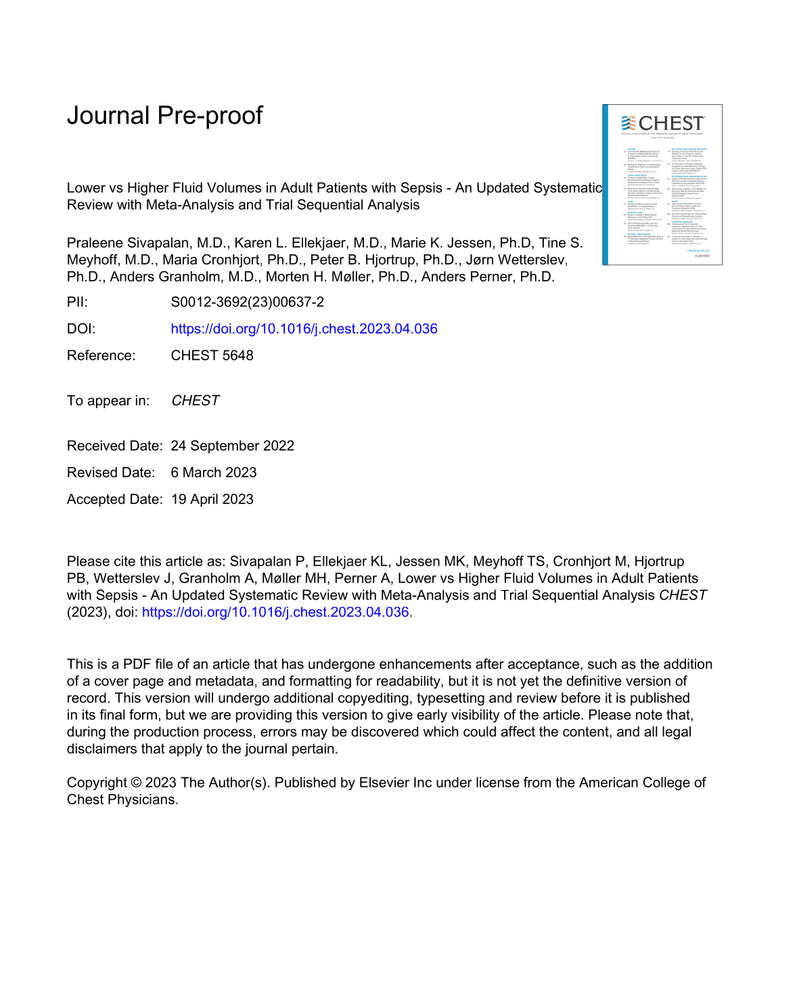
LOWER VS HIGHER FLUID VOLUMES IN ADULT PATIENTS WITH SEPSIS - AN UPDATED SYSTEMATIC REVIEW WITH META-ANALYSIS AND TRIAL SEQUENTIAL ANALYSIS
Same clinical topic · Critical Care Medicine
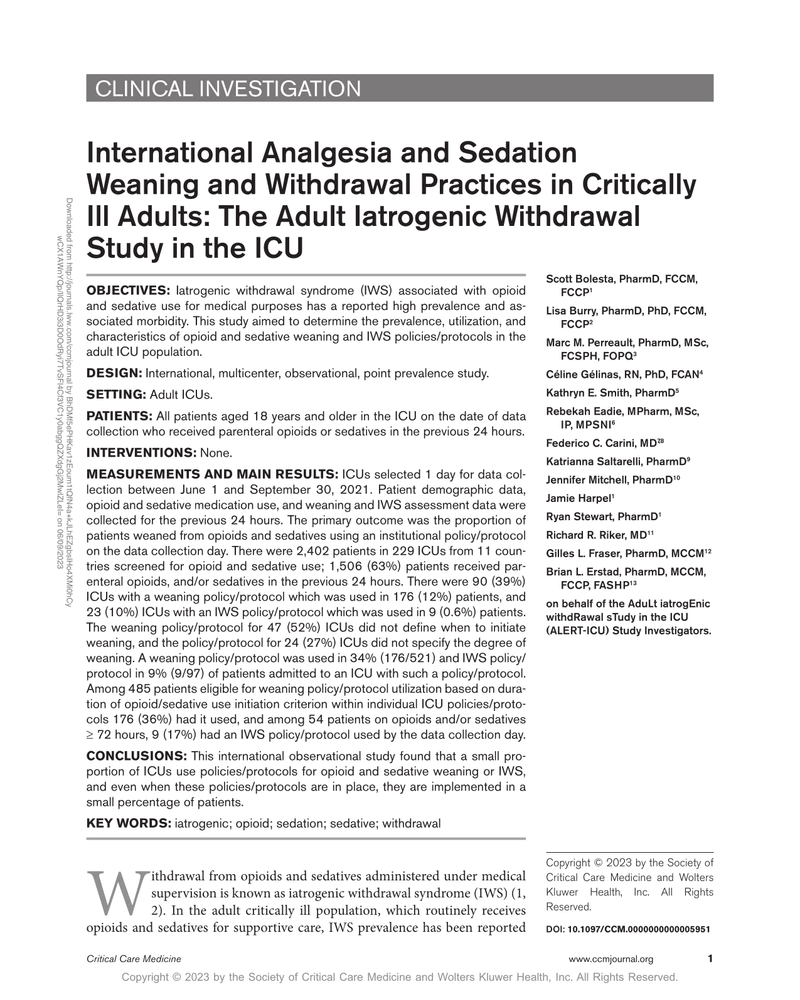
INTERNATIONAL ANALGESIA AND SEDATION WEANING AND WITHDRAWAL PRACTICES IN CRITICALLY ILL ADULTS: THE ADULT IATROGENIC WITHDRAWAL STUDY IN THE ICU
Same clinical topic · Critical Care Medicine
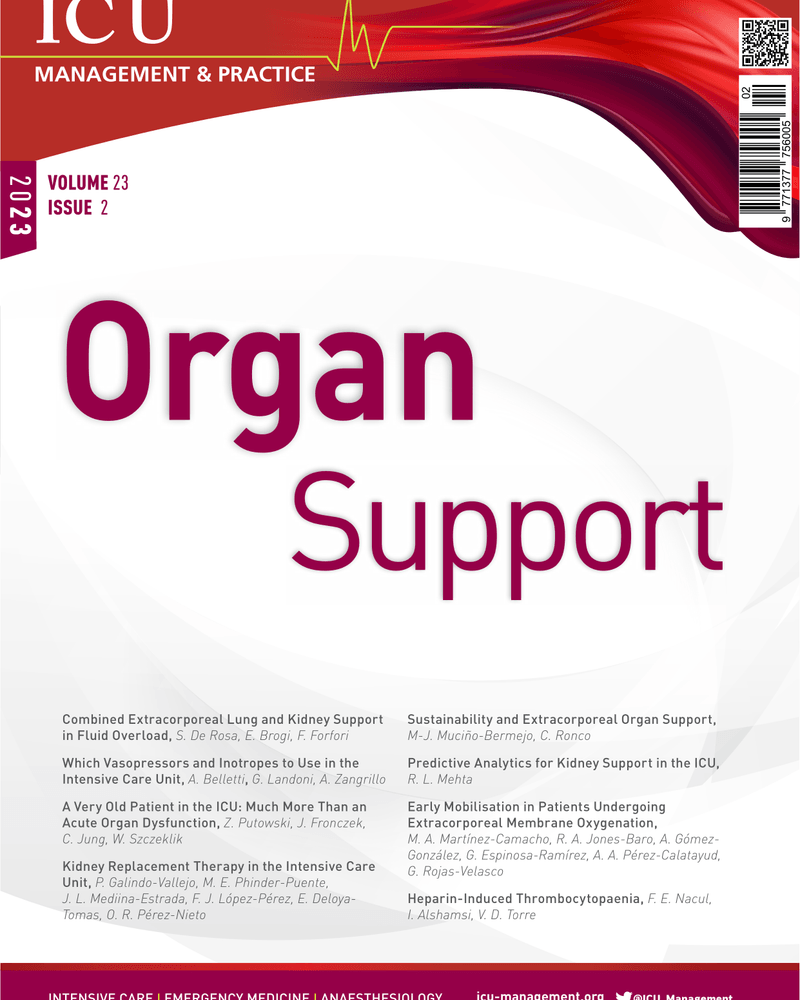
HEPARIN-INDUCED THROMBOCYTOPAENIA
Same clinical topic · Critical Care Medicine
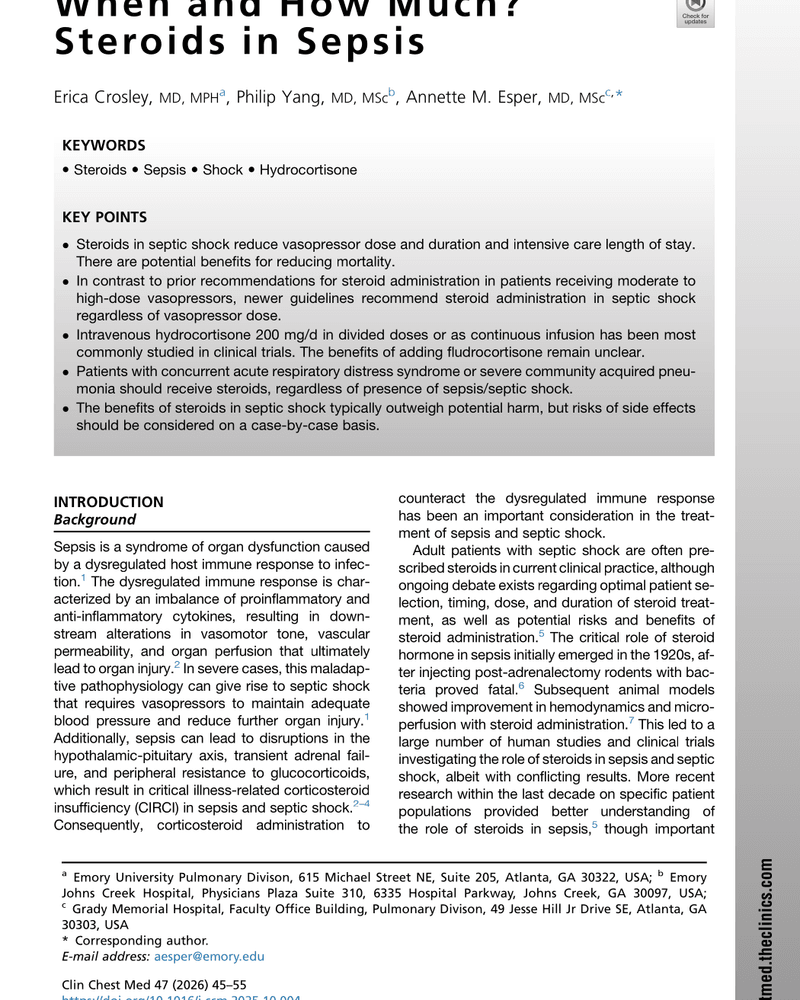
WHEN AND HOW MUCH? STEROIDS IN SEPSIS
Same clinical topic · Critical Care Medicine
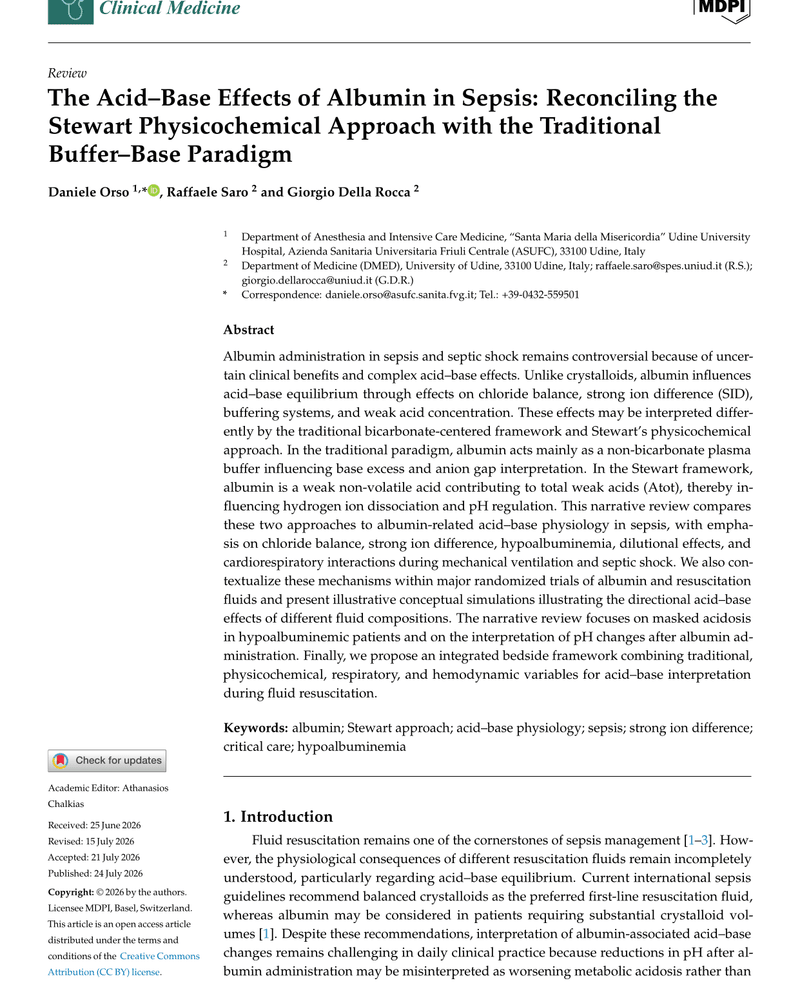
THE ACID-BASE EFFECTS OF ALBUMIN IN SEPSIS: RECONCILING THE STEWART PHYSICOCHEMICAL APPROACH WITH THE TRADITIONAL BUFFER-BASE PARADIGM
Same clinical topic · Critical Care Medicine
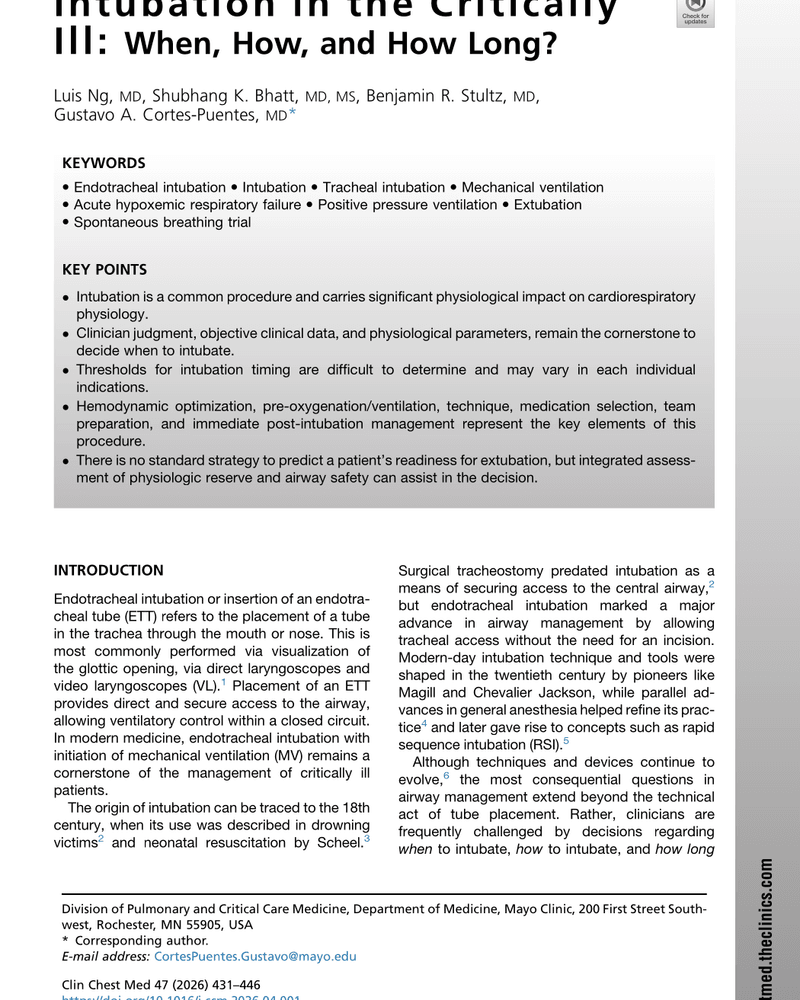
Intubation in the Critically Ill: When, How, and How Long?
Same clinical topic · Critical Care Medicine
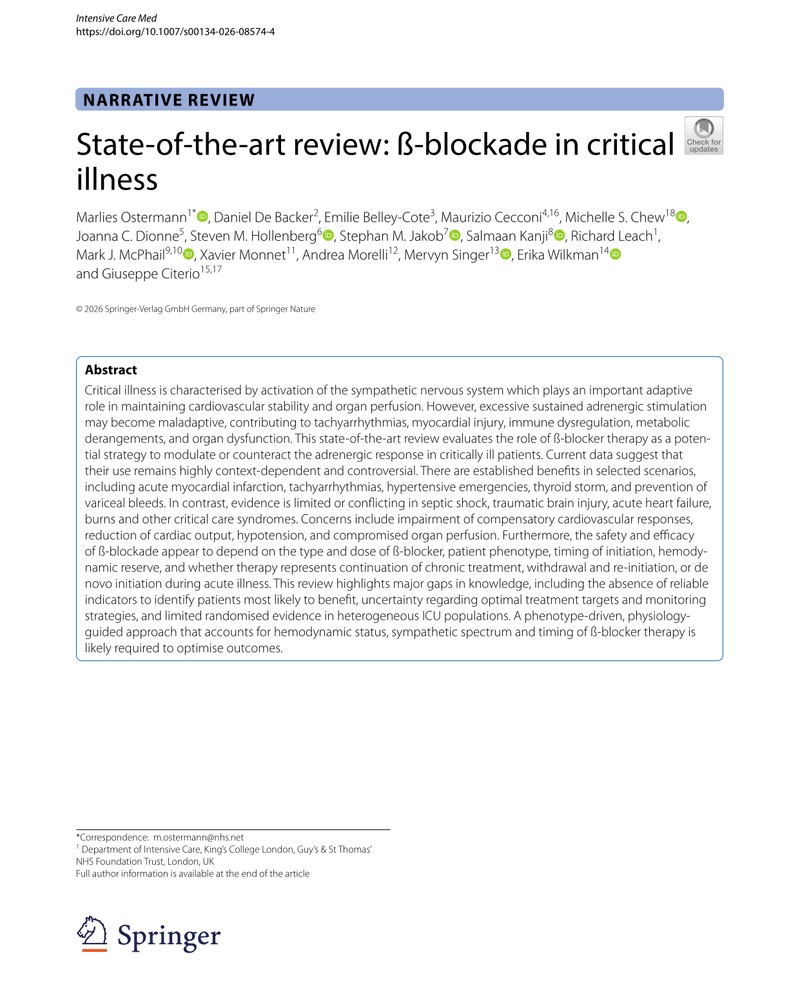
STATE - OF - THE - ART REVIEW: ß - BLOCKADE IN CRITICAL ILLNESS
Same clinical topic · Critical Care Medicine
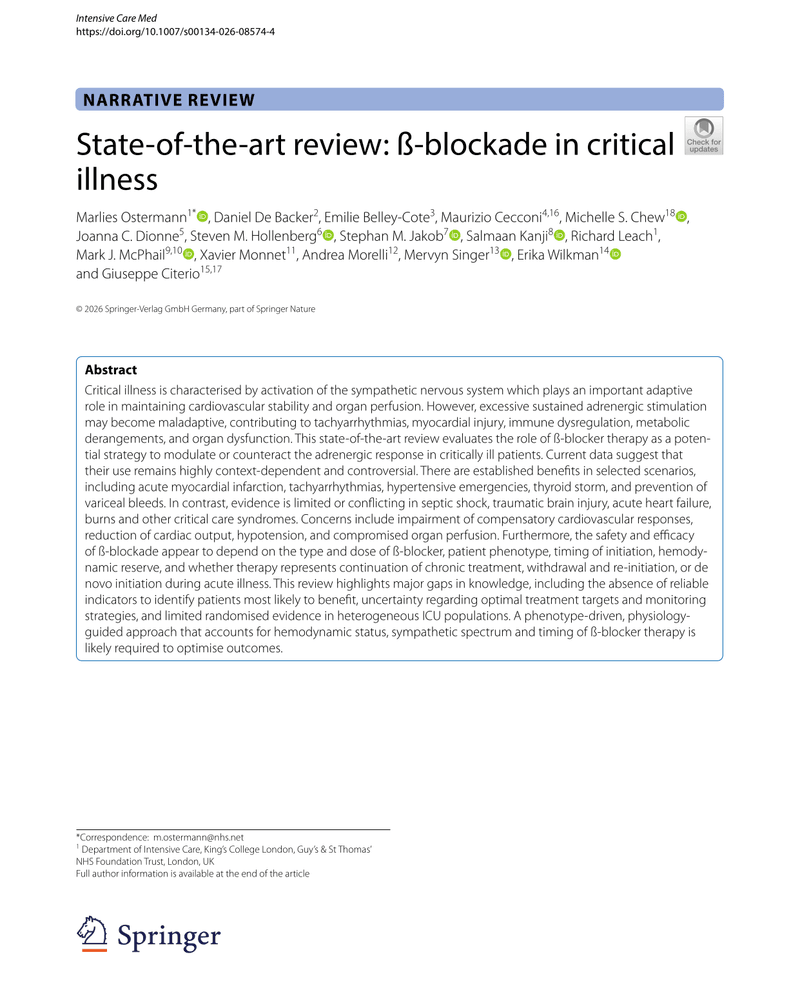
STATE - OF - THE - ART REVIEW: ß - BLOCKADE IN CRITICAL ILLNESS
Same clinical topic · Critical Care Medicine