Please wait while we open this resource.


K

Clinical reviews
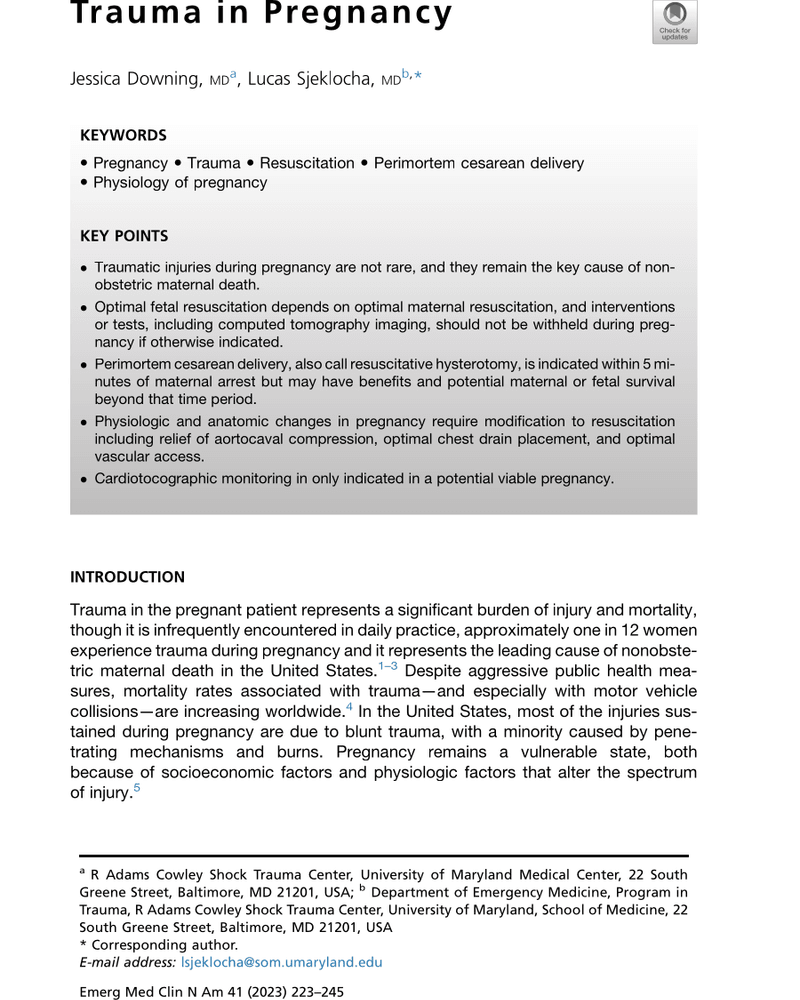
TRAUMA IN PREGNANCY
R Adams Cowley Shock Trauma Center, University of Maryland Medical Center
PDF23 pages726 KB
Trauma in pregnant patients is a leading cause of non-obstetric maternal death, with approximately one in 12 women experiencing trauma during pregnancy. The document emphasizes the importance of optimal maternal resuscitation for fetal survival and outlines specific interventions and considerations for managing trauma in pregnant patients. It also addresses the unique physiological and anatomical changes that impact treatment protocols.
Sign in to open
Ask this resource
Answers use this document only.
Your first question is free.
More like this
Resources from the same specialty and type. Curated links will replace these when added.
Clinical Resources
Documents that extend or complement this resource.
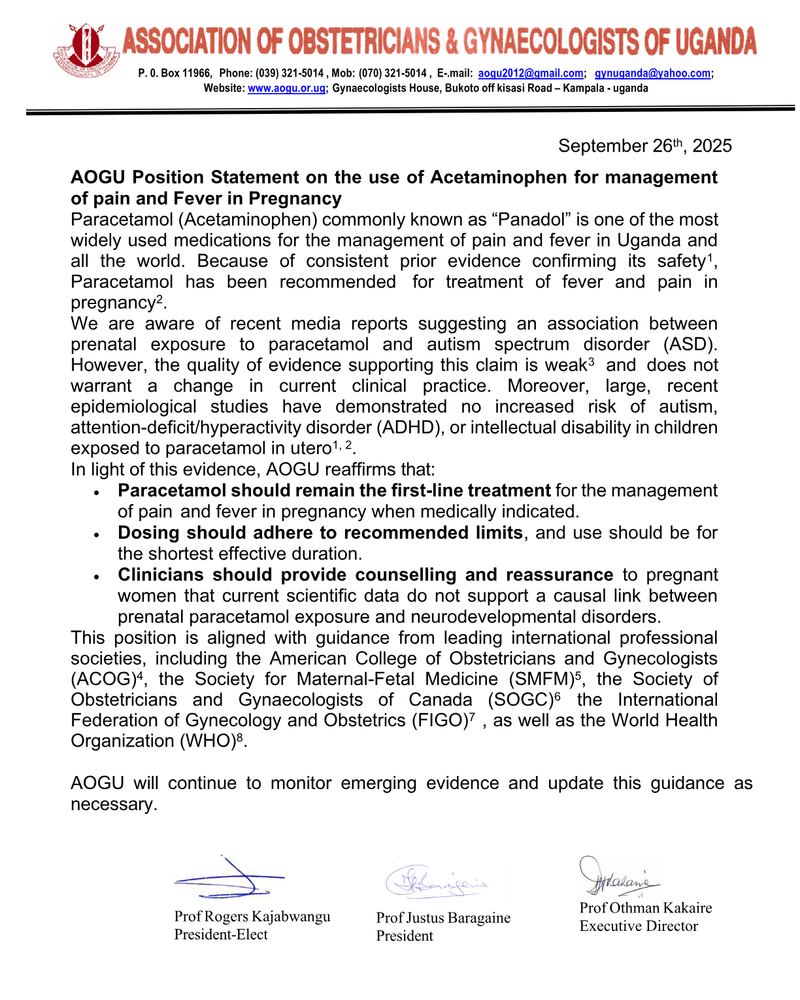
AOGU Position Statement on Acetaminophen Use in Pregnancy
Same clinical topic · Obstetrics and Gynecology
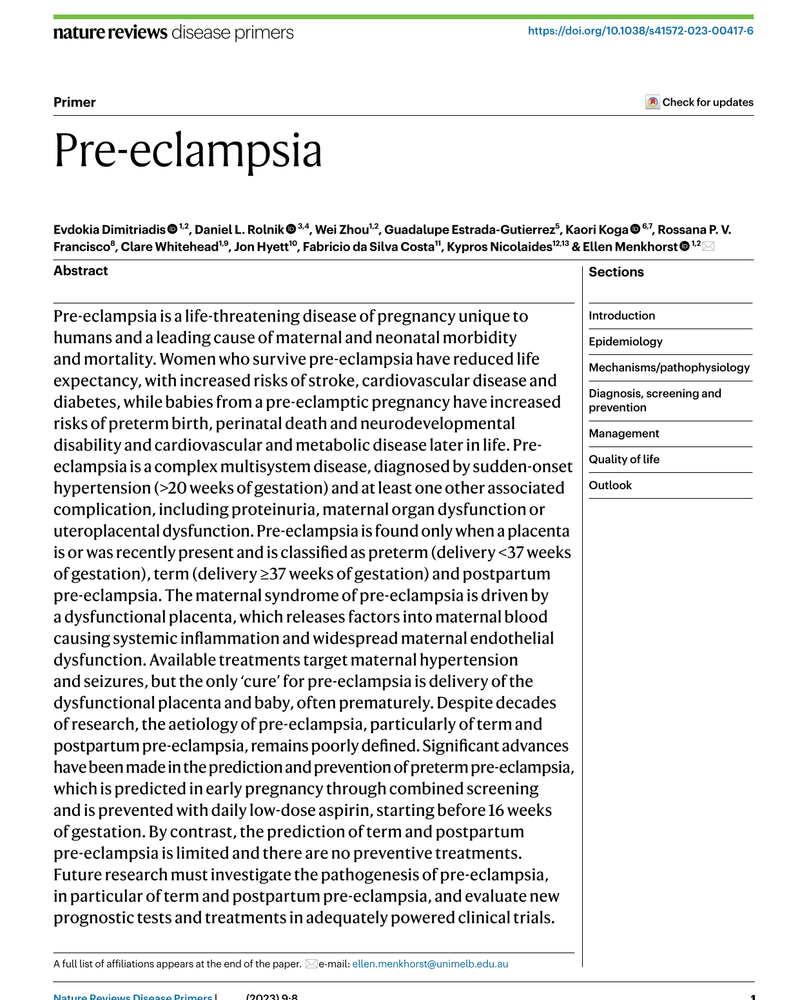
PRE-ECLAMPSIA
Same clinical topic · Obstetrics and Gynecology
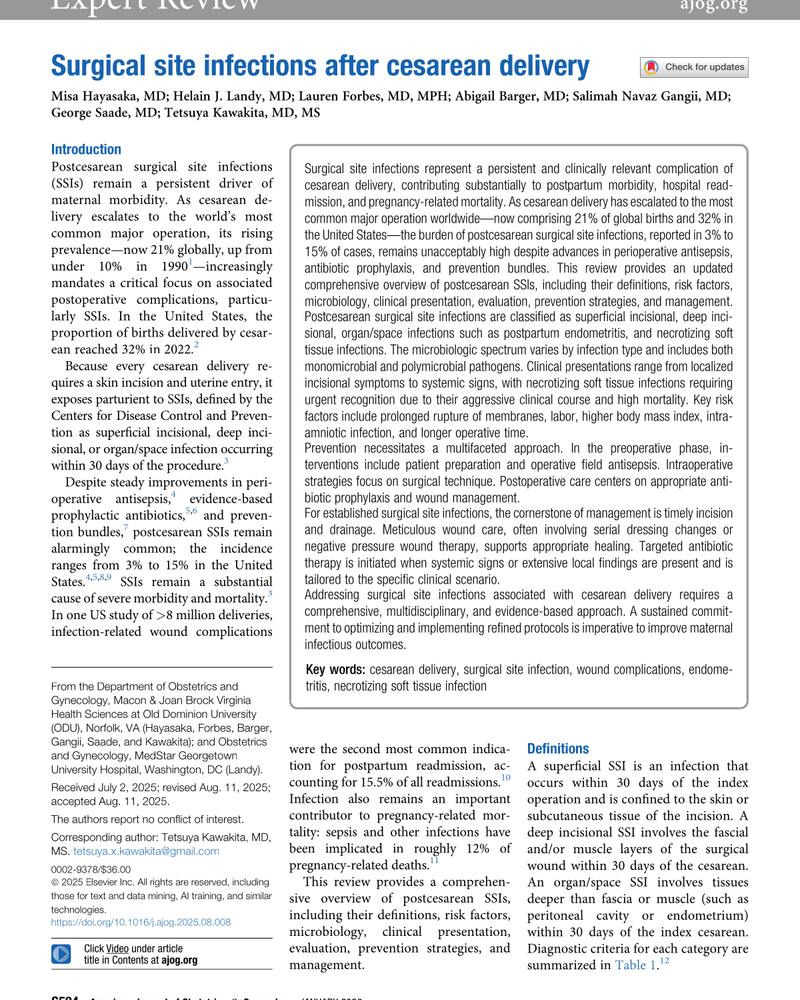
SURGICAL SITE INFECTIONS AFTER CESAREAN DELIVERY
Same clinical topic · Obstetrics and Gynecology
PHARMACOLOGICAL MANAGEMENT OF OBSTETRIC HAEMORRHAGE: AN EVIDENCE-BASED APPROACH
Same clinical topic · Obstetrics and Gynecology
ASTHMA IN PREGNANCY: CONTEMPORARY MANAGEMENT
Same clinical topic · Obstetrics and Gynecology
MANAGEMENT OF POSTPARTUM HYPERTENSIVE DISORDERS OF PREGNANCY
Same clinical topic · Obstetrics and Gynecology
THE DIAGNOSIS AND MANAGEMENT OF EXTRAUTERINE AND UTERINE ECTOPIC PREGNANCY
Same clinical topic · Obstetrics and Gynecology
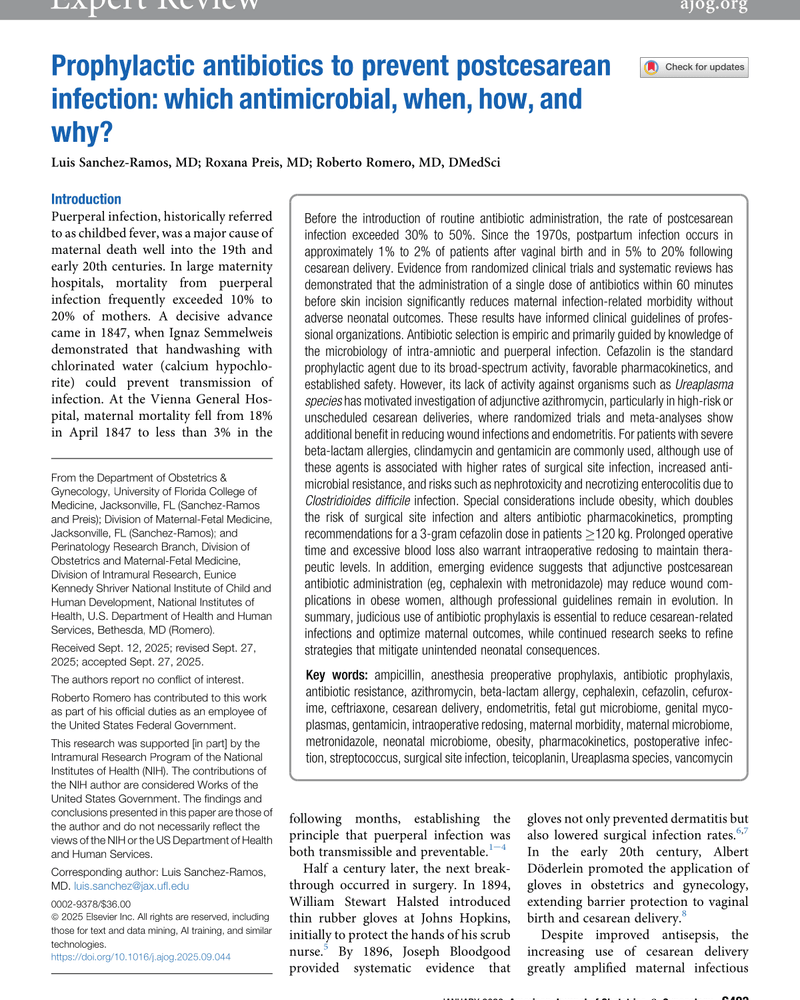
PROPHYLACTIC ANTIBIOTICS TO PREVENT POSTCESAREAN INFECTION: WHY? WHICH ANTIMICROBIAL, WHEN, HOW
Same clinical topic · Obstetrics and Gynecology
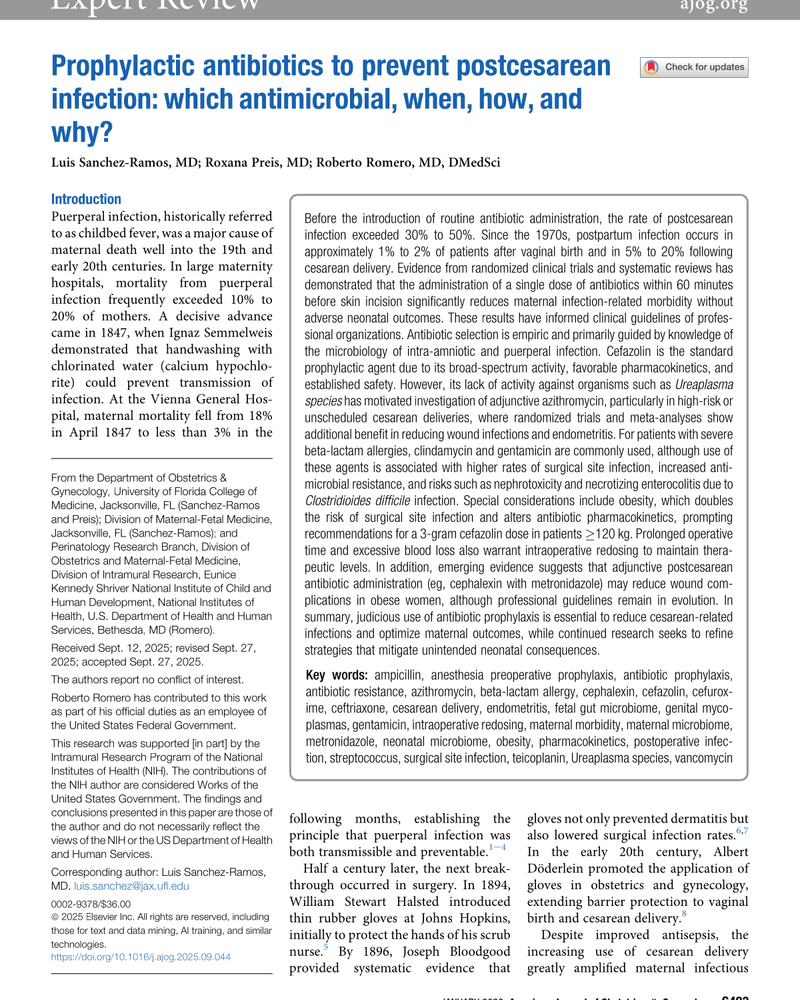
PROPHYLACTIC ANTIBIOTICS TO PREVENT POSTCESAREAN INFECTION: WHY? WHICH ANTIMICROBIAL, WHEN, HOW
Same clinical topic · Obstetrics and Gynecology