Please wait while we open this resource.


K

Clinical reviews
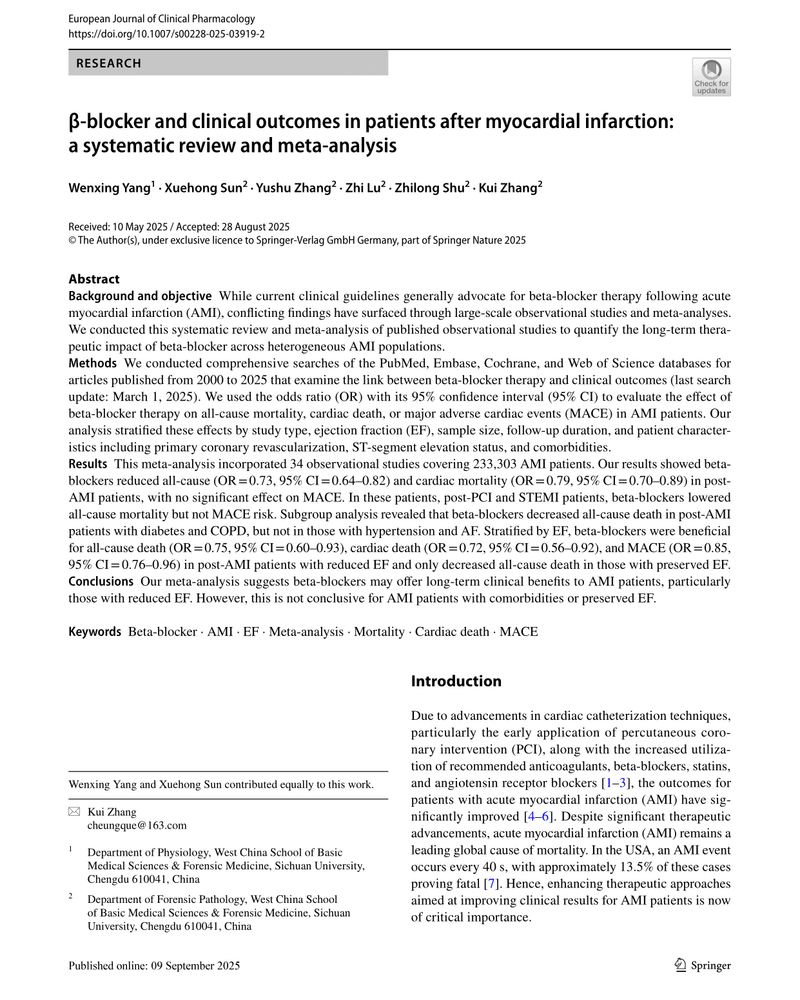
β‑BLOCKER AND CLINICAL OUTCOMES IN PATIENTS AFTER MYOCARDIAL INFARCTION: A SYSTEMATIC REVIEW AND META‑ANALYSIS
Wenxing Yang, Xuehong Sun, Yushu Zhang, Zhi Lu, Zhilong Shu, Kui Zhang
PDF202511 pages1.1 MB
The research investigates the conflicting findings regarding beta-blocker therapy following acute myocardial infarction (AMI) as highlighted in various large-scale observational studies. By conducting a systematic review and meta-analysis, the authors aimed to quantify the long-term effects of beta-blockers across diverse AMI populations. The analysis included a comprehensive search of multiple databases for relevant studies published from 2000 to 2025, focusing on clinical outcomes such as mortality and major adverse cardiac events. The findings suggest that beta-blockers may reduce all-cause and cardiac mortality in post-AMI patients, although they do not significantly affect major adverse cardiac events.
Sign in to open
Ask this resource
Answers use this document only.
Your first question is free.
More like this
Resources from the same specialty and type. Curated links will replace these when added.
Clinical Resources
Documents that extend or complement this resource.
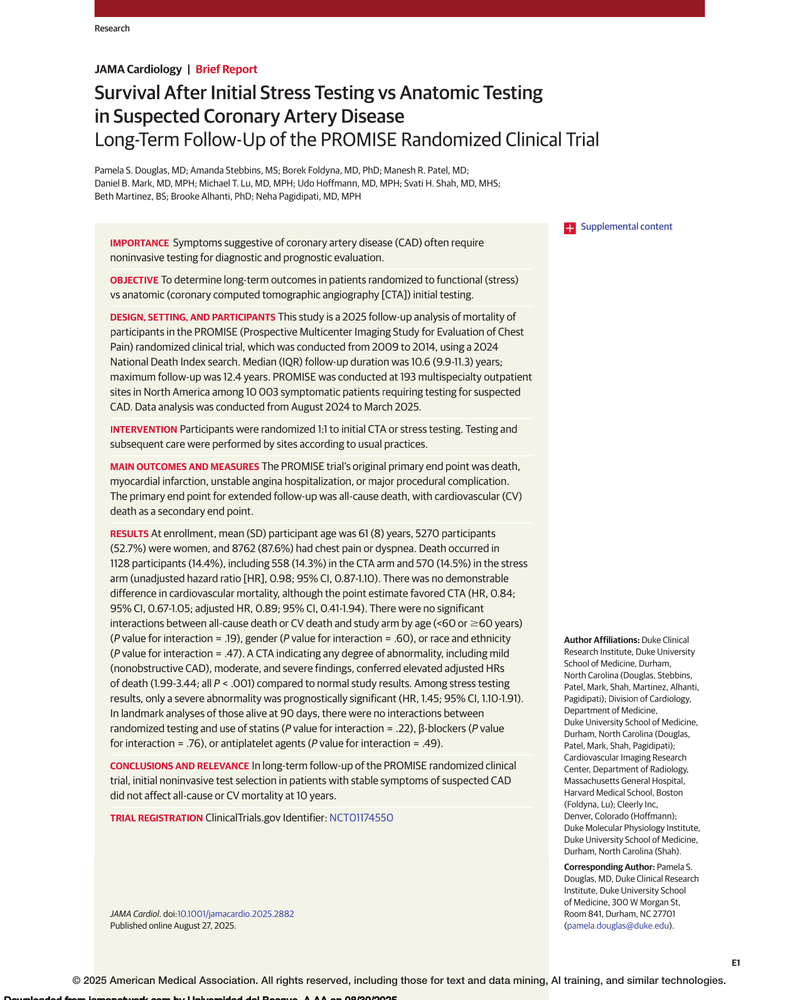
SURVIVAL AFTER INITIAL STRESS TESTING VS ANATOMIC TESTING IN SUSPECTED CORONARY ARTERY DISEASE
Same clinical topic · Cardiology
PRACTICAL CARDIO-ONCOLOGY
Same clinical topic · Cardiology
OXFORD CARDIOLOGY LIBRARY: Hypertension
Same clinical topic · Cardiology
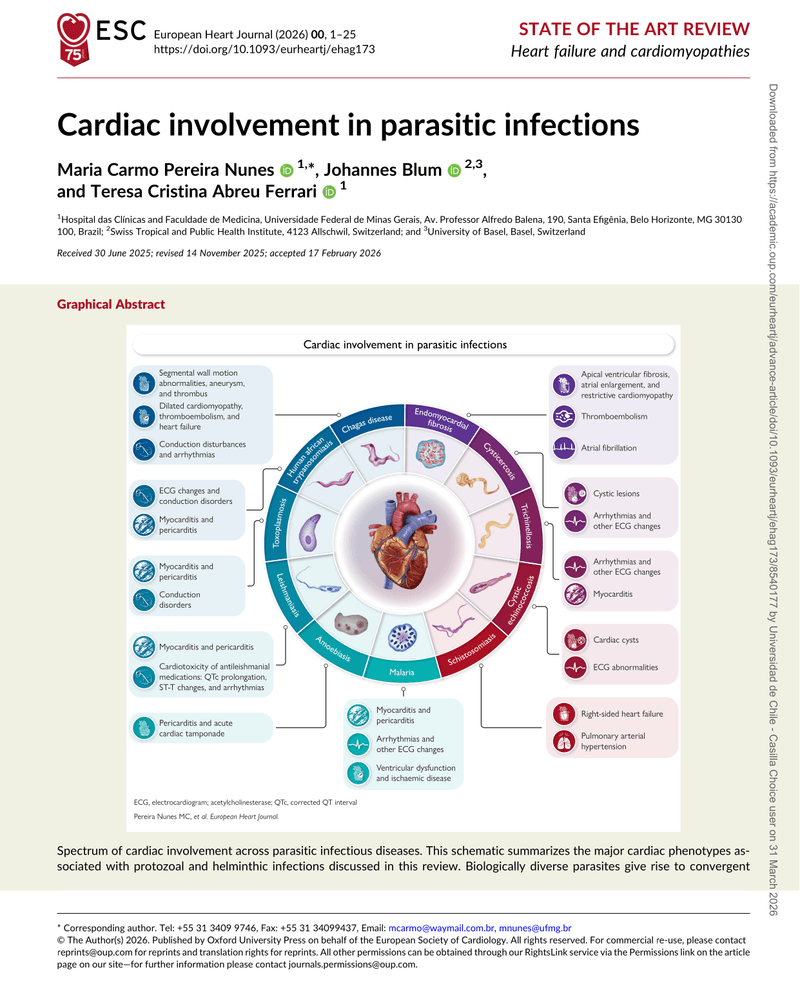
CARDIAC INVOLVEMENT IN PARASITIC INFECTIONS
Same clinical topic · Cardiology
The Athlete’s ECG
Same clinical topic · Cardiology
Antigen carbohydrate 125 as a biomarker in heart failure: a narrative review
Same clinical topic · Cardiology
Current ECG Aspects of Interatrial Block
Same clinical topic · Cardiology
Arrhythmic mitral valve prolapse in 2023: Evidence-based update
Same clinical topic · Cardiology
INTERPRETING THE NORMAL PACEMAKER
Same clinical topic · Cardiology