Please wait while we open this resource.


K

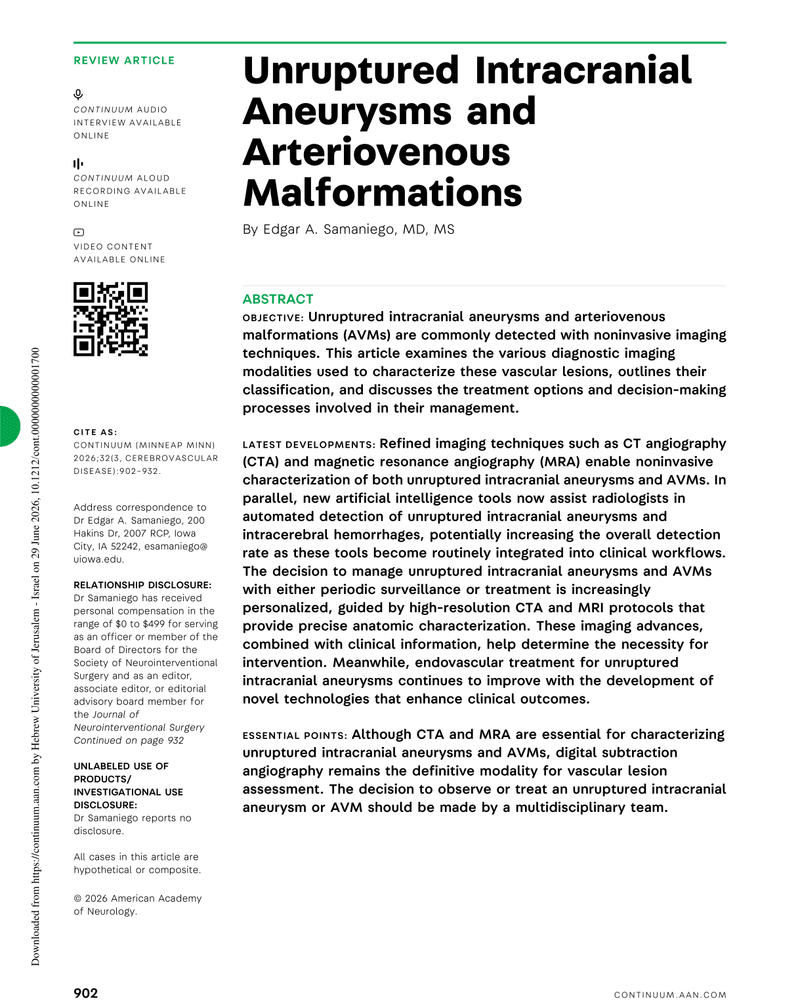
Clinical reviews
ETHNIC AND GEOGRAPHIC DISPARITIES IN INTRACRANIAL ANEURYSMS
Institute
PDF31 pages1.8 MB
Unruptured intracranial aneurysms and AVMs are commonly detected with noninvasive imaging techniques. The article highlights the latest developments in imaging, including refined techniques such as CT angiography and magnetic resonance angiography, which enable better characterization of these vascular lesions. Additionally, it discusses the integration of artificial intelligence tools in clinical workflows to assist radiologists in the automated detection of these conditions, ultimately aiding in personalized management strategies.
Sign in to open
Ask this resource
Answers use this document only.
Your first question is free.
More like this
Resources from the same specialty and type. Curated links will replace these when added.
Clinical Resources
Documents that extend or complement this resource.
NEUROTRAUMA AND INTRACRANIAL PRESSURE MANAGEMENT
Same clinical topic · Neurosurgery
MANAGEMENT OF MODERATE TO SEVERE TRAUMATIC BRAIN INJURY: AN UPDATE FOR THE INTENSIVIST
Same clinical topic · Neurosurgery
THE ROLE OF CATECHOLAMINES IN ANEURYSMAL SUBARACHNOID HEMORRHAGE: A NARRATIVE REVIEW
Same clinical topic · Neurosurgery
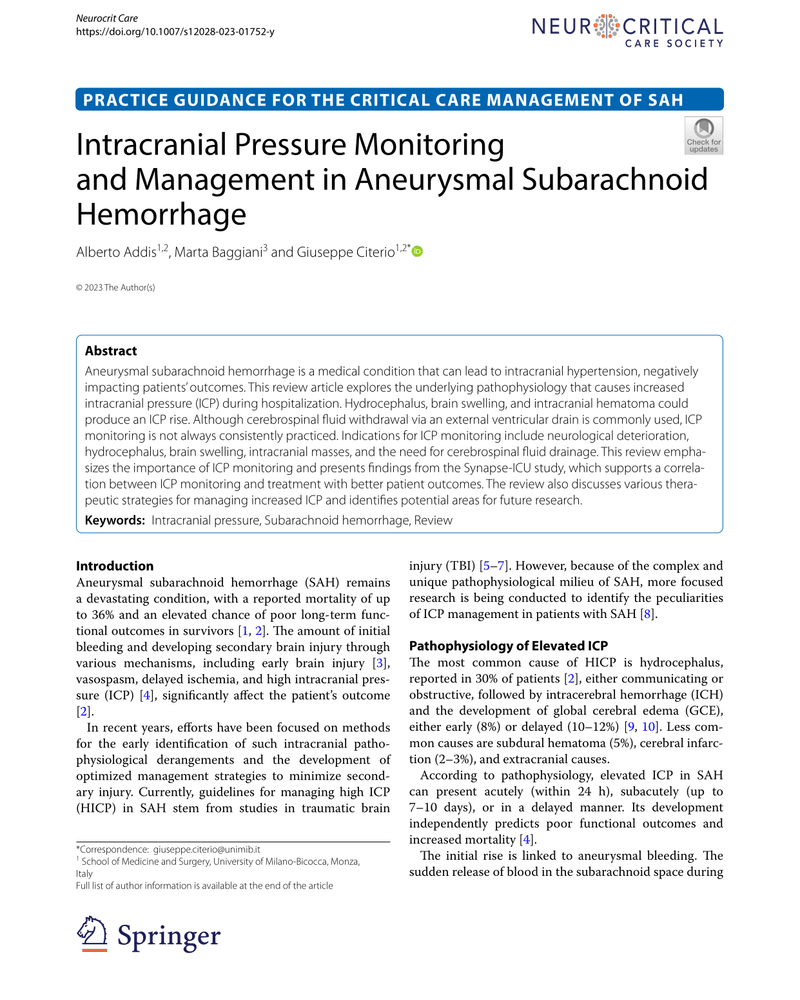
PRACTICE GUIDANCE FOR THE CRITICAL CARE MANAGEMENT OF SAH: Intracranial Pressure Monitoring and Management in Aneurysmal Subarachnoid Hemorrhage
Same clinical topic · Neurosurgery
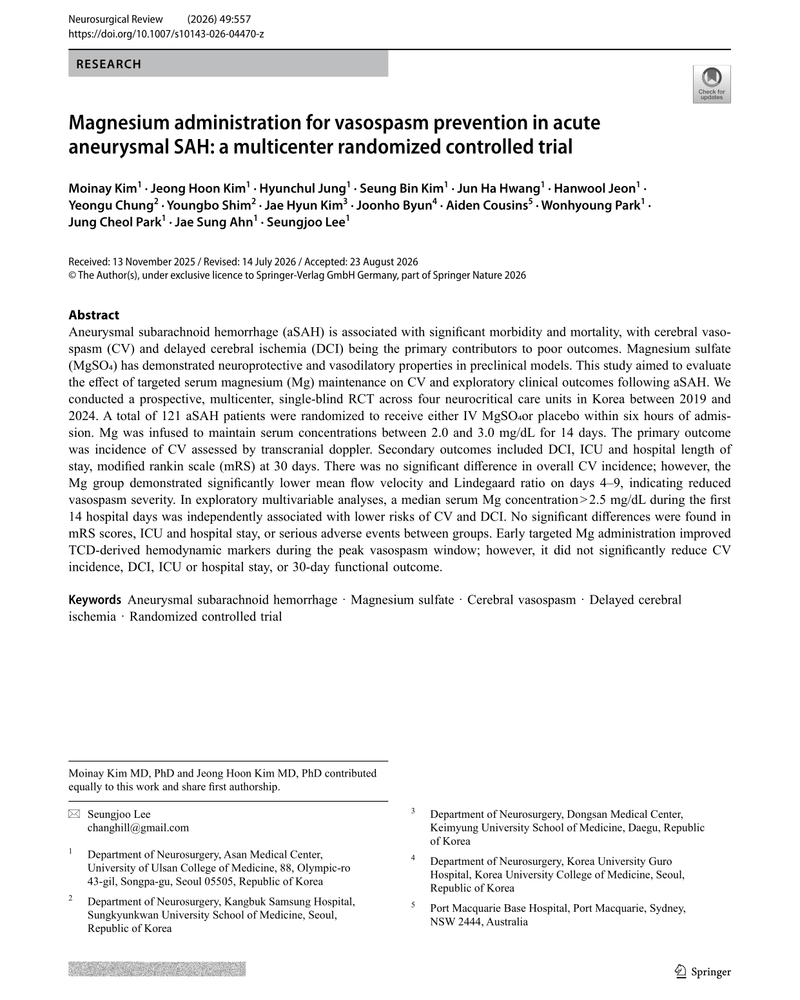
MAGNESIUM ADMINISTRATION FOR VASOSPASM PREVENTION IN ACUTE ANEURYSMAL SAH: A MULTICENTER RANDOMIZED CONTROLLED TRIAL
Same clinical topic · Neurosurgery
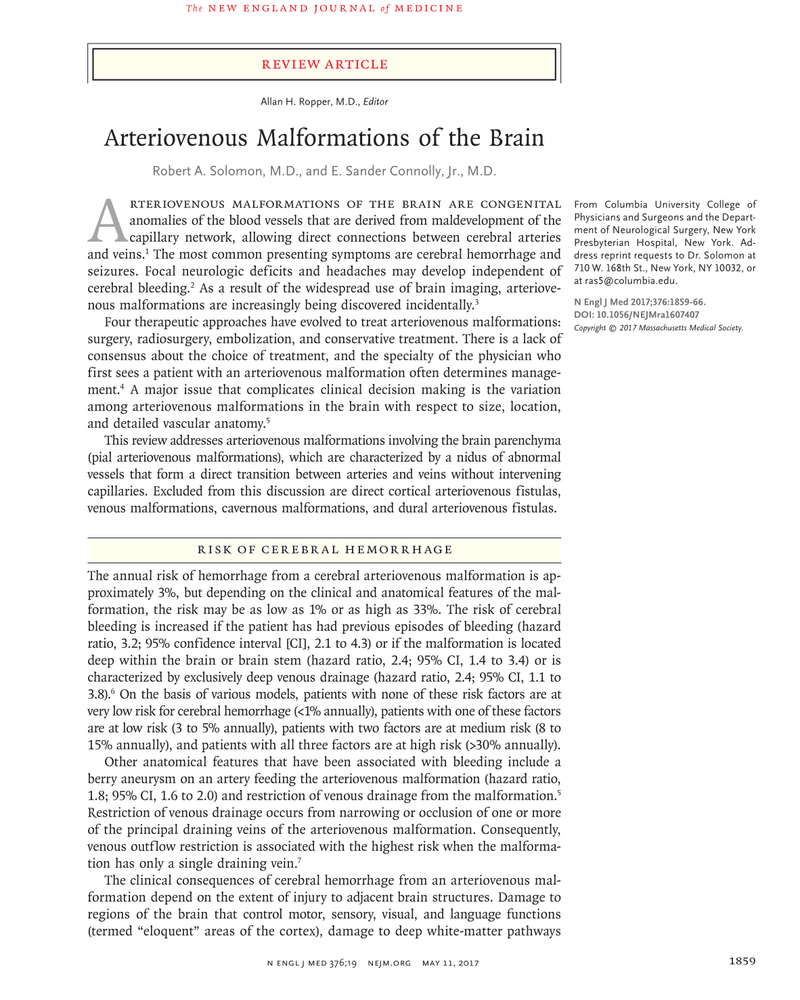
ARTERIOVENOUS MALFORMATIONS OF THE BRAIN
Same clinical topic · Neurosurgery
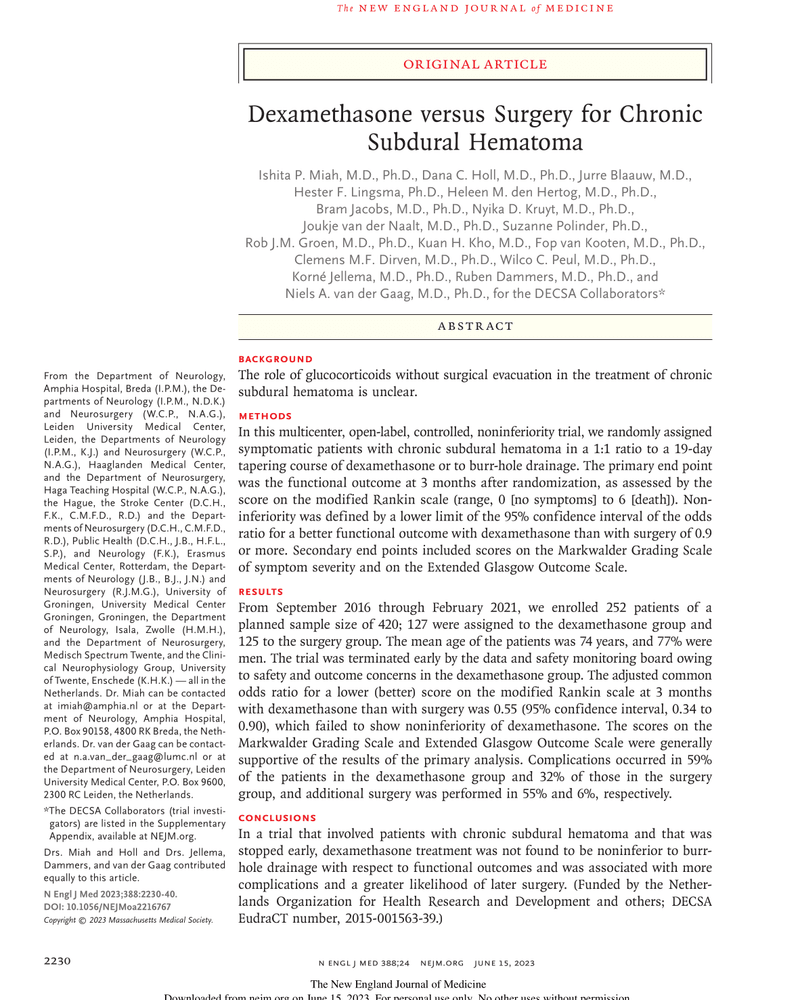
DEXAMETHASONE VERSUS SURGERY FOR CHRONIC SUBDURAL HEMATOMA
Same clinical topic · Neurosurgery
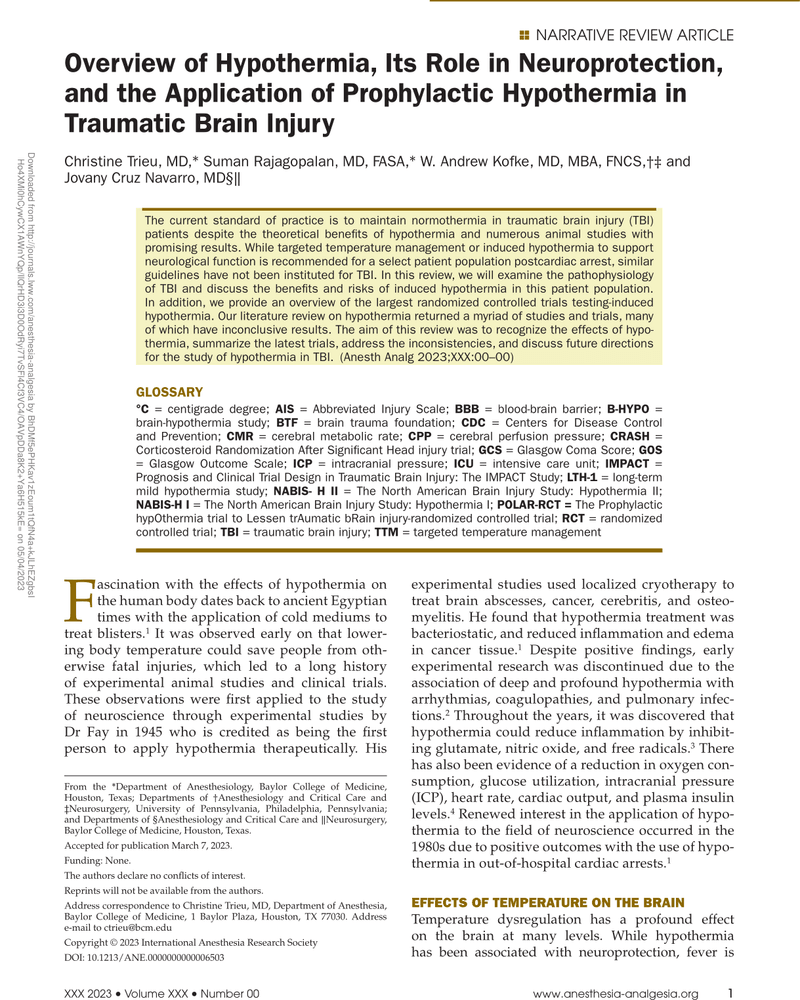
OVERVIEW OF HYPOTHERMIA, ITS ROLE IN NEUROPROTECTION, AND THE APPLICATION OF PROPHYLACTIC HYPOTHERMIA IN TRAUMATIC BRAIN INJURY
Same clinical topic · Neurosurgery
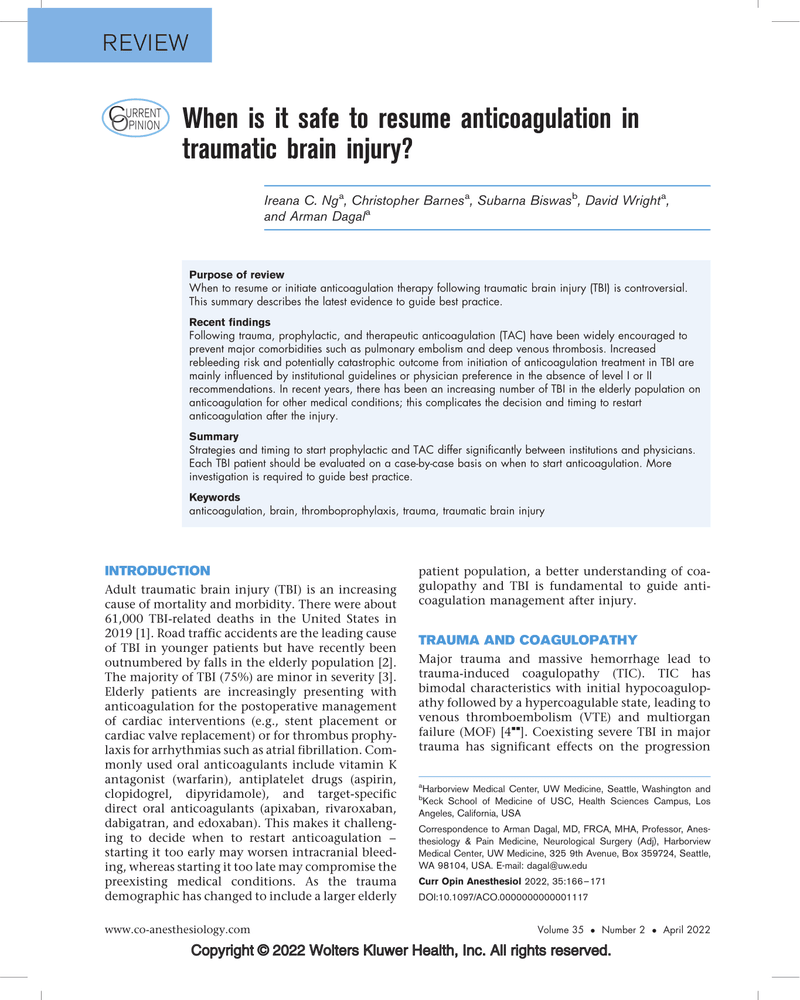
WHEN IS IT SAFE TO RESUME ANTICOAGULATION IN TRAUMATIC BRAIN INJURY?
Same clinical topic · Neurosurgery