Please wait while we open this resource.


K


Clinical reviews
HEMOSTATIC TREATMENTS FOR ANTICOAGULATED PATIENTS WITH INTRACRANIAL HEMORRHAGE
William David Freeman, MD, Jeffrey I Weitz, MD
PDF202638 pages409 KB
Intracranial hemorrhage, which includes various types of bleeding within the skull, poses significant risks for patients undergoing anticoagulant therapy. The document provides an in-depth review of treatment options, focusing on prohemostatic agents that can mitigate bleeding. It also discusses the implications of anticoagulation on patient outcomes, including the potential for increased hematoma growth and neurologic deterioration. The content is regularly updated to reflect new evidence and clinical practices.
Sign in to open
Ask this resource
Answers use this document only.
Your first question is free.
More like this
Resources from the same specialty and type. Curated links will replace these when added.
Clinical Resources
Documents that extend or complement this resource.

Traumatic Brain Injury
Same clinical topic · Neurology

Classification of the Epilepsies
Same clinical topic · Neurology

Neuroimaging Patterns of Intracranial Infections: Meningitis, Cerebritis, and Their Complications
Same clinical topic · Neurology
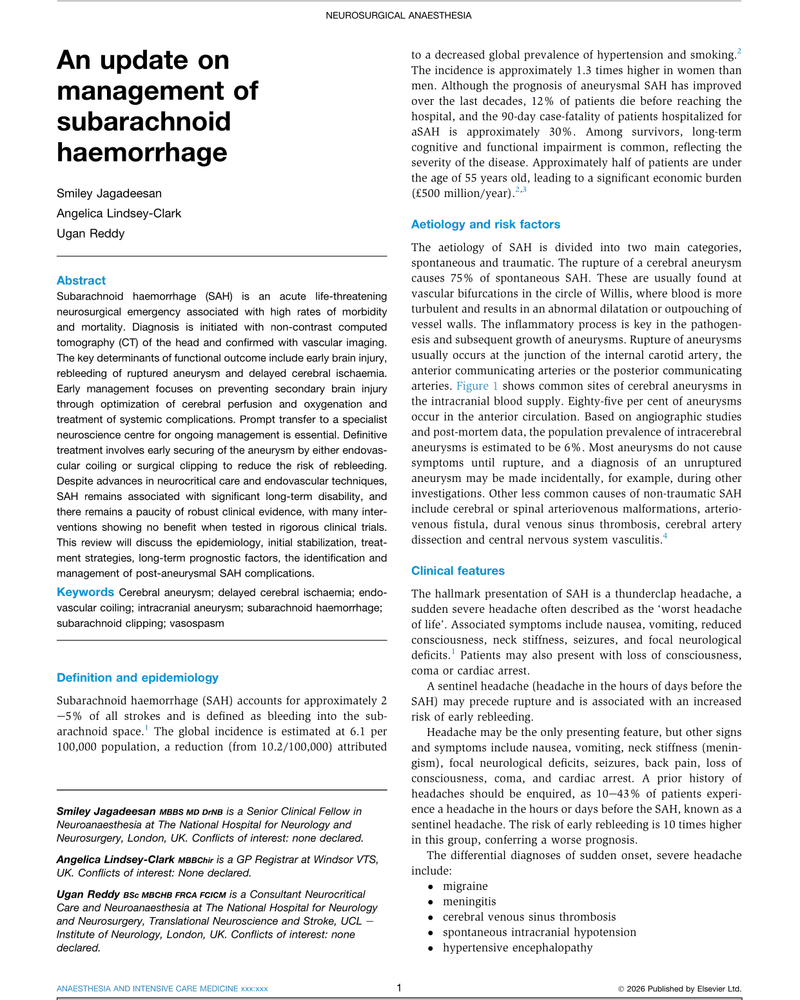
An update on management of subarachnoid haemorrhage
Same clinical topic · Neurology
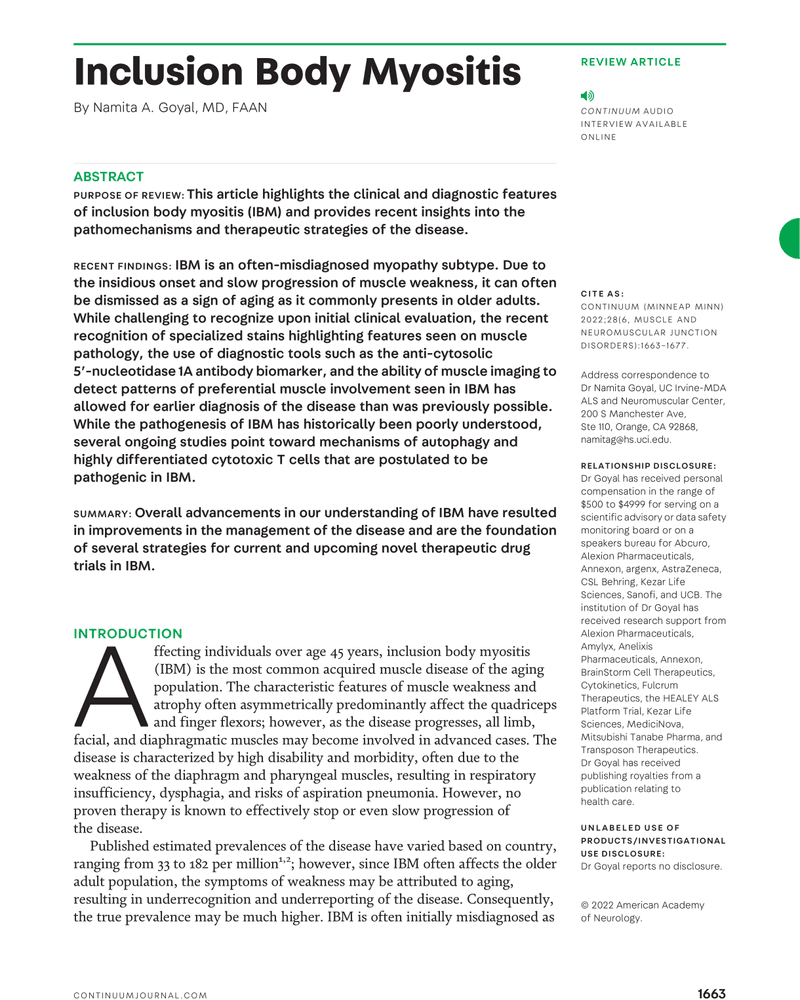
INCLUSION BODY MYOSITIS
Same clinical topic · Neurology
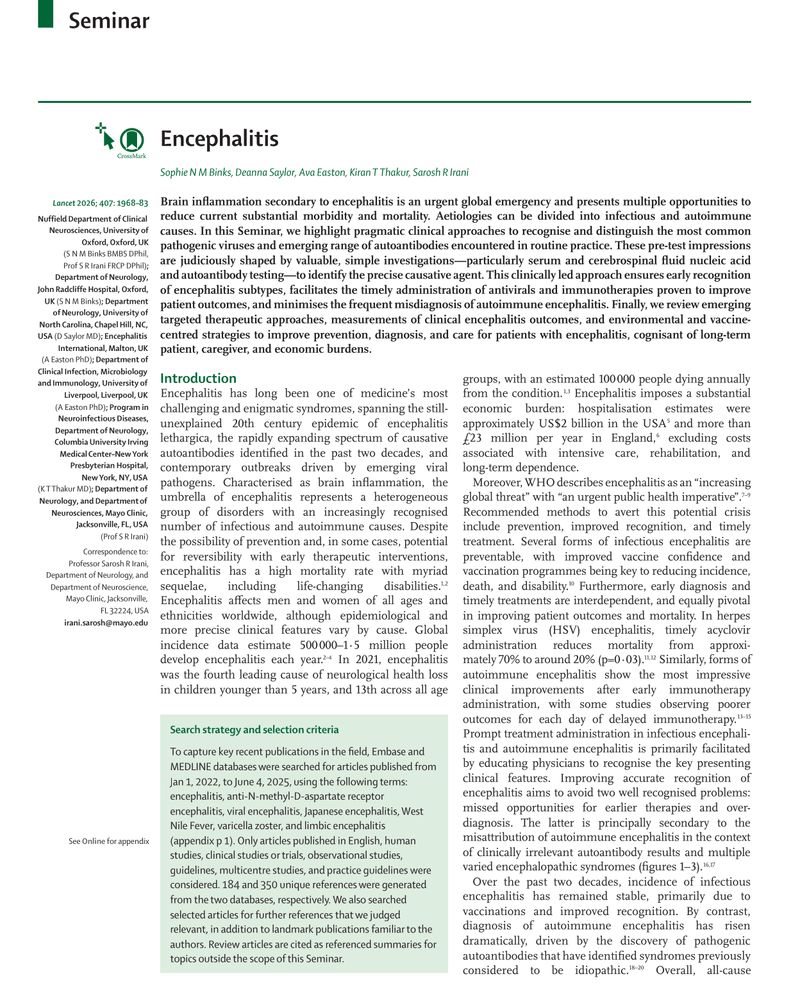
ENCEPHALITIS
Same clinical topic · Neurology
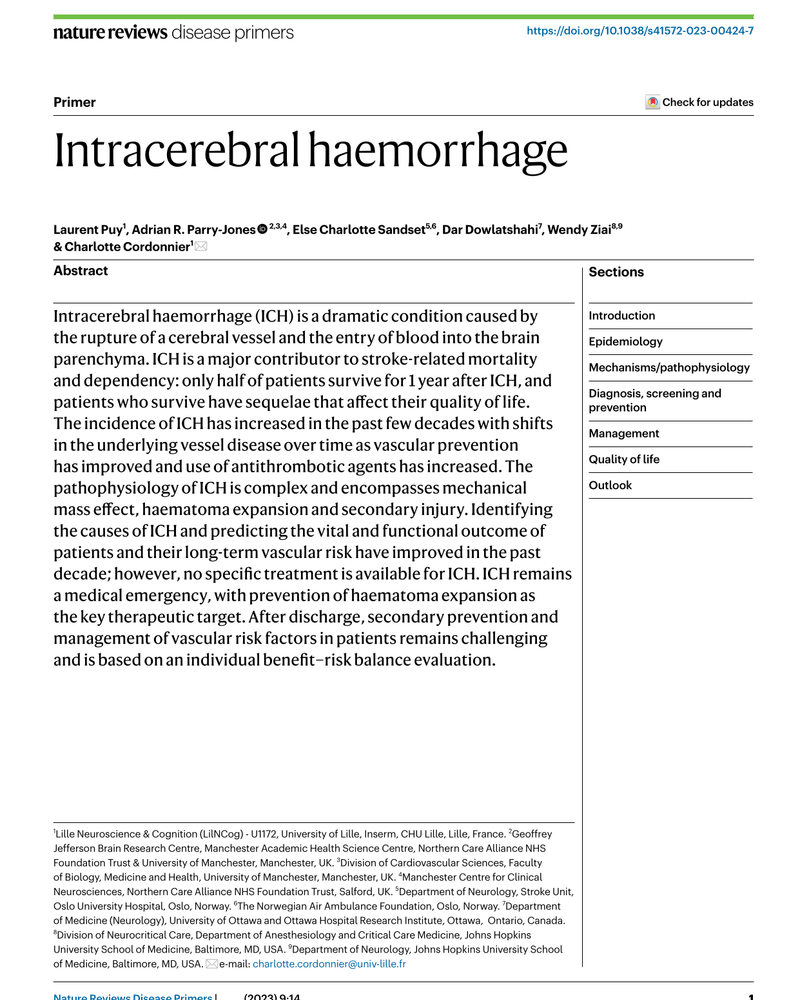
INTRACEREBRAL HAEMORRHAGE
Same clinical topic · Neurology
INCLUSION BODY MYOSITIS
Same clinical topic · Neurology
PREVENTION OF STROKE
Same clinical topic · Neurology