Please wait while we open this resource.


K

Clinical reviews
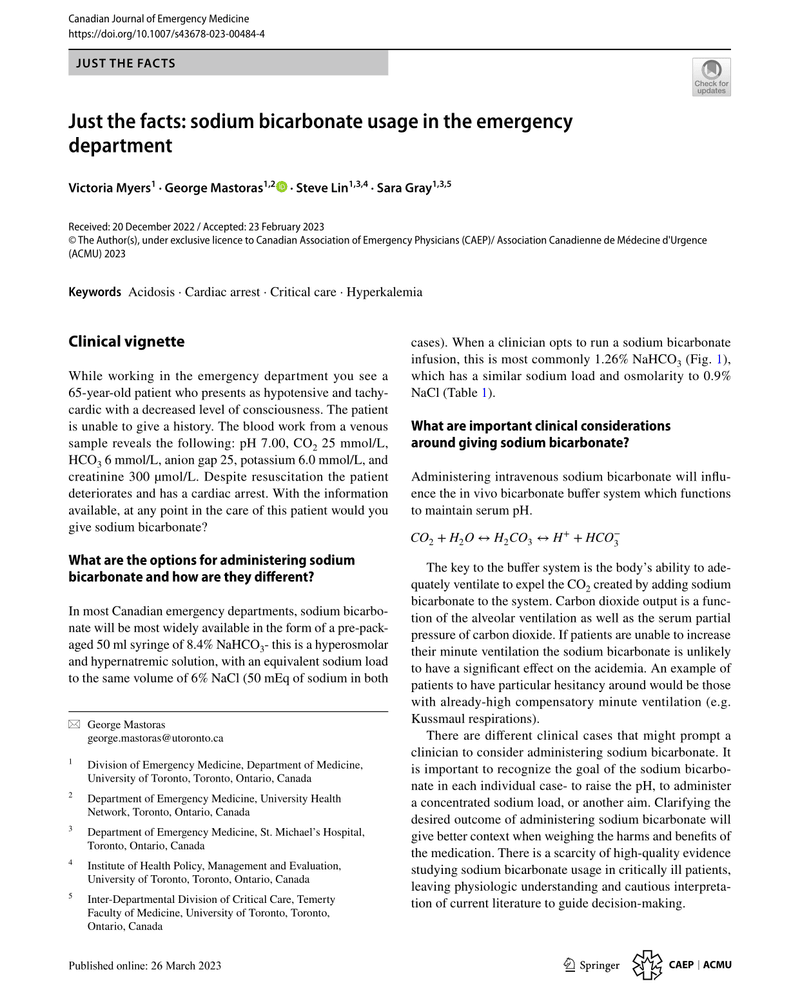
JUST THE FACTS: SODIUM BICARBONATE USAGE IN THE EMERGENCY DEPARTMENT
Canadian Association of Emergency Physicians (CAEP)/ Association Canadienne de Médecine d'Urgence (ACMU)
PDF20233 pages439 KB
The article provides an in-depth examination of sodium bicarbonate's role in the management of patients presenting with severe metabolic acidosis and hyperkalemia in the emergency department. It highlights the lack of evidence supporting routine use of bicarbonate in cardiac arrest scenarios and discusses alternative methods of administration. The authors emphasize the importance of understanding the physiological effects of bicarbonate and the implications for patient outcomes.
Sign in to open
Ask this resource
Answers use this document only.
Your first question is free.
More like this
Resources from the same specialty and type. Curated links will replace these when added.
Clinical Resources
Documents that extend or complement this resource.
Approach to Acute Abdominal Pain: Practical Algorithms
Same clinical topic · Emergency Medicine
TREATMENT AND MONITORING
Same clinical topic · Emergency Medicine
Managing Diabetic Ketoacidosis
Same clinical topic · Emergency Medicine
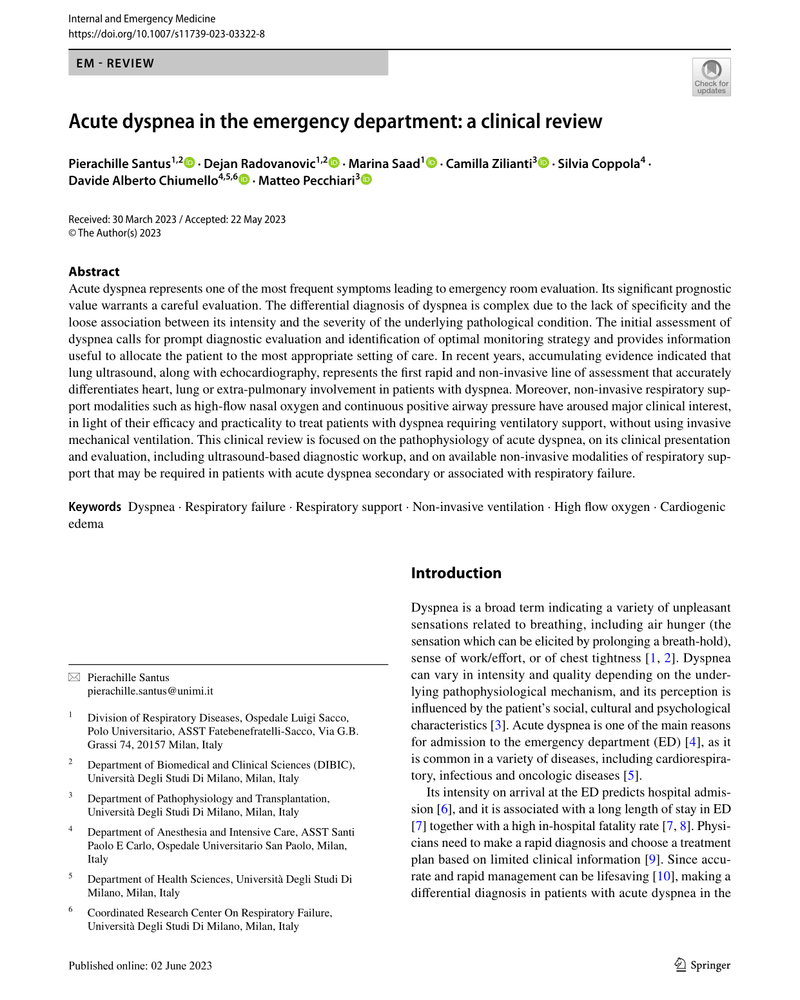
ACUTE DYSPNEA IN THE EMERGENCY DEPARTMENT: A CLINICAL REVIEW
Same clinical topic · Emergency Medicine
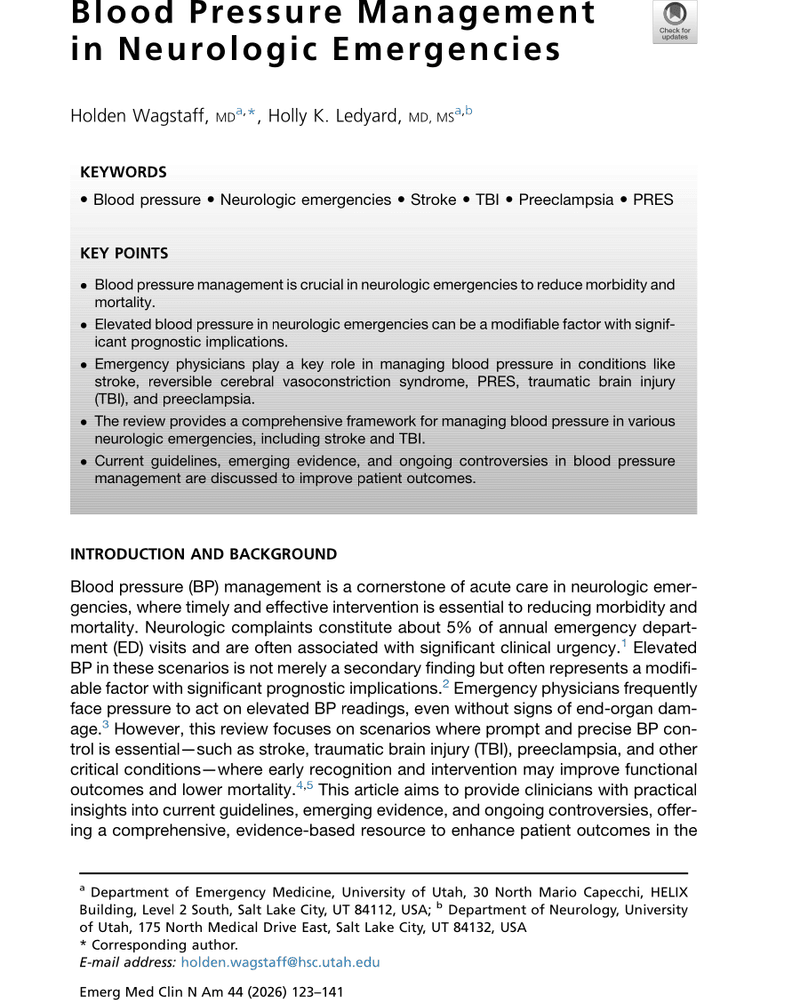
BLOOD PRESSURE MANAGEMENT IN NEUROLOGIC EMERGENCIES
Same clinical topic · Emergency Medicine
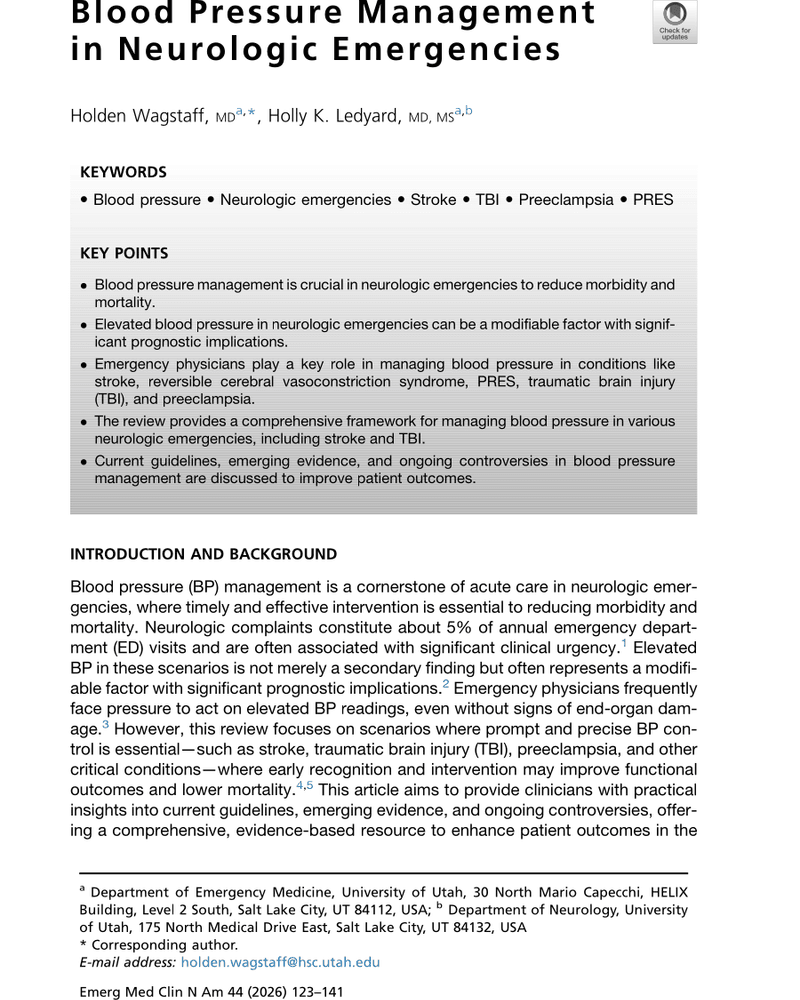
BLOOD PRESSURE MANAGEMENT IN NEUROLOGIC EMERGENCIES
Same clinical topic · Emergency Medicine
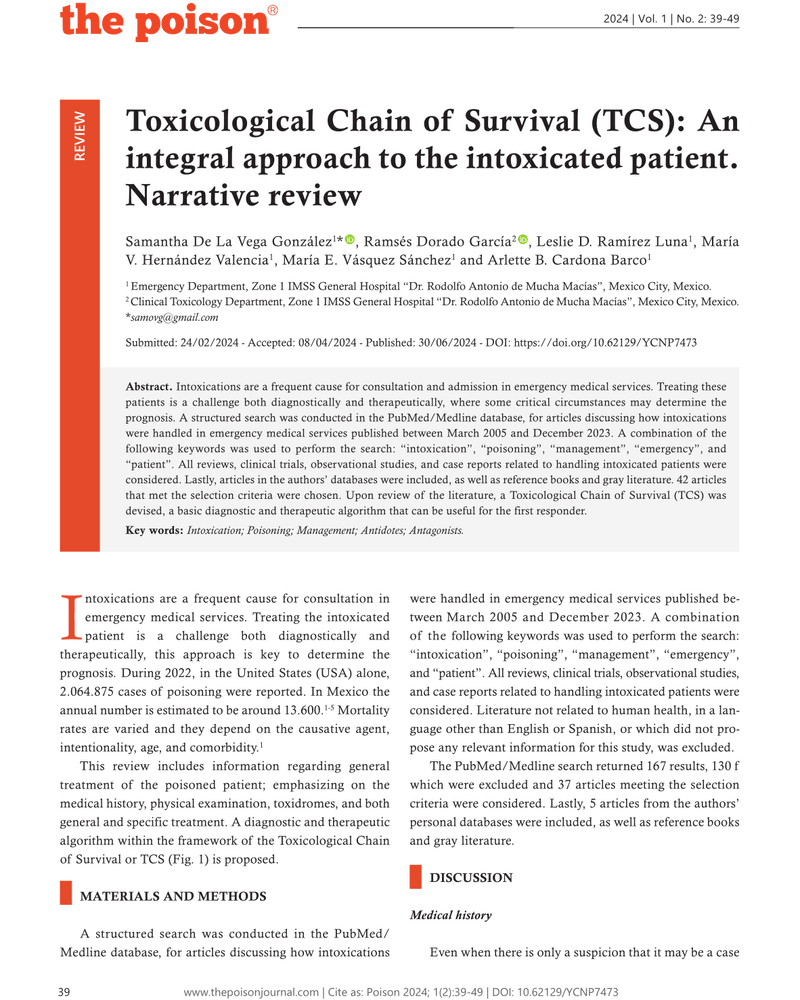
TOXICOLOGICAL CHAIN OF SURVIVAL (TCS): AN INTEGRAL APPROACH TO THE INTOXICATED PATIENT. NARRATIVE REVIEW
Same clinical topic · Emergency Medicine
FAILURES IN THE MANAGEMENT OF STATUS EPILEPTICUS
Same clinical topic · Emergency Medicine
A Review of Bicarbonate Use in Common Clinical Scenarios
Same clinical topic · Emergency Medicine