Preparing your experience, please wait…


K

Clinical reviews
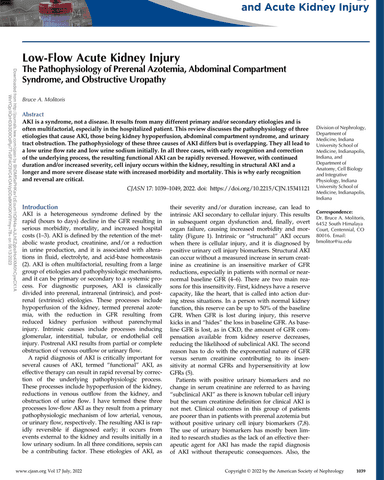
LOW-FLOW ACUTE KIDNEY INJURY
Bruce A. Molitoris
PDF202211 pages2.0 MB
Acute kidney injury (AKI) is a heterogeneous syndrome characterized by a rapid decline in glomerular filtration rate (GFR), leading to significant morbidity and mortality. This review focuses on three specific etiologies of AKI: kidney hypoperfusion, abdominal compartment syndrome, and urinary tract obstruction. Each of these conditions presents unique pathophysiological mechanisms but shares common outcomes, such as low urine flow and sodium levels. The document underscores the critical nature of early diagnosis and intervention to reverse functional AKI before it progresses to structural damage.
No account needed
Discuss clinical evidence & guidelines
Examine in Ask OslerAsk this resource
Answers from this document onlyRenal Hypoperfusion: Efferent Arteriolar Constriction Helps Preserve Glomerular Filtration
“Systemic and intrarenal neurohormonal activation occurs to counteract systemic and kidney hypoperfusion in a compensatory fashion in an attempt to normalize renal blood flow (RBF) and GFR. Catecholamines increase heart rate and vasoconstriction to increase BP, antidiuretic hormone (ADH) release increases to induce vasoconstriction, and angiotensin II production also causes vasoconstriction. This results in an increase in cardiac output and BP. Within the kidney, macula densa (MD)mediated angiotensin II release increases efferent arteriole resistance, leading to stabilization of filtration pressure and GFR, and production of aldosterone, resulting in higher sodium (Na) reabsorption to increase plasma volume.”
More like this
Resources from the same specialty and type. Curated links will replace these when added.
Clinical Resources
Documents that extend or complement this resource.
The Diagnosis And Management OfHepatorenal Syndrome
Same clinical topic · Nephrology
CONTRAST-ASSOCIATED ACUTE KIDNEY INJURY: COMPREHENSIVE REVIEW OF RISK FACTORS, PATHOPHYSIOLOGY, DEFINITION AND MANAGEMENT
Same clinical topic · Nephrology
ACUTE GLOMERULONEPHRITIS
Same clinical topic · Nephrology
RENAL THROMBOTIC MICROANGIOPATHY: A REVIEW
Same clinical topic · Nephrology
CURRENT OPTIONS FOR KIDNEY PROTECTION: ARE RENIN –ANGIOTENSIN SYSTEM INHIBITORS STILL RELEVANT?
Same clinical topic · Nephrology
ACUTE KIDNEY DISEASE AFTER ACUTE KIDNEY INJURY: INCIDENCE, RISK FACTORS, AND ASSOCIATION WITH DE NOVO CHRONIC KIDNEY DISEASE
Same clinical topic · Nephrology
CONTEMPORARY APPROACHES TO KIDNEY DYSFUNCTION AND DIURETIC RESISTANCE IN ACUTE DECOMPENSATED HEART FAILURE
Same clinical topic · Nephrology
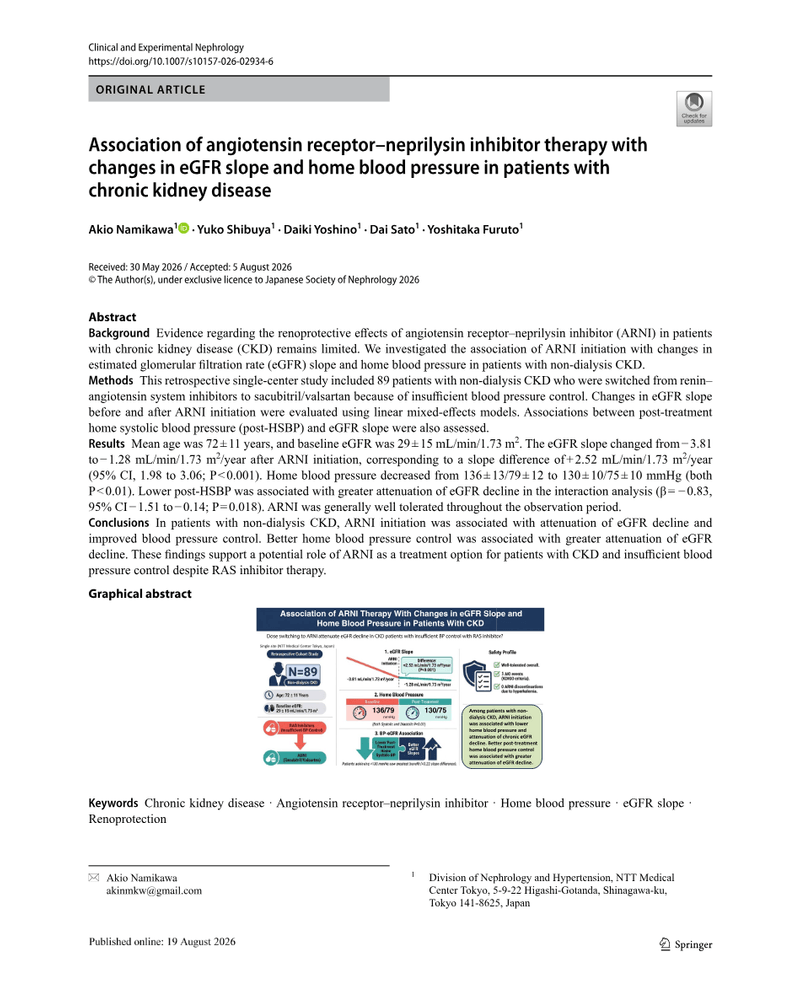
ORIGINAL ARTICLE
Same clinical topic · Nephrology
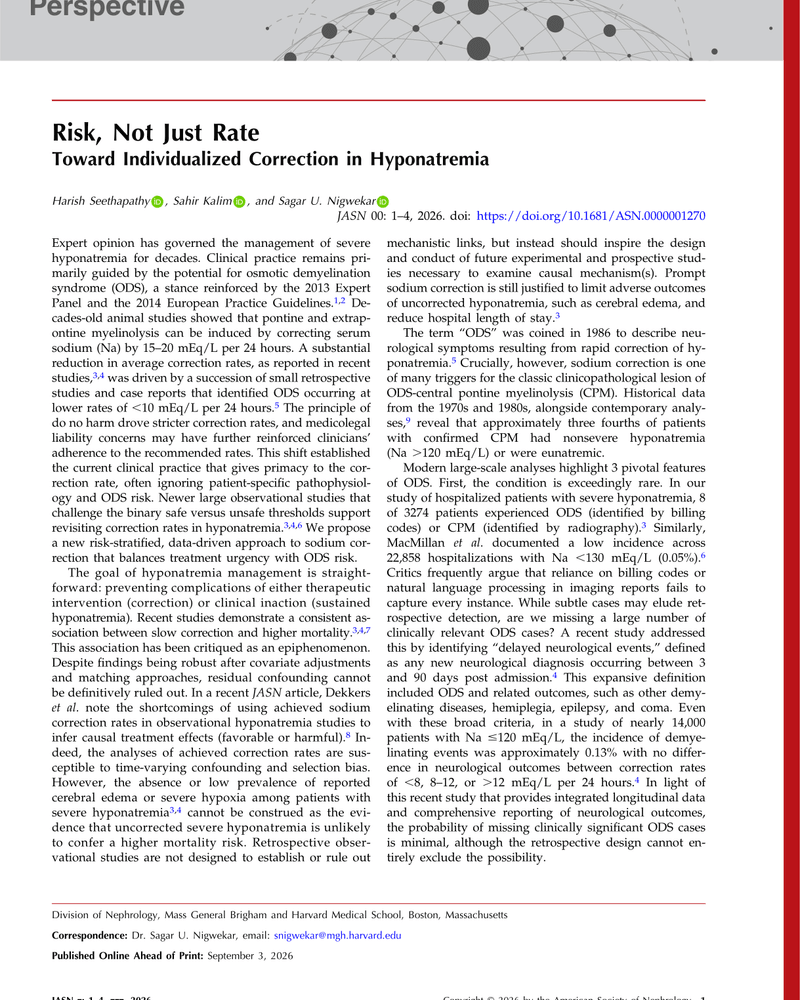
TOWARD INDIVIDUALIZED CORRECTION IN HYPONATREMIA
Same clinical topic · Nephrology