Please wait while we open this resource.


K

Clinical reviews
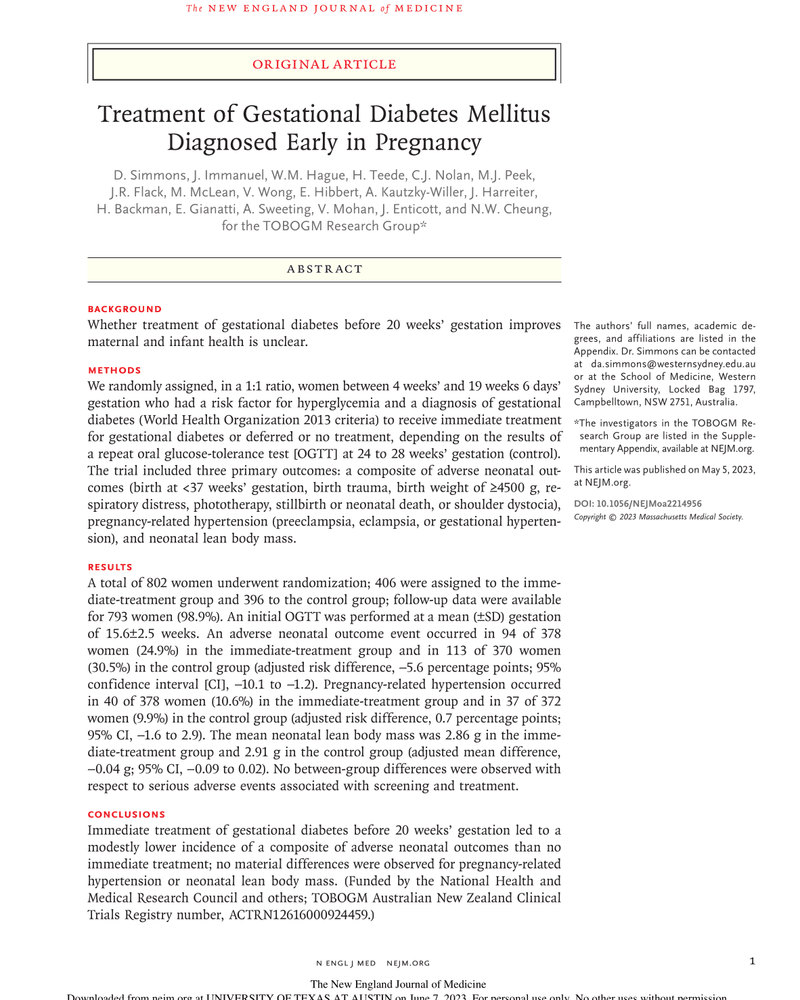
TREATMENT OF GESTATIONAL DIABETES MELLITUS DIAGNOSED EARLY IN PREGNANCY
D. Simmons, J. Immanuel, W.M. Hague, H. Teede, C.J. Nolan, M.J. Peek, J.R. Flack, M. McLean, V. Wong, E. Hibbert, A. Kautzky-Willer, J. Harreiter, H. Backman, E. Gianatti, A. Sweeting, V. Mohan, J. Enticott, N.W. Cheung
PDF202313 pages576 KB
The study randomly assigned women diagnosed with GDM and at risk for hyperglycemia to receive immediate treatment or deferred treatment based on subsequent glucose tolerance tests. It aimed to evaluate the impact of early intervention on adverse neonatal outcomes, pregnancy-related hypertension, and maternal weight gain. The findings suggest that immediate treatment may lead to a modest reduction in adverse neonatal events compared to deferred treatment.
Sign in to open
Ask this resource
Answers use this document only.
Your first question is free.
More like this
Resources from the same specialty and type. Curated links will replace these when added.
Clinical Resources
Documents that extend or complement this resource.
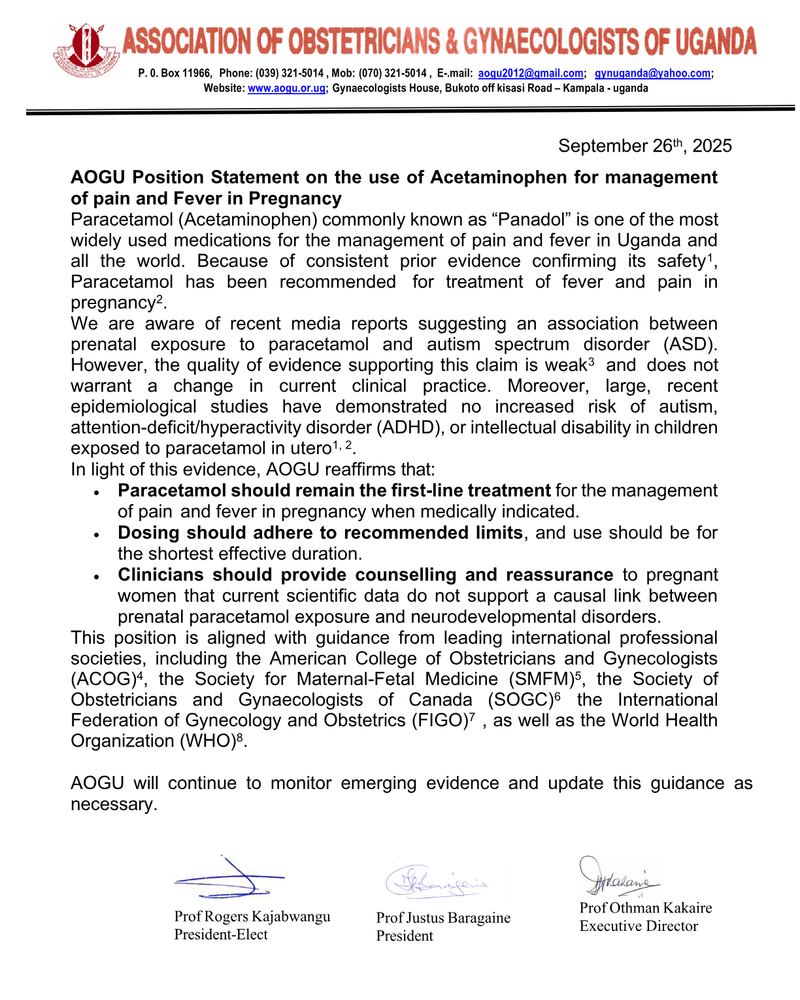
AOGU Position Statement on Acetaminophen Use in Pregnancy
Same clinical topic · Obstetrics and Gynecology
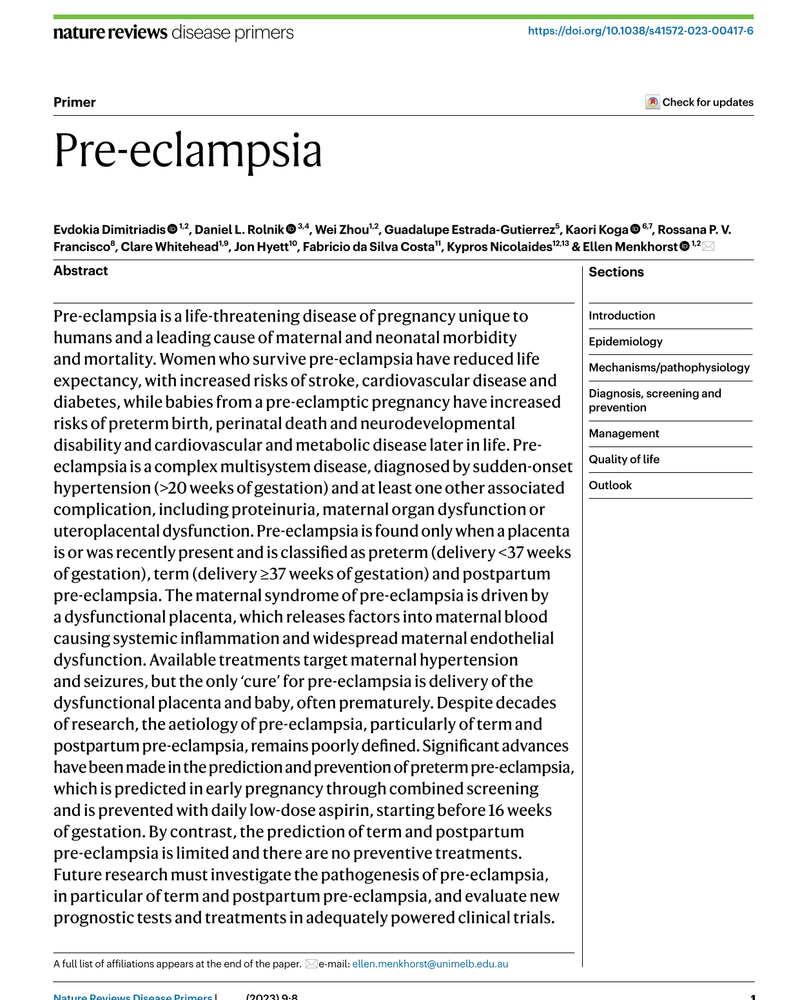
PRE-ECLAMPSIA
Same clinical topic · Obstetrics and Gynecology
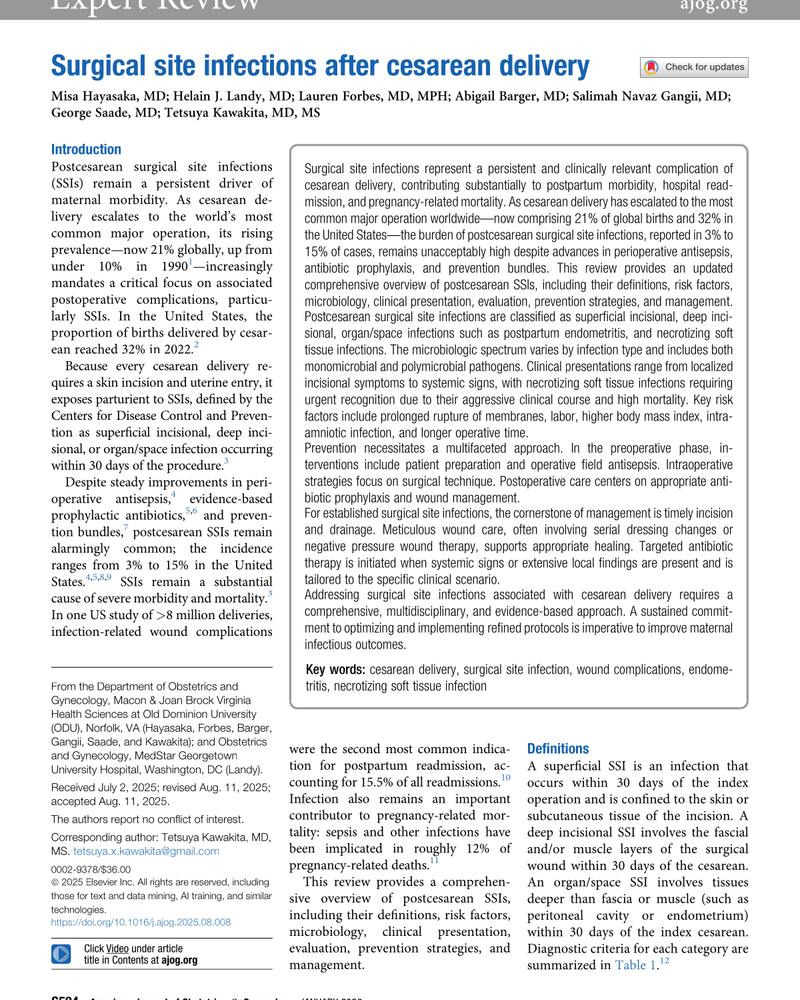
SURGICAL SITE INFECTIONS AFTER CESAREAN DELIVERY
Same clinical topic · Obstetrics and Gynecology
PHARMACOLOGICAL MANAGEMENT OF OBSTETRIC HAEMORRHAGE: AN EVIDENCE-BASED APPROACH
Same clinical topic · Obstetrics and Gynecology
ASTHMA IN PREGNANCY: CONTEMPORARY MANAGEMENT
Same clinical topic · Obstetrics and Gynecology
MANAGEMENT OF POSTPARTUM HYPERTENSIVE DISORDERS OF PREGNANCY
Same clinical topic · Obstetrics and Gynecology
THE DIAGNOSIS AND MANAGEMENT OF EXTRAUTERINE AND UTERINE ECTOPIC PREGNANCY
Same clinical topic · Obstetrics and Gynecology
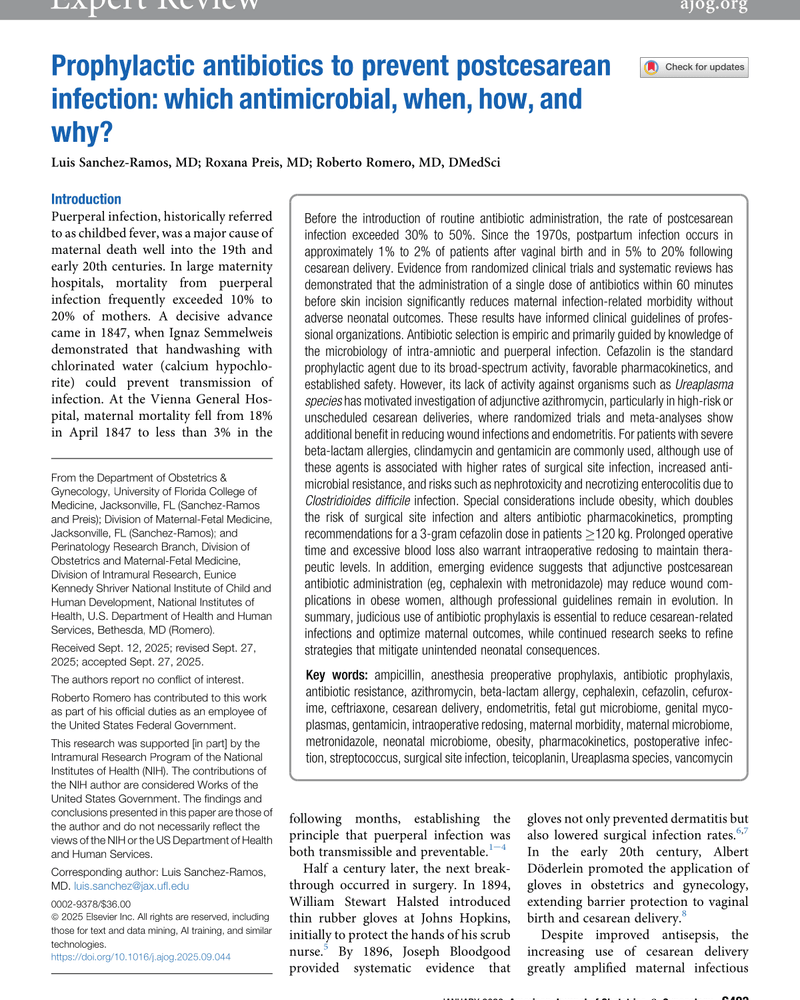
PROPHYLACTIC ANTIBIOTICS TO PREVENT POSTCESAREAN INFECTION: WHY? WHICH ANTIMICROBIAL, WHEN, HOW
Same clinical topic · Obstetrics and Gynecology
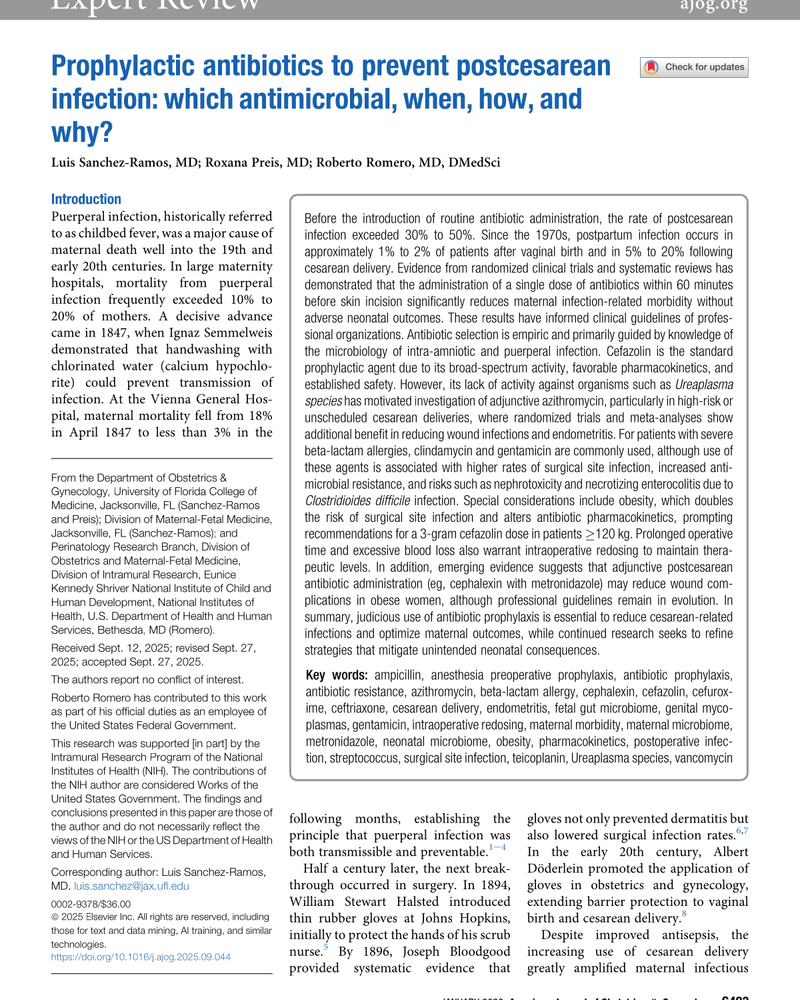
PROPHYLACTIC ANTIBIOTICS TO PREVENT POSTCESAREAN INFECTION: WHY? WHICH ANTIMICROBIAL, WHEN, HOW
Same clinical topic · Obstetrics and Gynecology