Please wait while we open this resource.


K

Clinical reviews
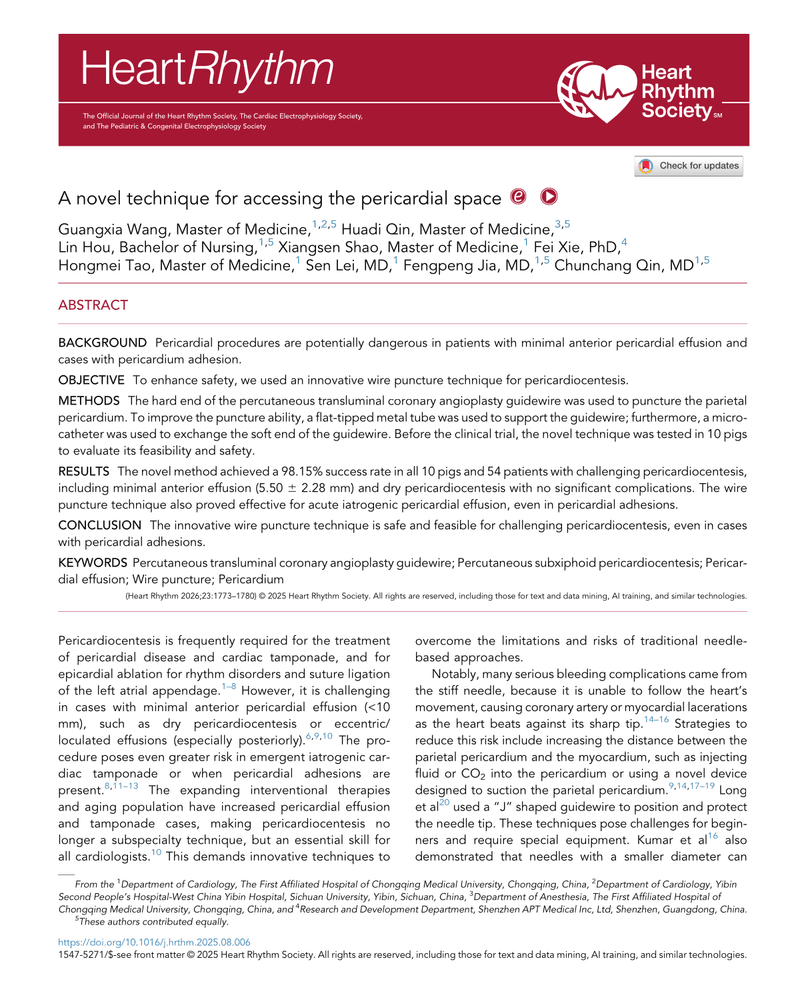
A NOVEL TECHNIQUE FOR ACCESSING THE PERICARDIAL SPACE
Guangxia Wang, Huadi Qin, Lin Hou, Xiangsen Shao, Fei Xie, Hongmei Tao, Sen Lei, Fengpeng Jia, Chunchang Qin
PDF20258 pages499 KB
Pericardial procedures can be risky, especially in patients with minimal anterior pericardial effusion or pericardial adhesions. This study introduces a novel technique utilizing a percutaneous transluminal coronary angioplasty guidewire to improve the safety and efficacy of pericardiocentesis. The technique was evaluated in a clinical trial involving 54 patients and showed a success rate of 98.15%, with no significant complications reported. The findings suggest that this method is a viable option for challenging cases of pericardial effusion.
Sign in to open
Ask this resource
Answers use this document only.
Your first question is free.
More like this
Resources from the same specialty and type. Curated links will replace these when added.
Clinical Resources
Documents that extend or complement this resource.
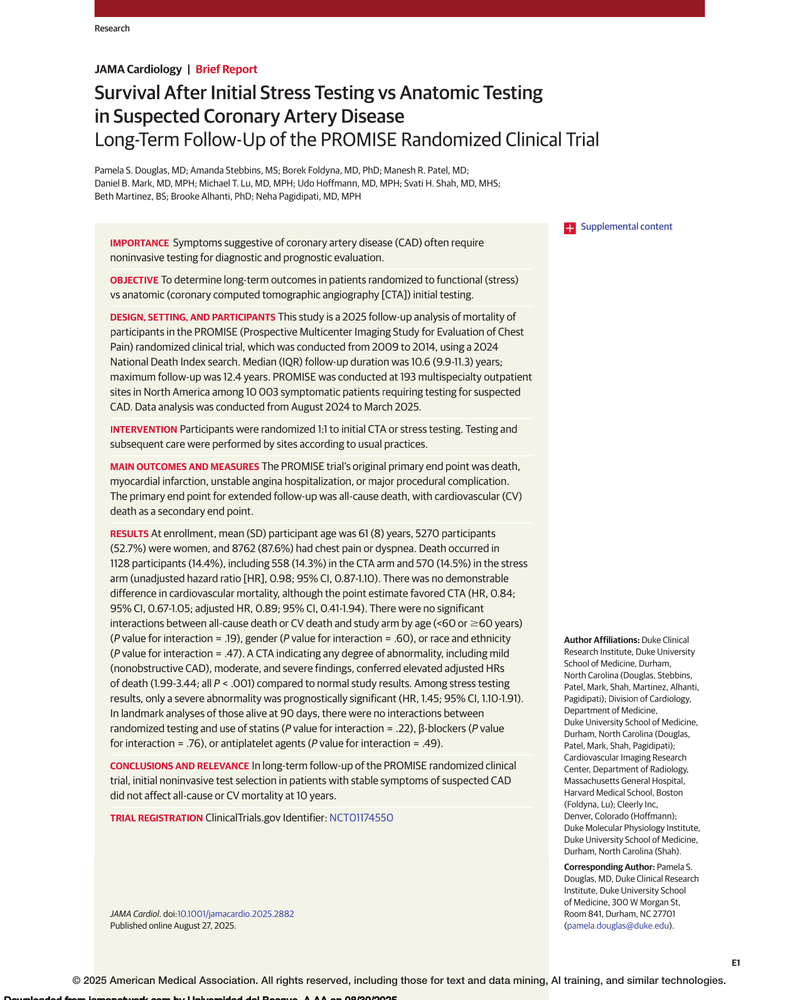
SURVIVAL AFTER INITIAL STRESS TESTING VS ANATOMIC TESTING IN SUSPECTED CORONARY ARTERY DISEASE
Same clinical topic · Cardiology
PRACTICAL CARDIO-ONCOLOGY
Same clinical topic · Cardiology
OXFORD CARDIOLOGY LIBRARY: Hypertension
Same clinical topic · Cardiology
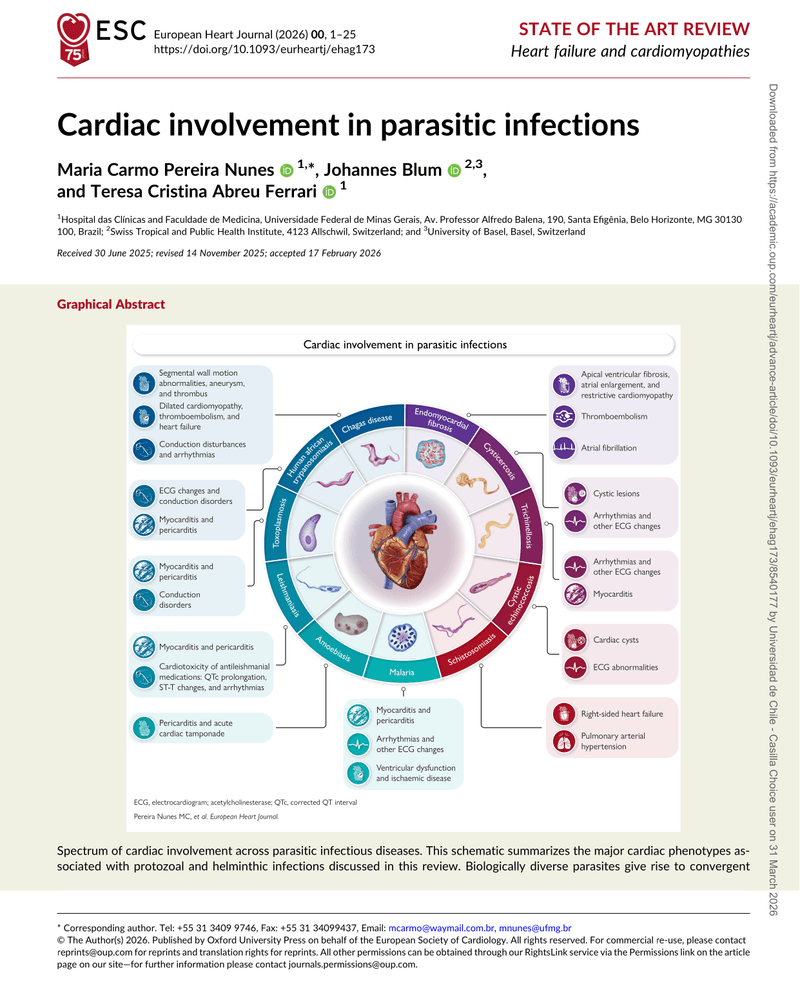
CARDIAC INVOLVEMENT IN PARASITIC INFECTIONS
Same clinical topic · Cardiology
The Athlete’s ECG
Same clinical topic · Cardiology
Antigen carbohydrate 125 as a biomarker in heart failure: a narrative review
Same clinical topic · Cardiology
Current ECG Aspects of Interatrial Block
Same clinical topic · Cardiology
Arrhythmic mitral valve prolapse in 2023: Evidence-based update
Same clinical topic · Cardiology
INTERPRETING THE NORMAL PACEMAKER
Same clinical topic · Cardiology