Please wait while we open this resource.


K

Clinical reviews
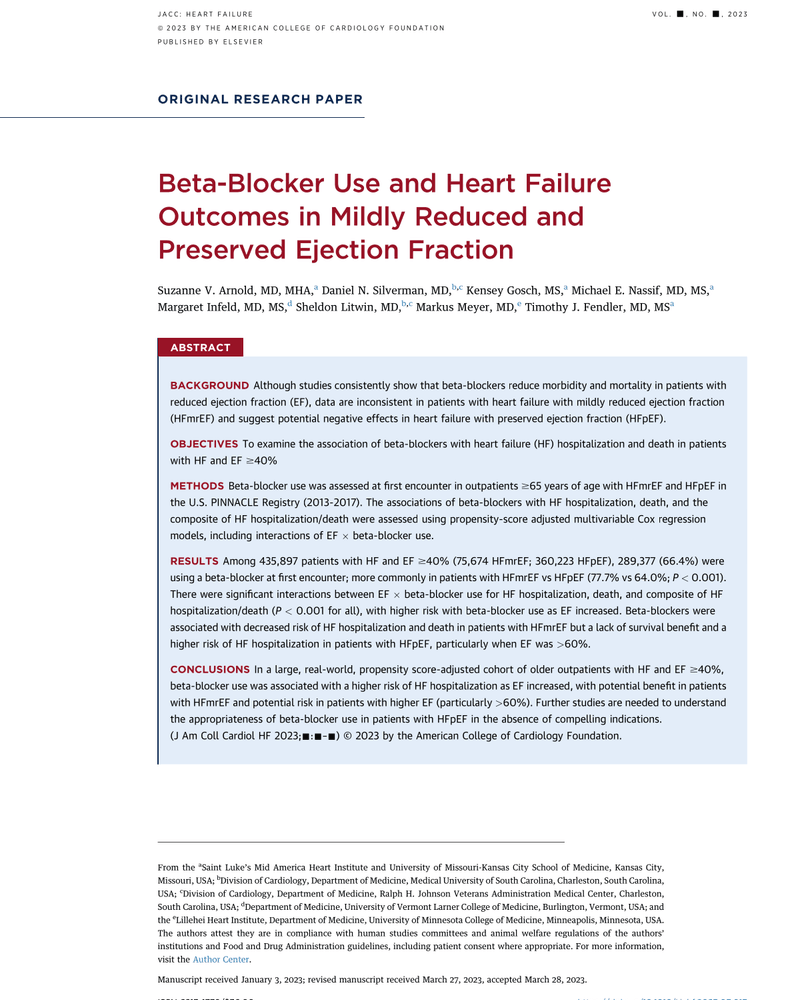
Beta-Blocker Use and Heart Failure Outcomes in Mildly Reduced and Preserved Ejection Fraction
Suzanne V. Arnold, Daniel N. Silverman, Kensey Gosch, Michael E. Nassif, Margaret Infeld, Sheldon Litwin, Markus Meyer, Timothy J. Fendler
PDF8 pages665 KB
This original research paper investigates the impact of beta-blocker therapy on heart failure outcomes, specifically hospitalization and death, in patients with ejection fractions of 40% or higher. Utilizing data from the U.S. PINNACLE Registry (2013-2017), the study analyzed a large cohort of outpatients aged 65 and older. The research employed propensity-score adjusted multivariable Cox regression models to assess the associations, including interactions between ejection fraction and beta-blocker use. The findings indicate a differential effect of beta-blockers based on ejection fraction levels, suggesting potential risks in HFpEF patients.
Sign in to open
Ask this resource
Answers use this document only.
Your first question is free.
More like this
Resources from the same specialty and type. Curated links will replace these when added.
Clinical Resources
Documents that extend or complement this resource.
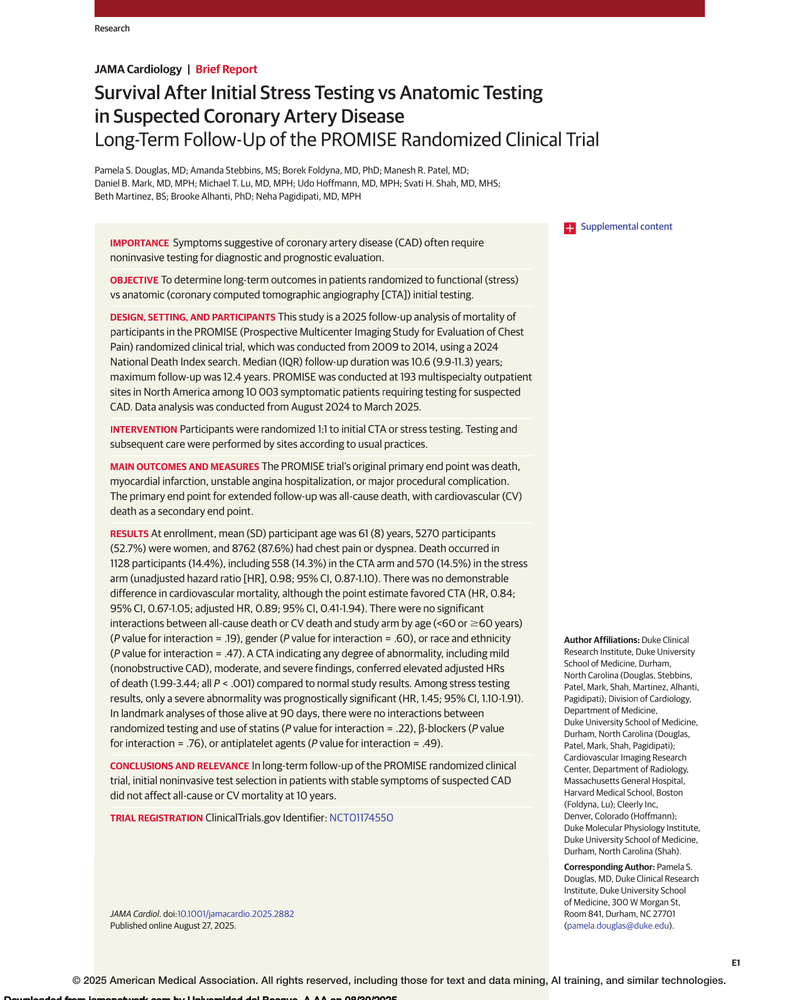
SURVIVAL AFTER INITIAL STRESS TESTING VS ANATOMIC TESTING IN SUSPECTED CORONARY ARTERY DISEASE
Same clinical topic · Cardiology
PRACTICAL CARDIO-ONCOLOGY
Same clinical topic · Cardiology
OXFORD CARDIOLOGY LIBRARY: Hypertension
Same clinical topic · Cardiology
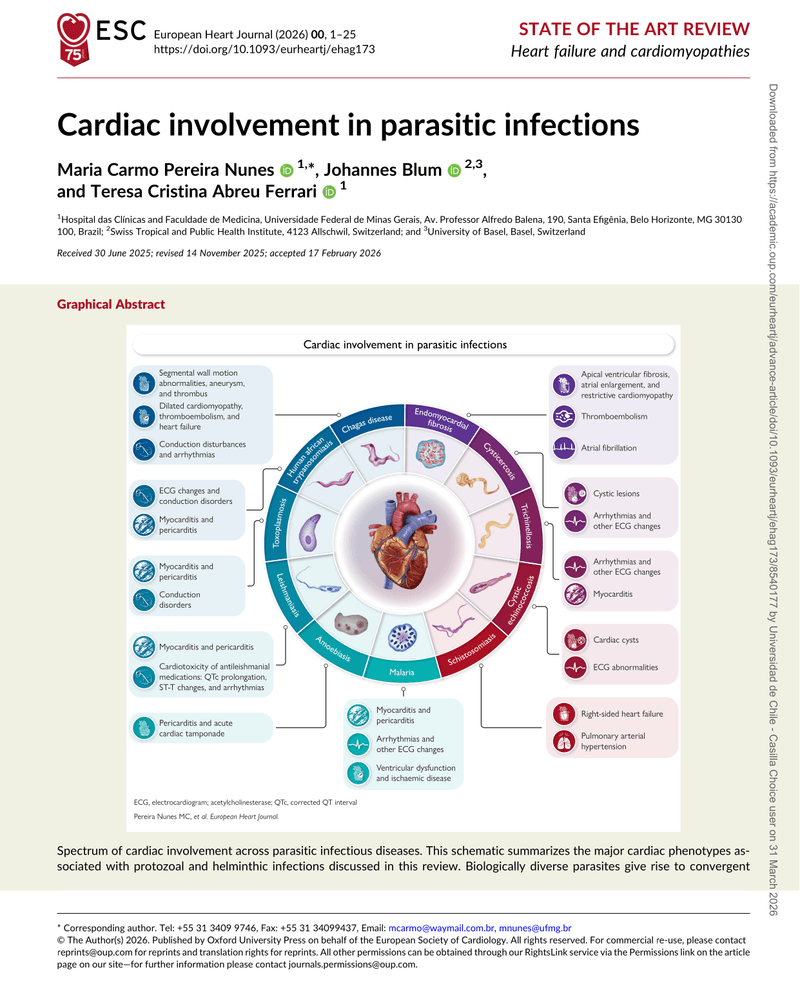
CARDIAC INVOLVEMENT IN PARASITIC INFECTIONS
Same clinical topic · Cardiology
The Athlete’s ECG
Same clinical topic · Cardiology
Antigen carbohydrate 125 as a biomarker in heart failure: a narrative review
Same clinical topic · Cardiology
Current ECG Aspects of Interatrial Block
Same clinical topic · Cardiology
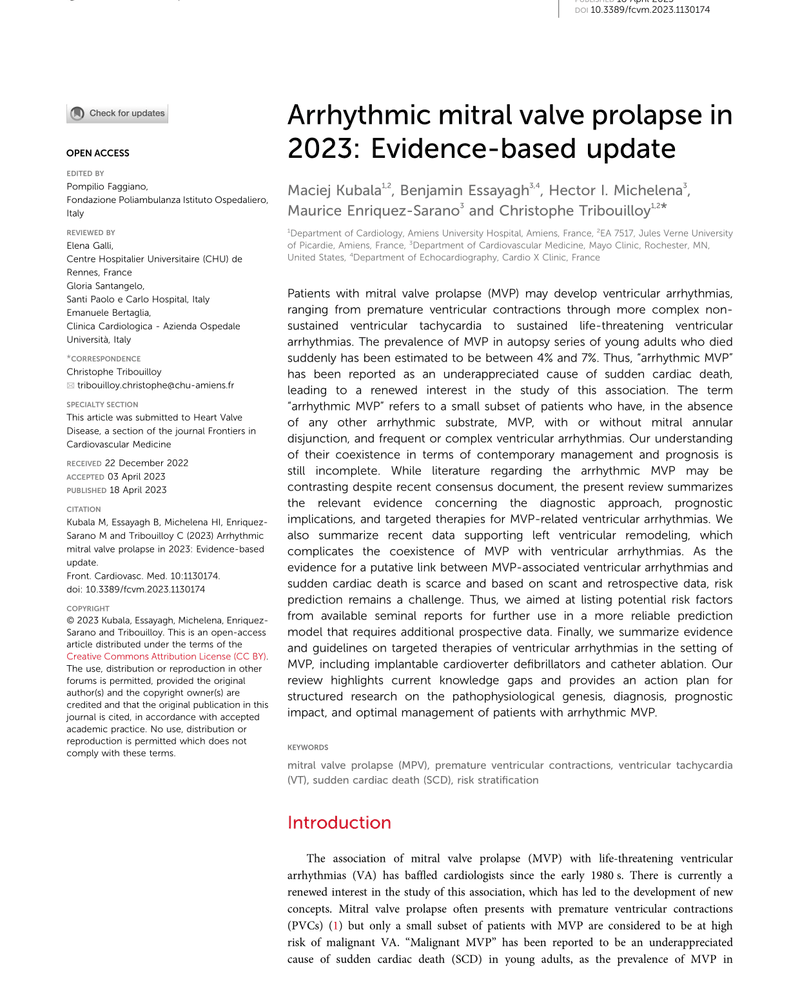
Arrhythmic mitral valve prolapse in 2023: Evidence-based update
Same clinical topic · Cardiology
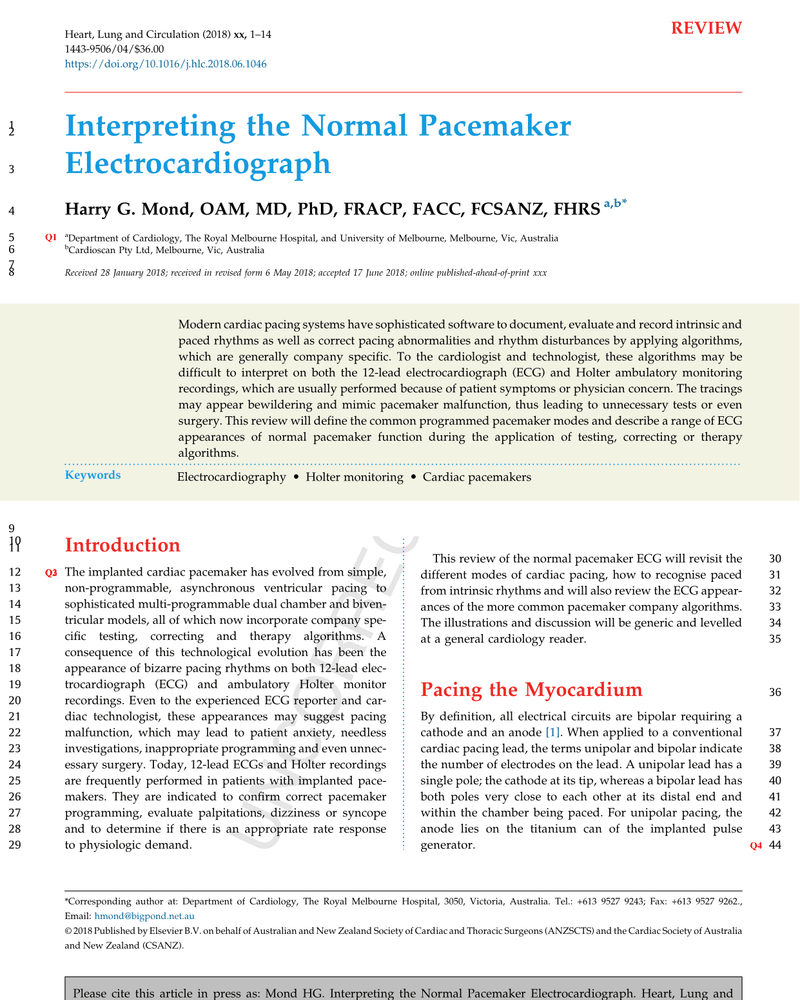
INTERPRETING THE NORMAL PACEMAKER
Same clinical topic · Cardiology