Please wait while we open this resource.


K

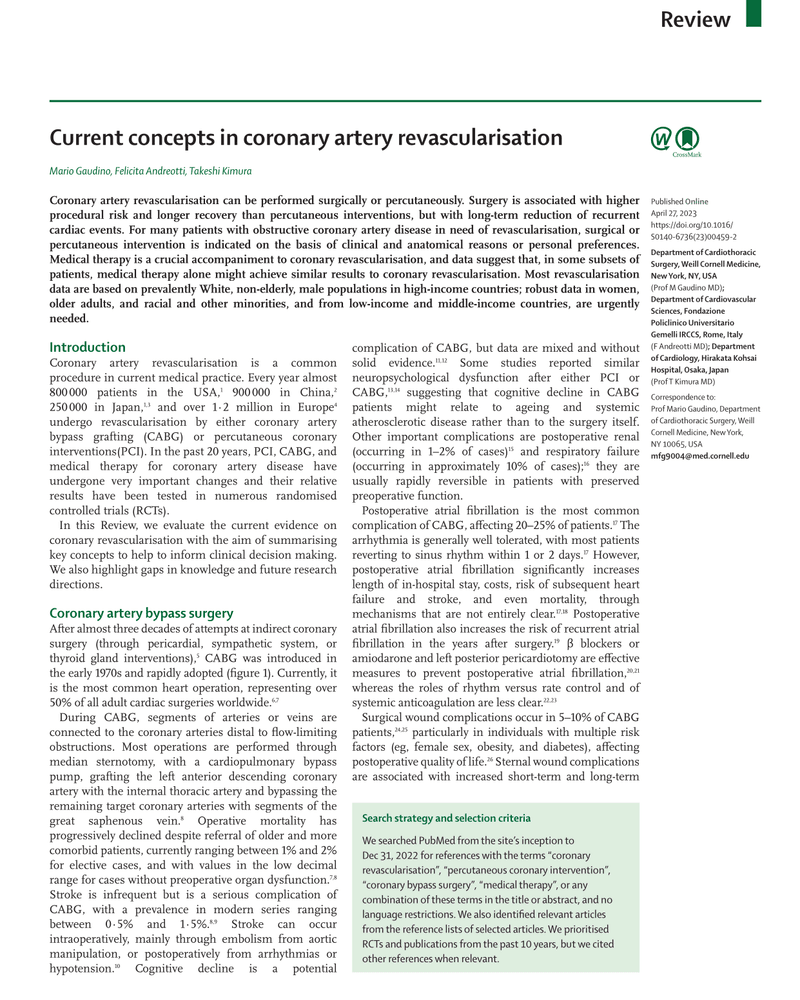
Clinical reviews
CURRENT CONCEPTS IN CORONARY ARTERY REVASCULARISATION
Department of Cardiothoracic Surgery, Weill Cornell Medicine, New York, NY, USA; Department of Cardiovascular, Policlinico Universitario Gemelli IRCCS, Rome, Italy; Osaka Hospital, Osaka, Japan
PDF202318 pages1.6 MB
Coronary artery revascularisation can be performed either surgically or percutaneously, each with distinct advantages and risks. Surgical interventions tend to have a higher procedural risk and longer recovery time but can lead to a significant long-term reduction in recurrent cardiac events. The document also points out that medical therapy is essential and may, in some cases, provide outcomes comparable to revascularisation alone. It calls for more robust data on diverse populations, particularly from low- and middle-income countries.
Sign in to open
Ask this resource
Answers use this document only.
Your first question is free.
More like this
Resources from the same specialty and type. Curated links will replace these when added.
Clinical Resources
Documents that extend or complement this resource.
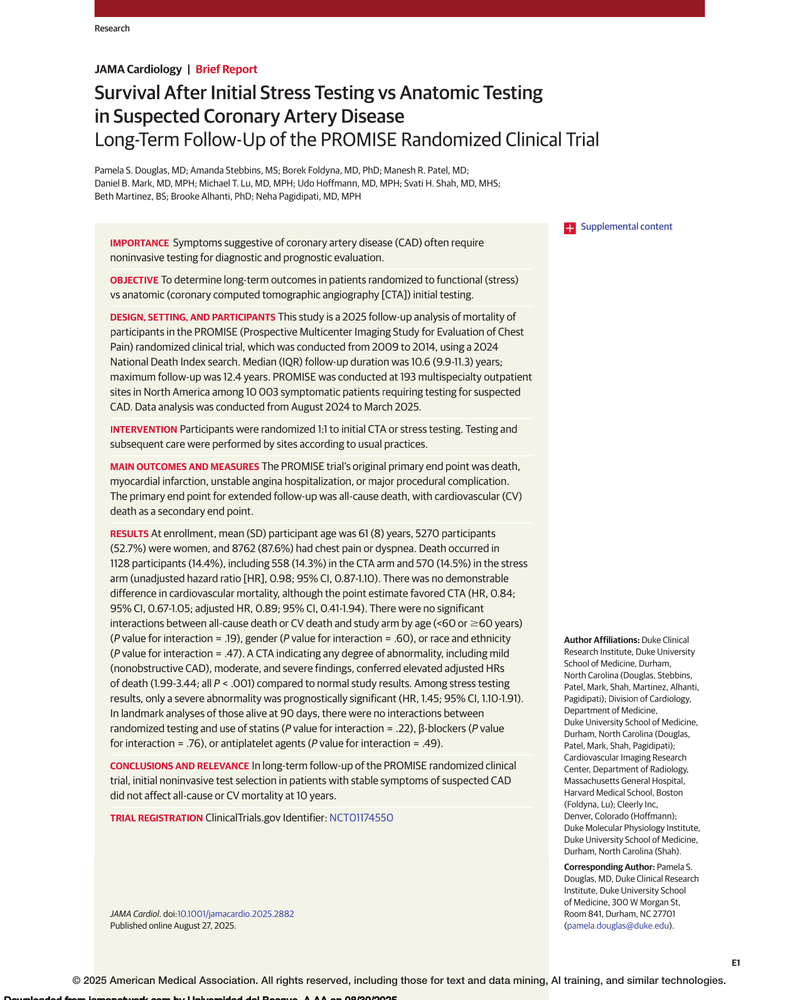
SURVIVAL AFTER INITIAL STRESS TESTING VS ANATOMIC TESTING IN SUSPECTED CORONARY ARTERY DISEASE
Same clinical topic · Cardiology
PRACTICAL CARDIO-ONCOLOGY
Same clinical topic · Cardiology
OXFORD CARDIOLOGY LIBRARY: Hypertension
Same clinical topic · Cardiology
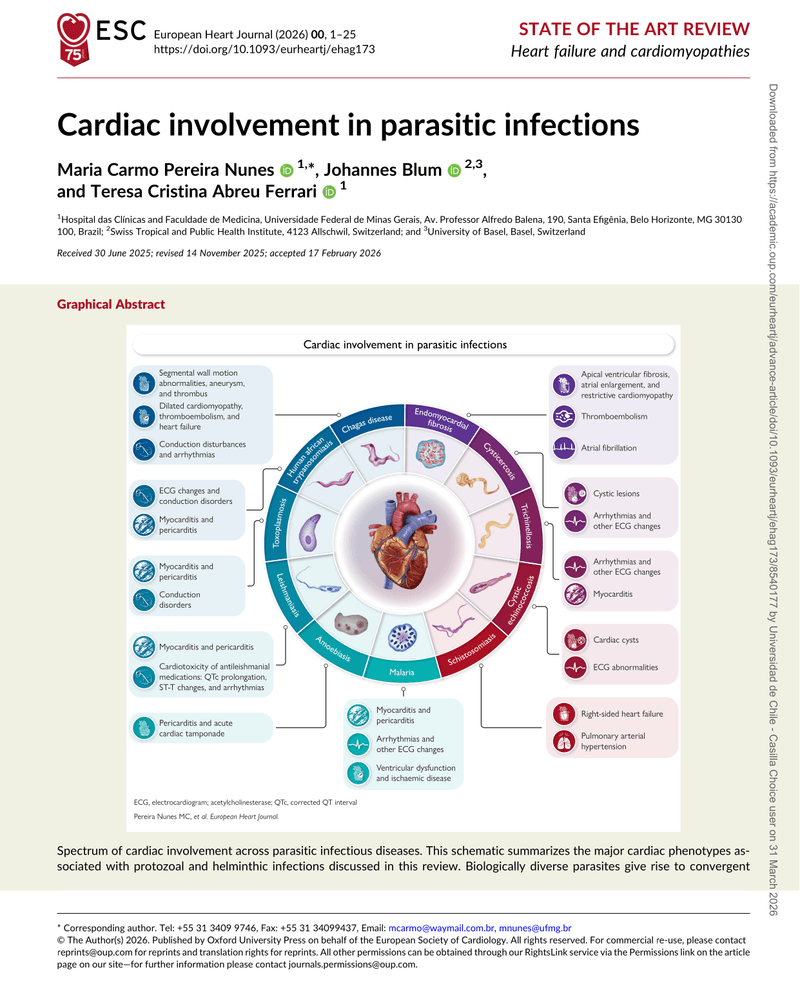
CARDIAC INVOLVEMENT IN PARASITIC INFECTIONS
Same clinical topic · Cardiology
The Athlete’s ECG
Same clinical topic · Cardiology
Antigen carbohydrate 125 as a biomarker in heart failure: a narrative review
Same clinical topic · Cardiology
Current ECG Aspects of Interatrial Block
Same clinical topic · Cardiology
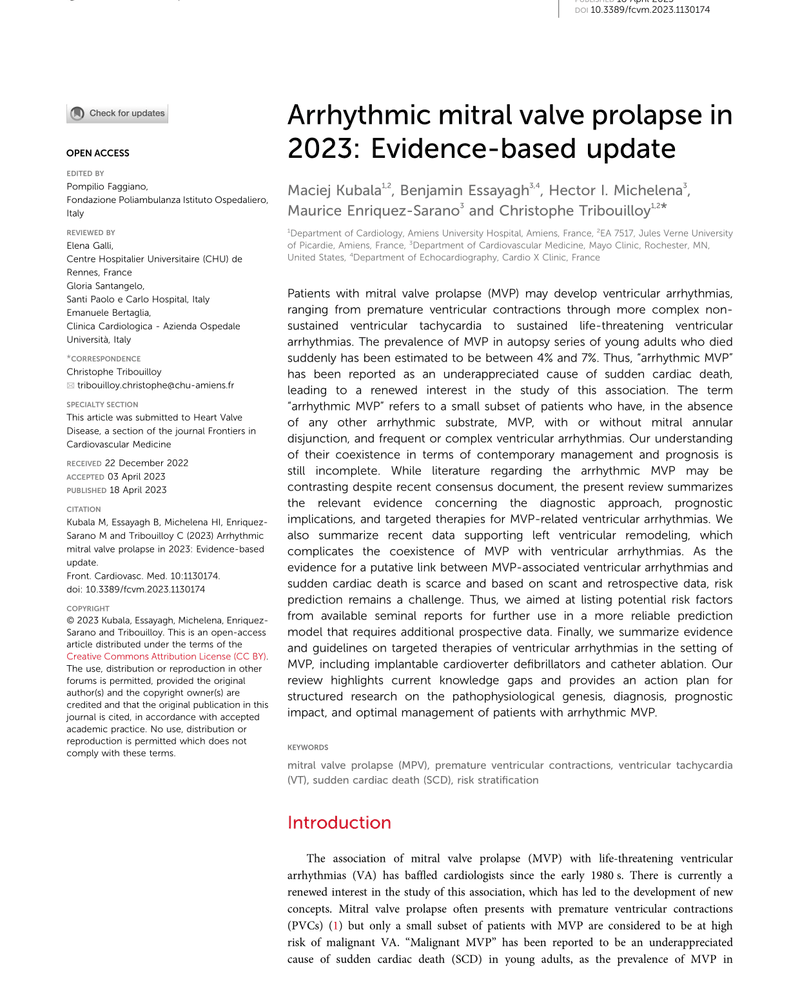
Arrhythmic mitral valve prolapse in 2023: Evidence-based update
Same clinical topic · Cardiology
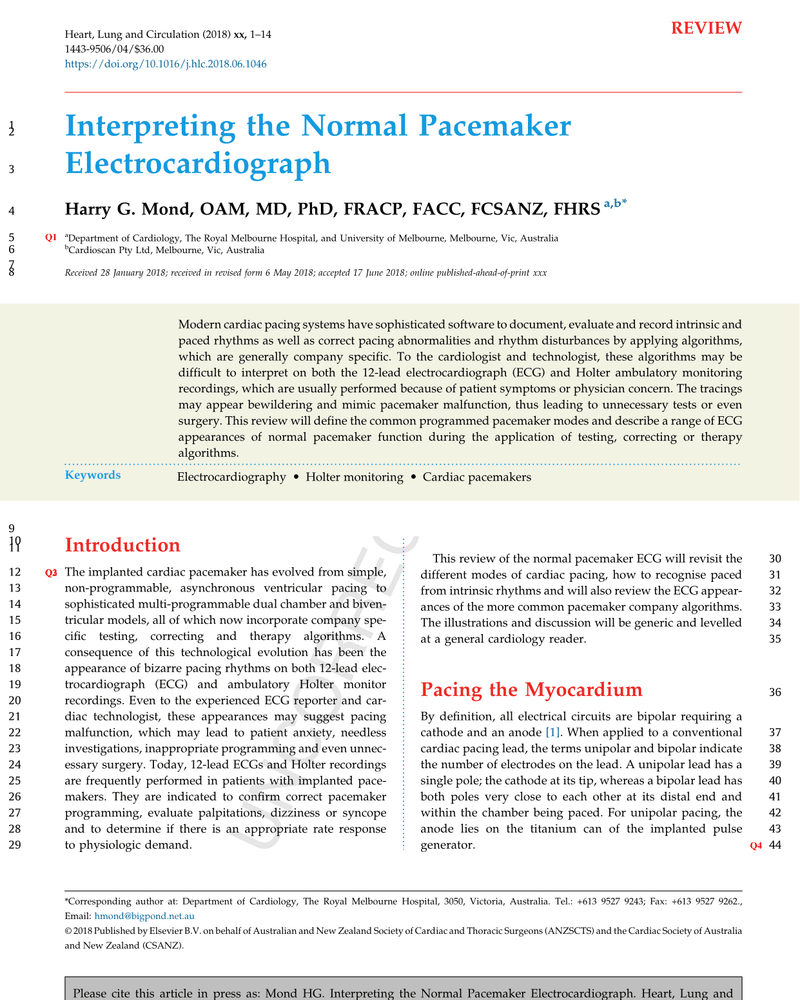
INTERPRETING THE NORMAL PACEMAKER
Same clinical topic · Cardiology