Please wait while we open this resource.


K

Clinical reviews
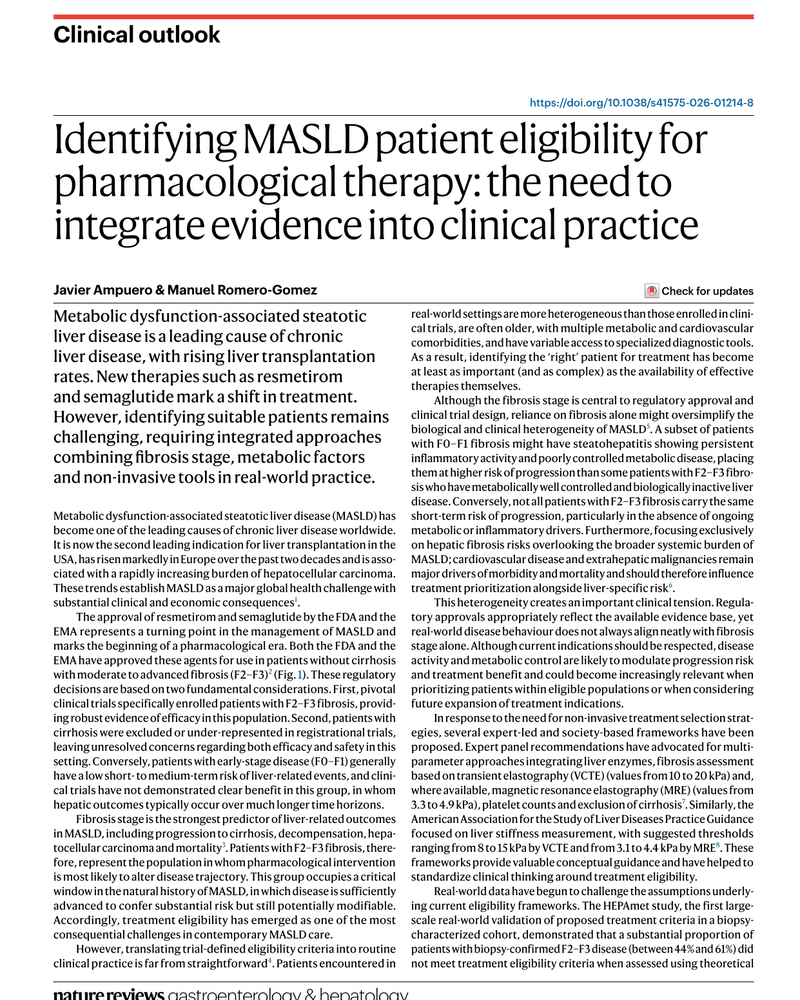
IDENTIFYING MASLD PATIENT ELIGIBILITY FOR PHARMACOLOGICAL THERAPY: THE NEED TO INTEGRATE EVIDENCE INTO CLINICAL PRACTICE
Javier Ampuero & Manuel Romero-Gomez
PDF2 pages1.1 MB
Metabolic dysfunction-associated steatotic liver disease (MASLD) is a leading cause of chronic liver disease, significantly impacting global health. The recent approval of new therapies like resmetirom and semaglutide marks a pivotal shift in treatment options. However, determining patient eligibility remains complex, necessitating a combination of fibrosis stage assessment, metabolic factors, and non-invasive tools. This document aims to provide insights into the evolving landscape of MASLD management and the implications for clinical practice.
Sign in to open
Ask this resource
Answers use this document only.
Your first question is free.
More like this
Resources from the same specialty and type. Curated links will replace these when added.
Clinical Resources
Documents that extend or complement this resource.

Hepatitis E Virus, Second Edition (Springer, 2023)
Same clinical topic · Hepatology
AUTOIMMUNE HEPATITIS
Same clinical topic · Hepatology
MOLECULAR MECHANISMS AND PATHOGENESIS OF MASH
Same clinical topic · Hepatology
CIRRHOSIS, PORTAL HYPERTENSION AND HEPATOCELLULAR CARCINOMA: A STAGE-BASED APPROACH
Same clinical topic · Hepatology
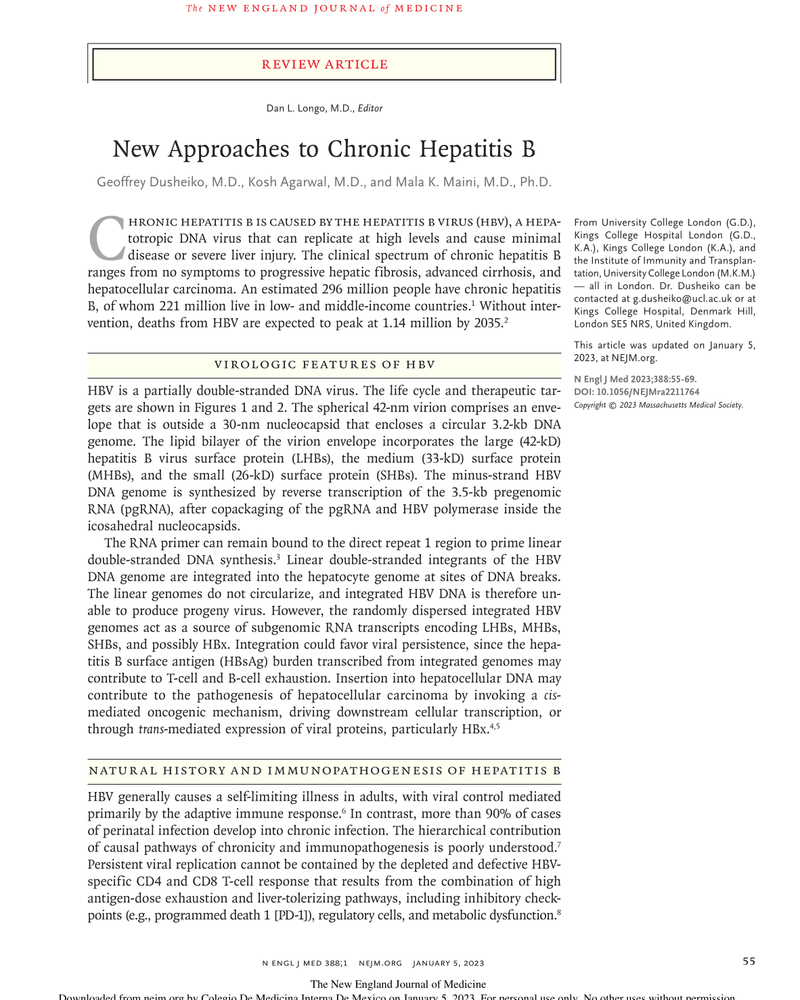
NEW APPROACHES TO CHRONIC HEPATITIS B
Same clinical topic · Hepatology
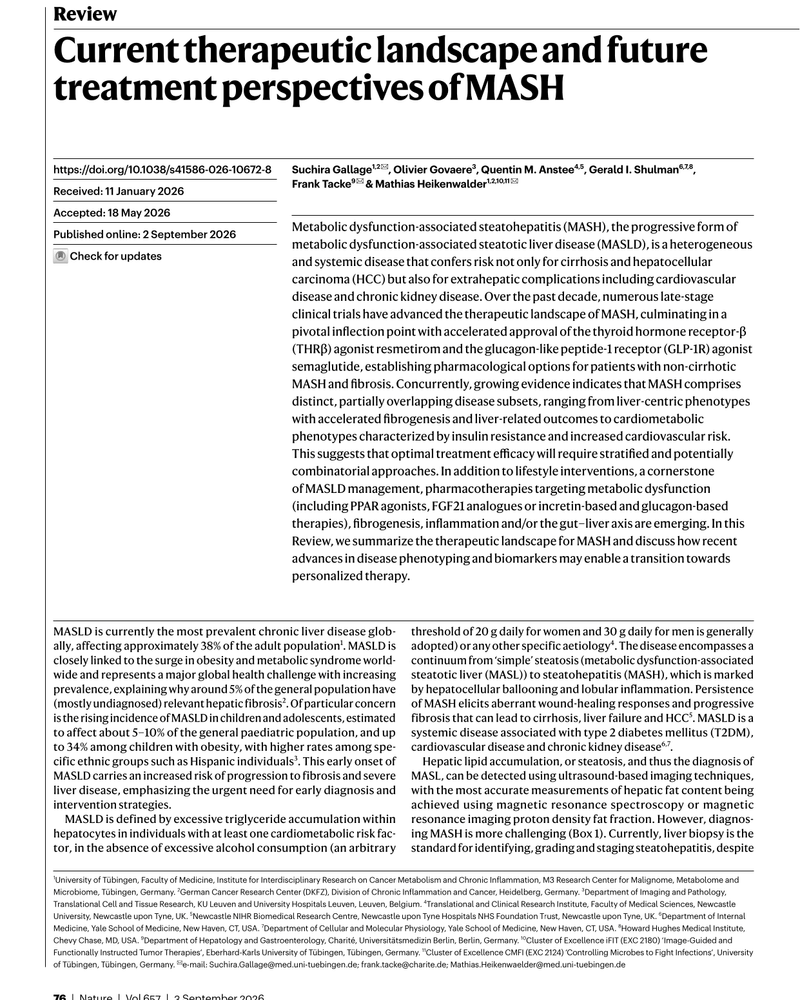
CURRENT THERAPEUTIC LANDSCAPE AND FUTURE TREATMENT PERSPECTIVES OF MASH
Same clinical topic · Hepatology
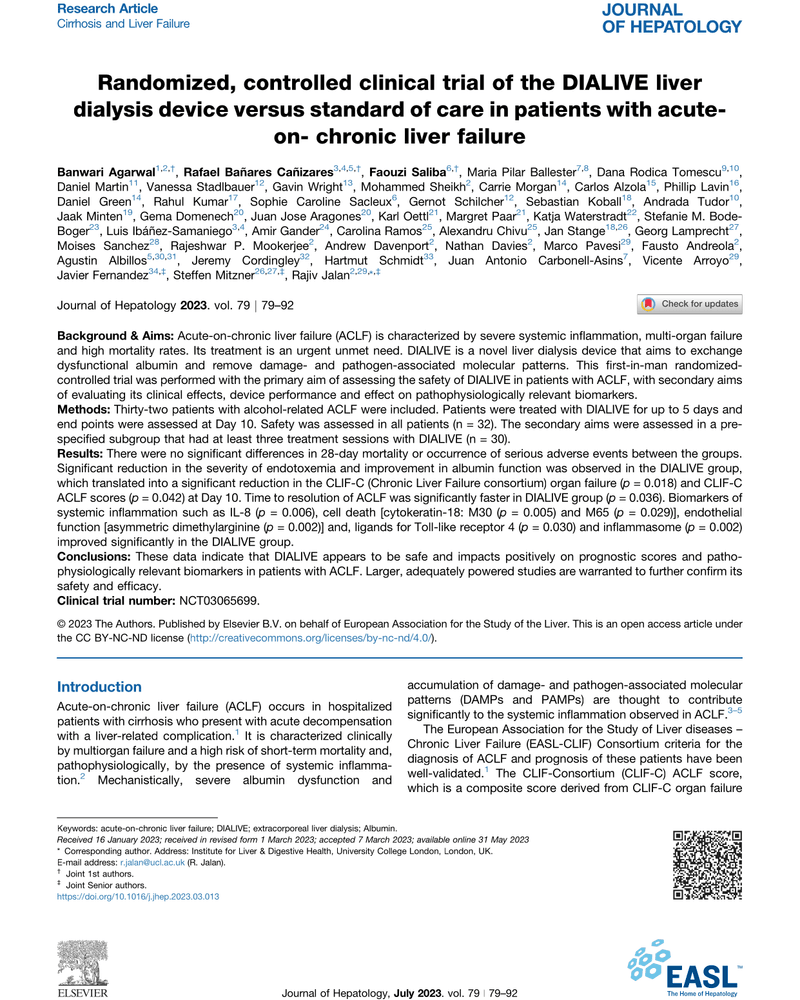
RANDOMIZED, CONTROLLED CLINICAL TRIAL OF THE DIALIVE LIVER DIALYSIS DEVICE VERSUS STANDARD OF CARE IN PATIENTS WITH ACUTE ON-CHRONIC LIVER FAILURE
Same clinical topic · Hepatology
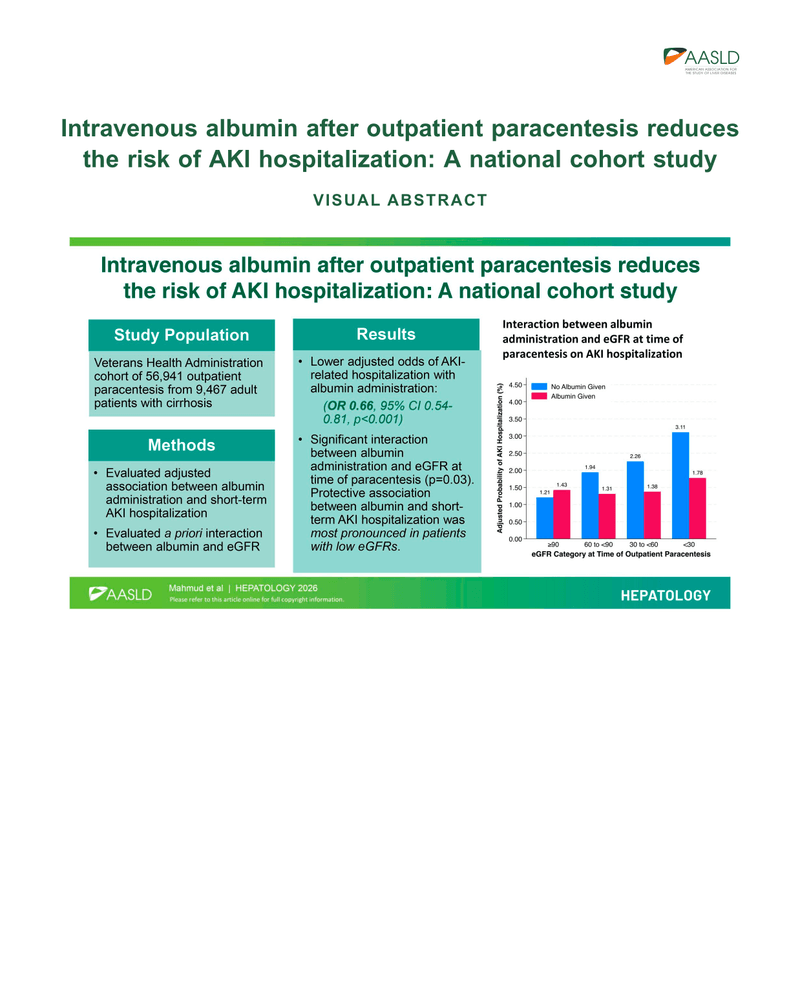
Intravenous albumin after outpatient paracentesis reduces the risk of AKI hospitalization: A national cohort study
Same clinical topic · Hepatology
LIVER TRANSPLANTATION FOR PATIENTS WITH SEVERE ACUTE ON CHRONIC LIVER FAILURE: IT IS TIME TO CHANGE PARADIGMS
Same clinical topic · Hepatology