Please wait while we open this resource.


K

Clinical reviews
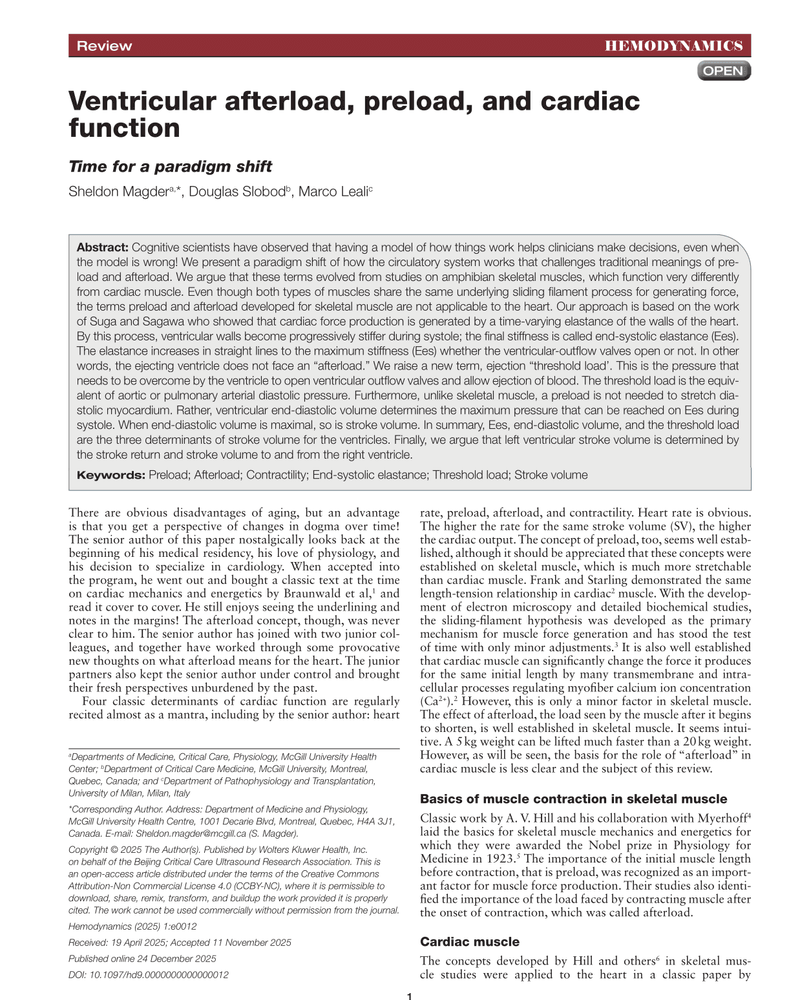
VENTRICULAR AFTERLOAD, PRELOAD, AND CARDIAC FUNCTION
Sheldon Magder, Douglas Slobod, Marco Leali
PDF6 pages907 KB
The authors argue that the traditional definitions of preload and afterload, derived from studies on amphibian skeletal muscles, do not apply to cardiac muscle. They propose that cardiac force production is governed by a time-varying elastance of the heart walls, leading to a new understanding of how the heart functions during systole. The document emphasizes the importance of end-diastolic volume and introduces the term 'threshold load' to describe the pressure needed to open the ventricular outflow valves, which is crucial for understanding cardiac output dynamics.
Sign in to open
Ask this resource
Answers use this document only.
Your first question is free.
More like this
Resources from the same specialty and type. Curated links will replace these when added.
Clinical Resources
Documents that extend or complement this resource.
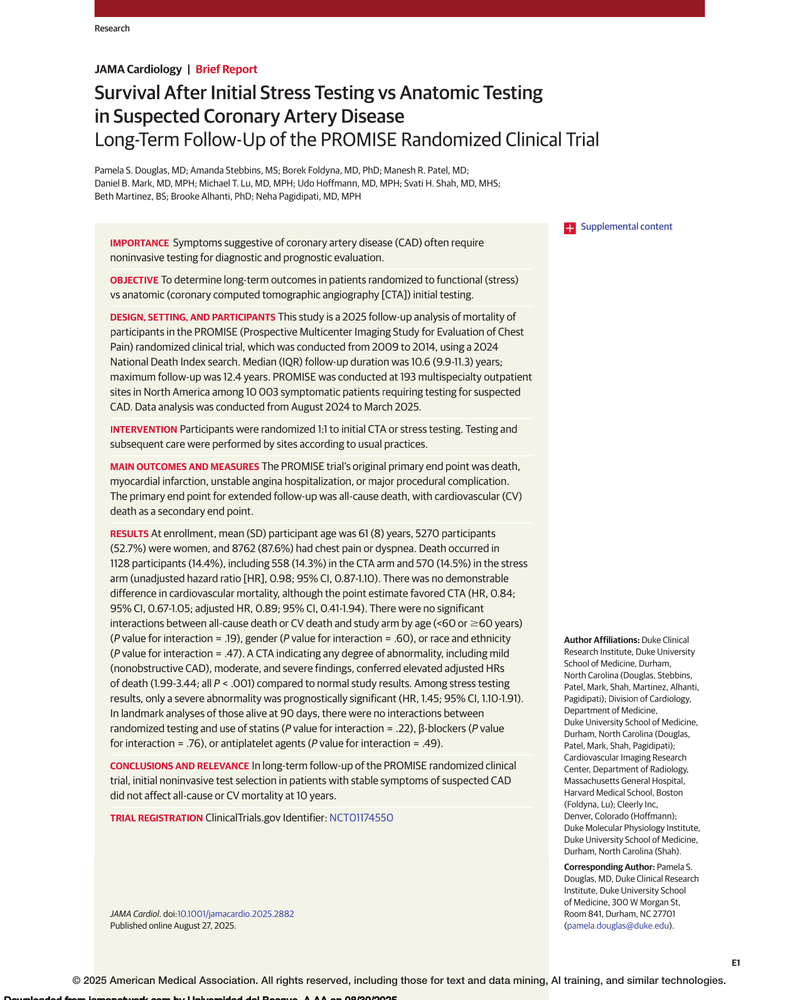
SURVIVAL AFTER INITIAL STRESS TESTING VS ANATOMIC TESTING IN SUSPECTED CORONARY ARTERY DISEASE
Same clinical topic · Cardiology

PRACTICAL CARDIO-ONCOLOGY
Same clinical topic · Cardiology
OXFORD CARDIOLOGY LIBRARY: Hypertension
Same clinical topic · Cardiology
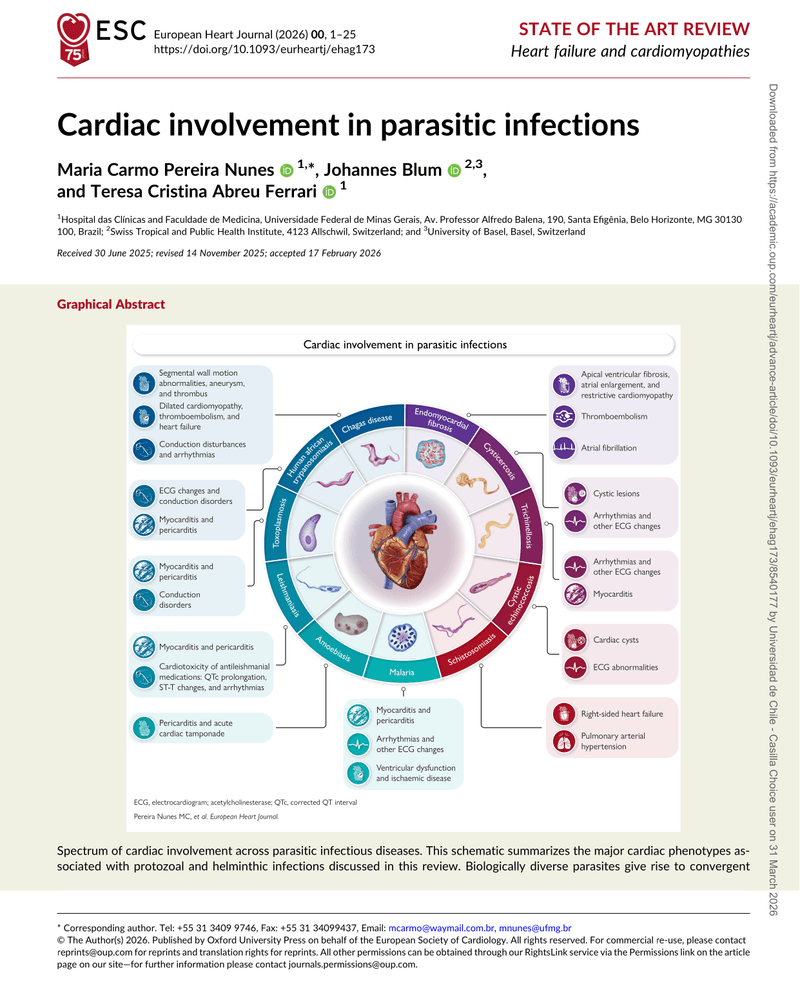
CARDIAC INVOLVEMENT IN PARASITIC INFECTIONS
Same clinical topic · Cardiology
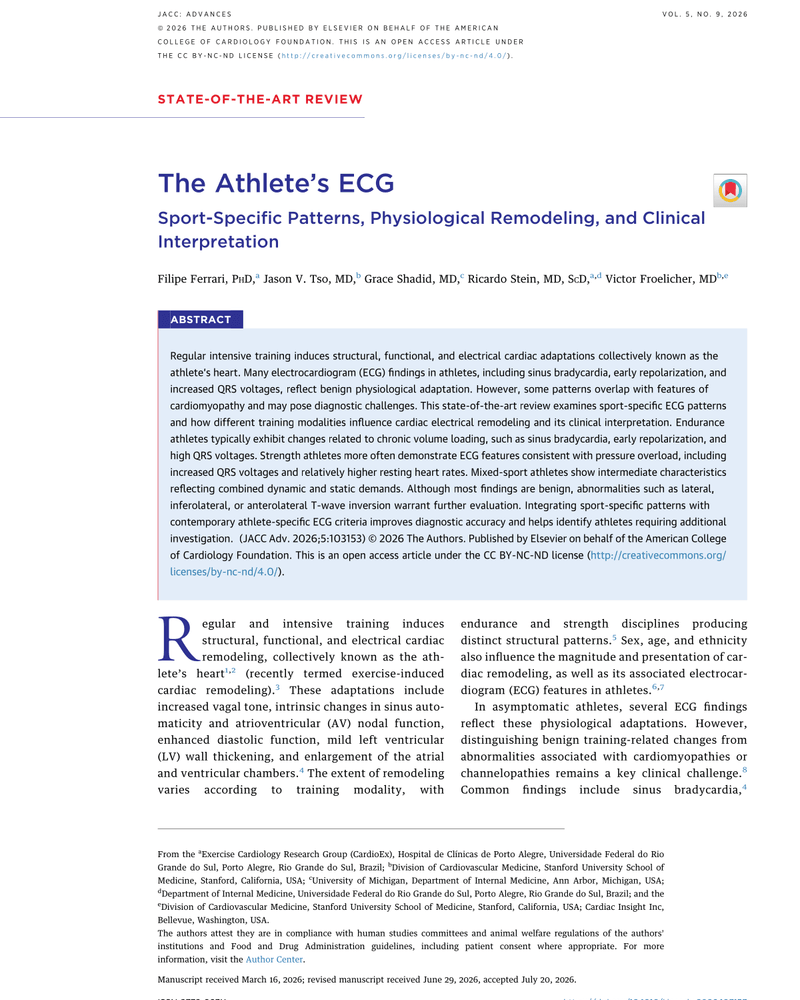
The Athlete’s ECG
Same clinical topic · Cardiology
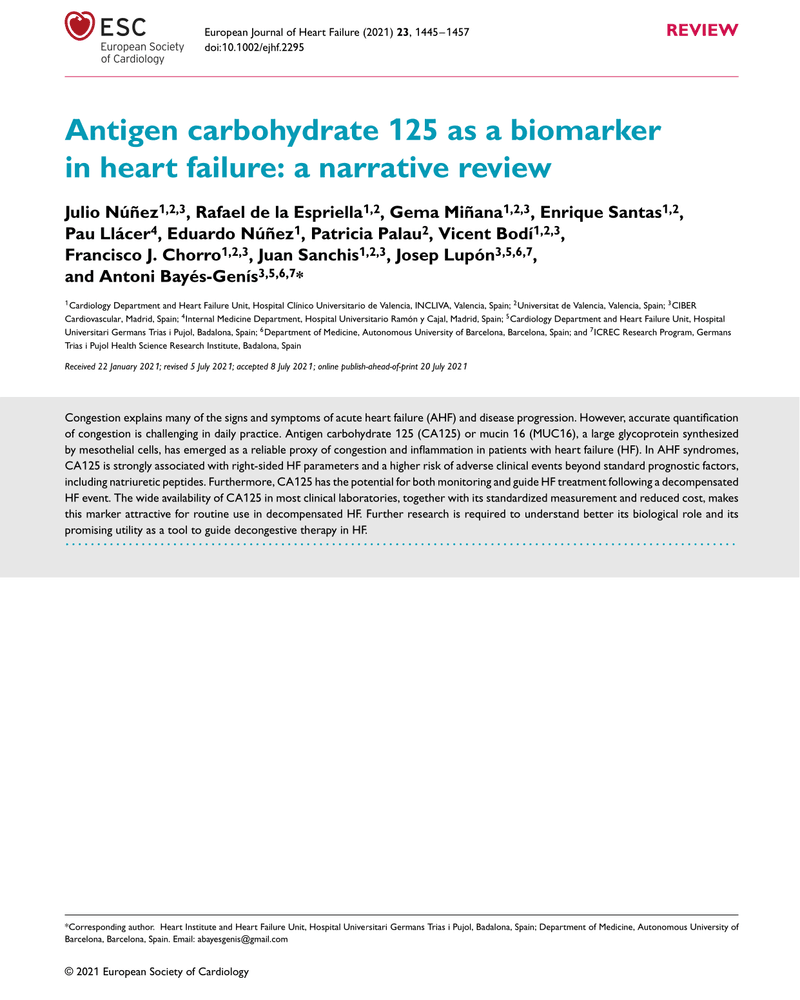
Antigen carbohydrate 125 as a biomarker in heart failure: a narrative review
Same clinical topic · Cardiology
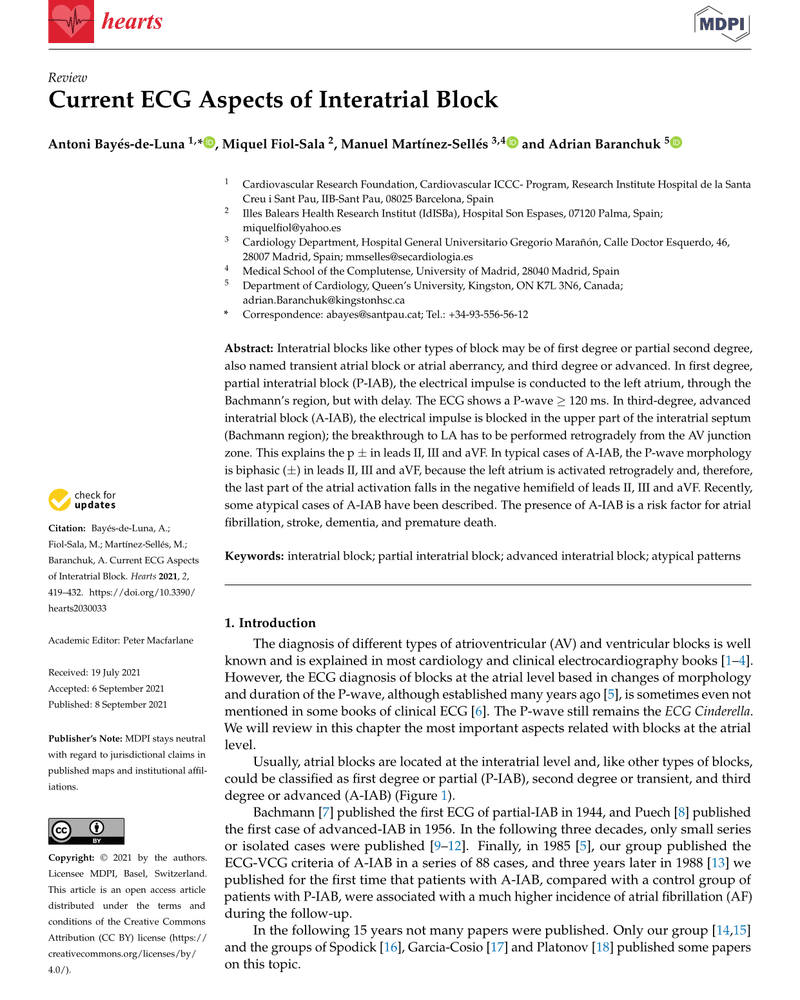
Current ECG Aspects of Interatrial Block
Same clinical topic · Cardiology
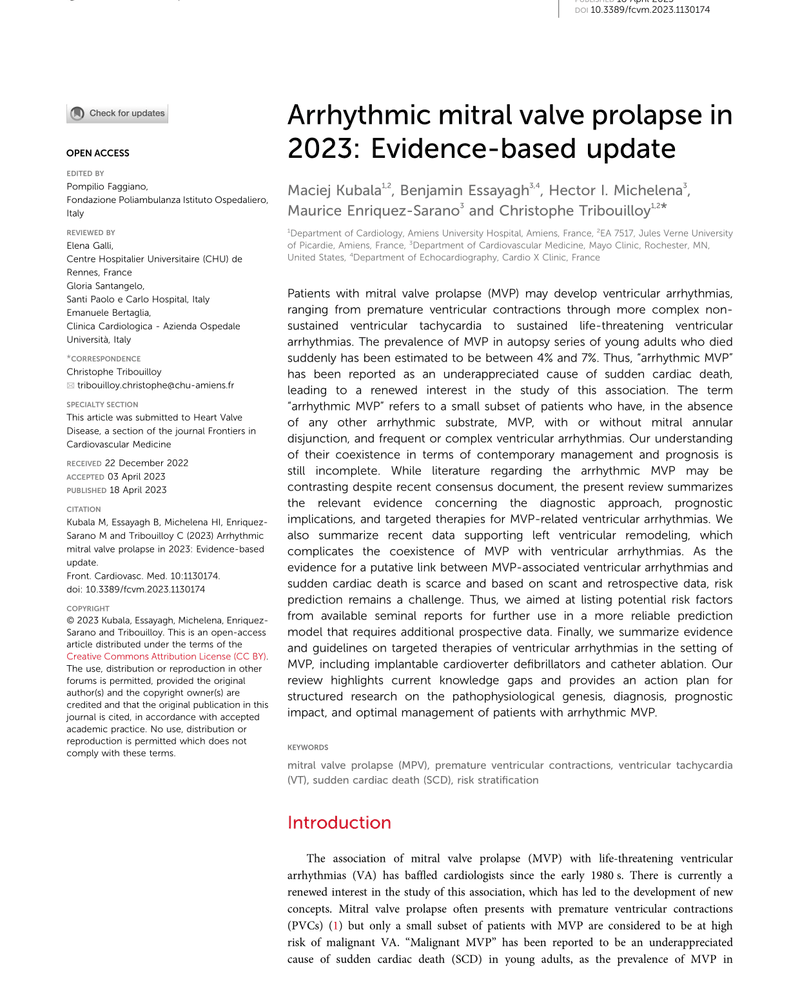
Arrhythmic mitral valve prolapse in 2023: Evidence-based update
Same clinical topic · Cardiology
INTERPRETING THE NORMAL PACEMAKER
Same clinical topic · Cardiology