Please wait while we open this resource.


K

Clinical reviews
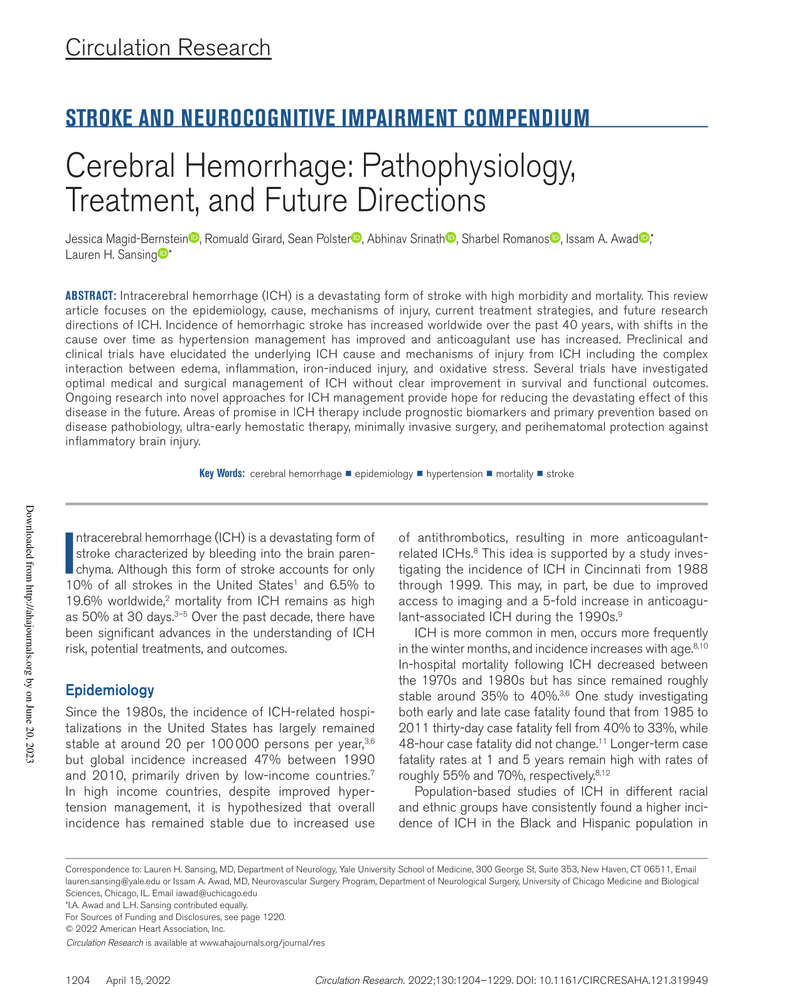
CEREBRAL HEMORRHAGE: PATHOPHYSIOLOGY, TREATMENT, AND FUTURE DIRECTIONS
Circulation Research
PDF26 pages1.5 MB
Intracerebral hemorrhage (ICH) is a devastating form of stroke with high morbidity and mortality. The incidence of hemorrhagic stroke has increased worldwide over the past 40 years, with shifts in the cause over time as hypertension management has improved and anticoagulant use has increased. This article discusses the complex interactions involved in ICH, including edema, inflammation, and oxidative stress, and reviews current treatment strategies and ongoing research into novel approaches for ICH management.
Sign in to open
Ask this resource
Answers use this document only.
Your first question is free.
More like this
Resources from the same specialty and type. Curated links will replace these when added.
Clinical Resources
Documents that extend or complement this resource.
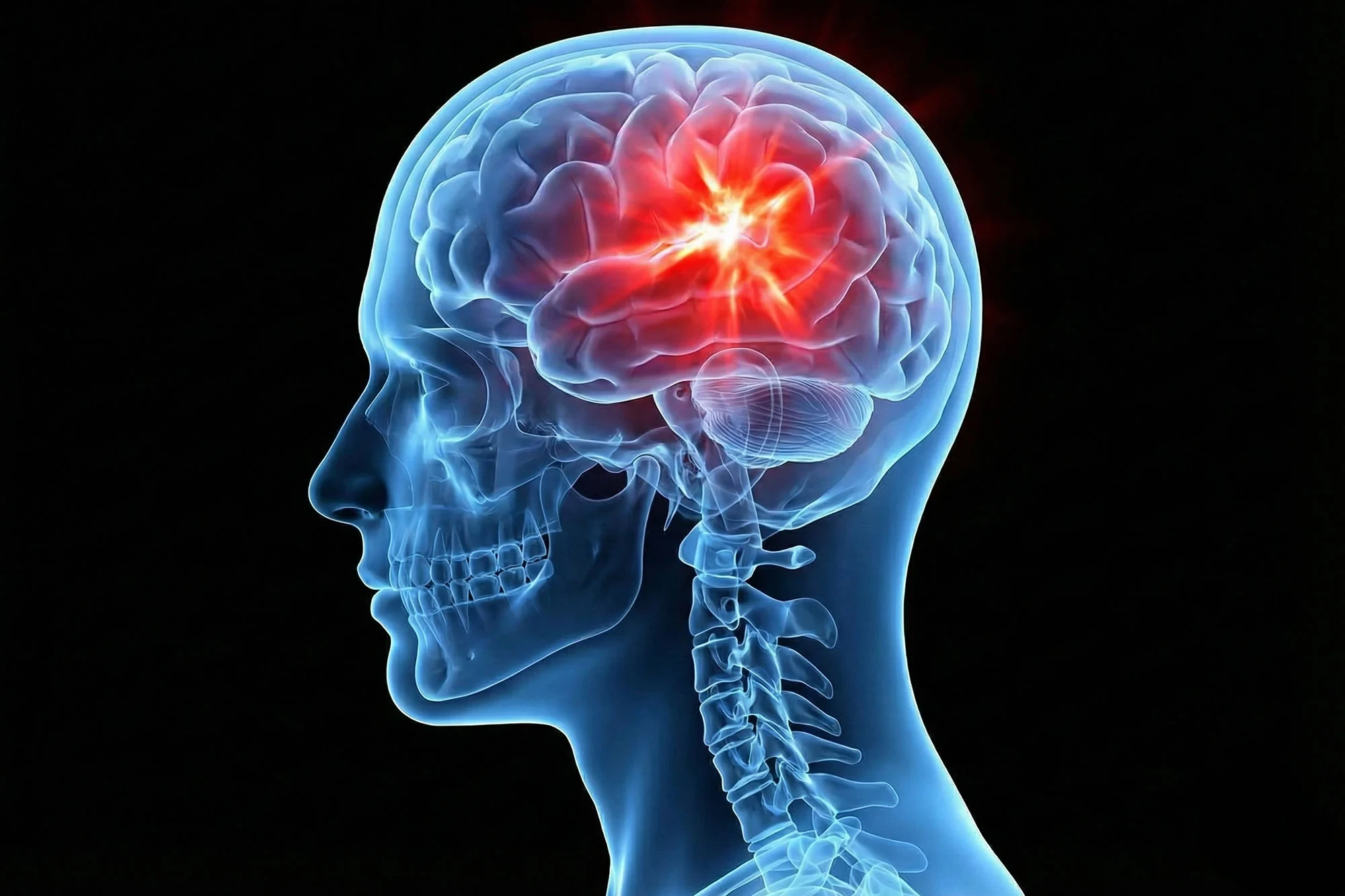
Traumatic Brain Injury
Same clinical topic · Neurology
Classification of the Epilepsies
Same clinical topic · Neurology
Neuroimaging Patterns of Intracranial Infections: Meningitis, Cerebritis, and Their Complications
Same clinical topic · Neurology
An update on management of subarachnoid haemorrhage
Same clinical topic · Neurology
INCLUSION BODY MYOSITIS
Same clinical topic · Neurology
ENCEPHALITIS
Same clinical topic · Neurology
INTRACEREBRAL HAEMORRHAGE
Same clinical topic · Neurology
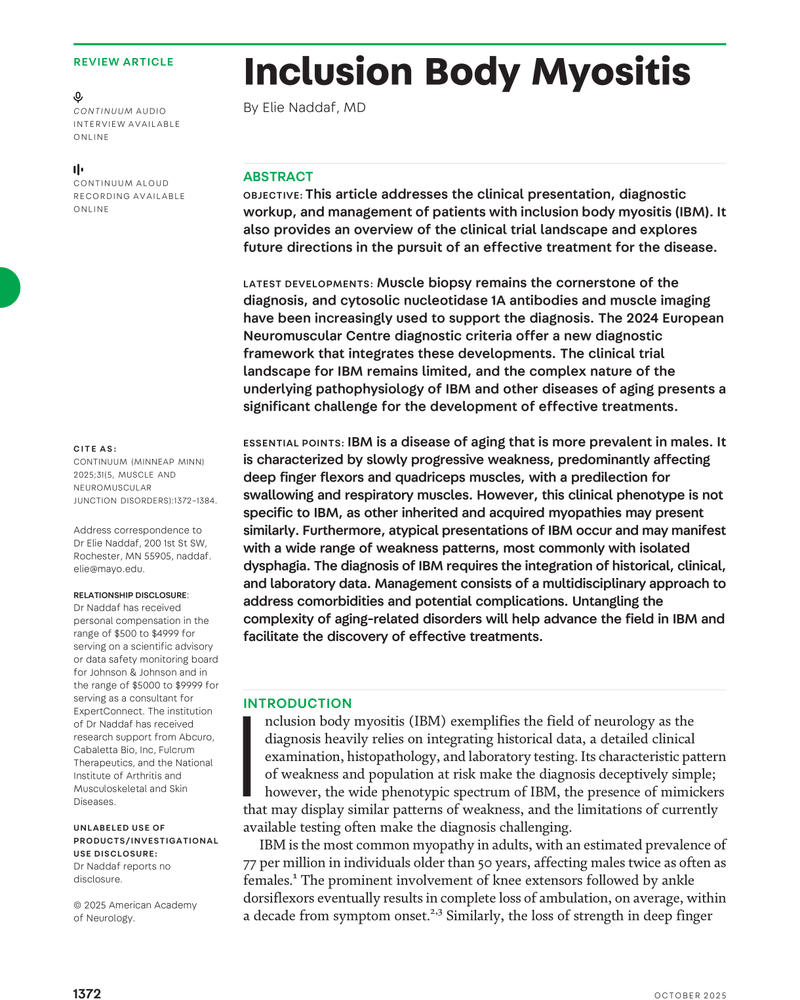
INCLUSION BODY MYOSITIS
Same clinical topic · Neurology
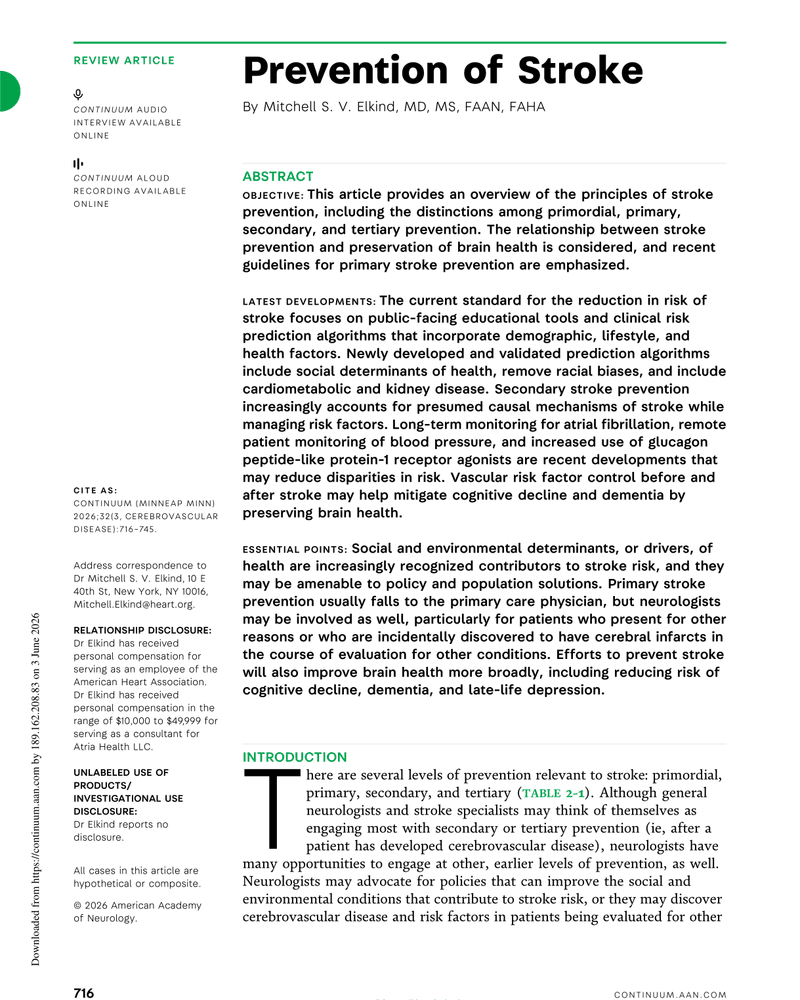
PREVENTION OF STROKE
Same clinical topic · Neurology