Please wait while we open this resource.


K

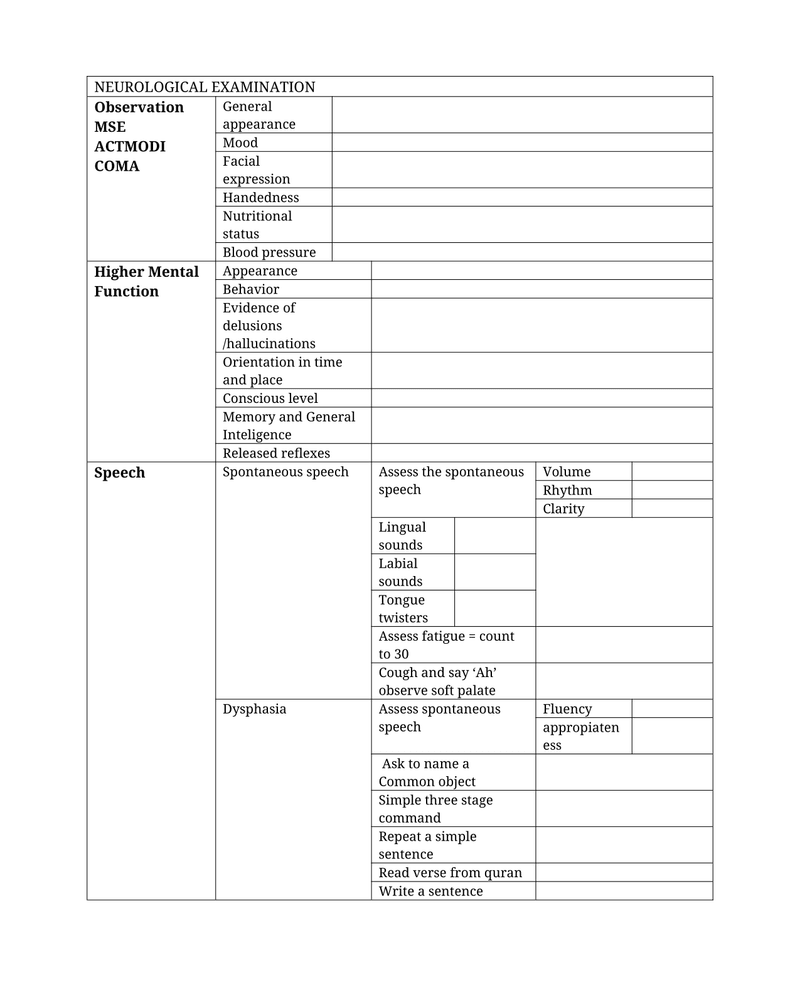
Clinical tools
Neurological
Neurology
DOCX1 pages24 KB
The protocol includes observations of general appearance, mood, and higher mental functions, as well as detailed assessments of cranial nerves, motor systems, sensory systems, and cerebellar signs. It provides step-by-step instructions for evaluating reflexes, strength, coordination, and sensory responses. Additionally, it covers miscellaneous tests for signs of meningeal irritation and autonomic nervous system function.
Sign in to open
Ask this resource
Answers use this document only.
Your first question is free.
More like this
Resources from the same specialty and type. Curated links will replace these when added.
Clinical Resources
Documents that extend or complement this resource.
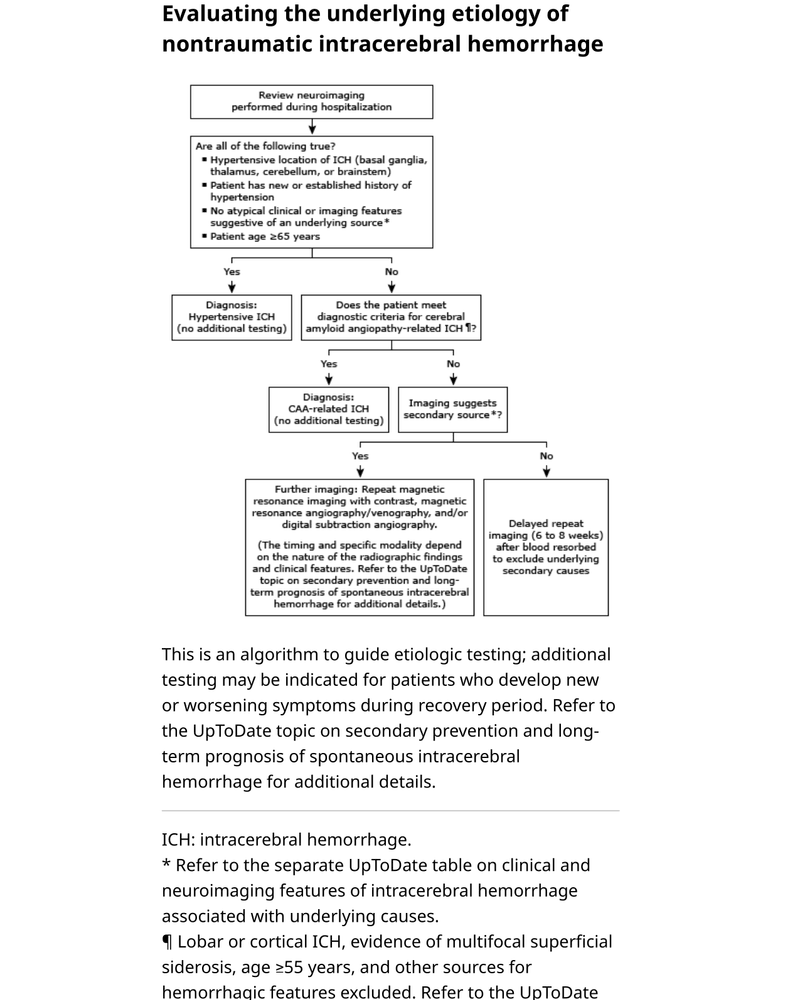
EVALUATING THE UNDERLYING ETIOLOGY OF NONTRAUMATIC INTRACEREBRAL HEMORRHAGE
Same clinical topic · Neurology
Traumatic Brain Injury
Same specialty · Neurology
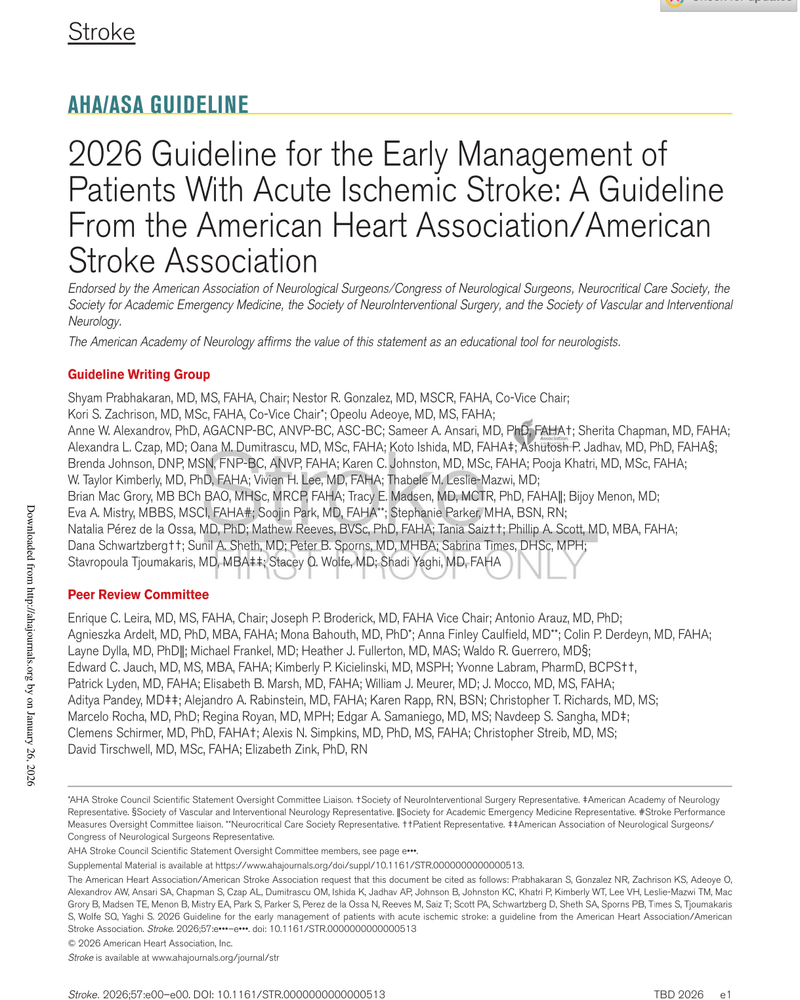
2026 Guideline for the Early Management of Patients With Acute Ischemic Stroke
Same specialty · Neurology
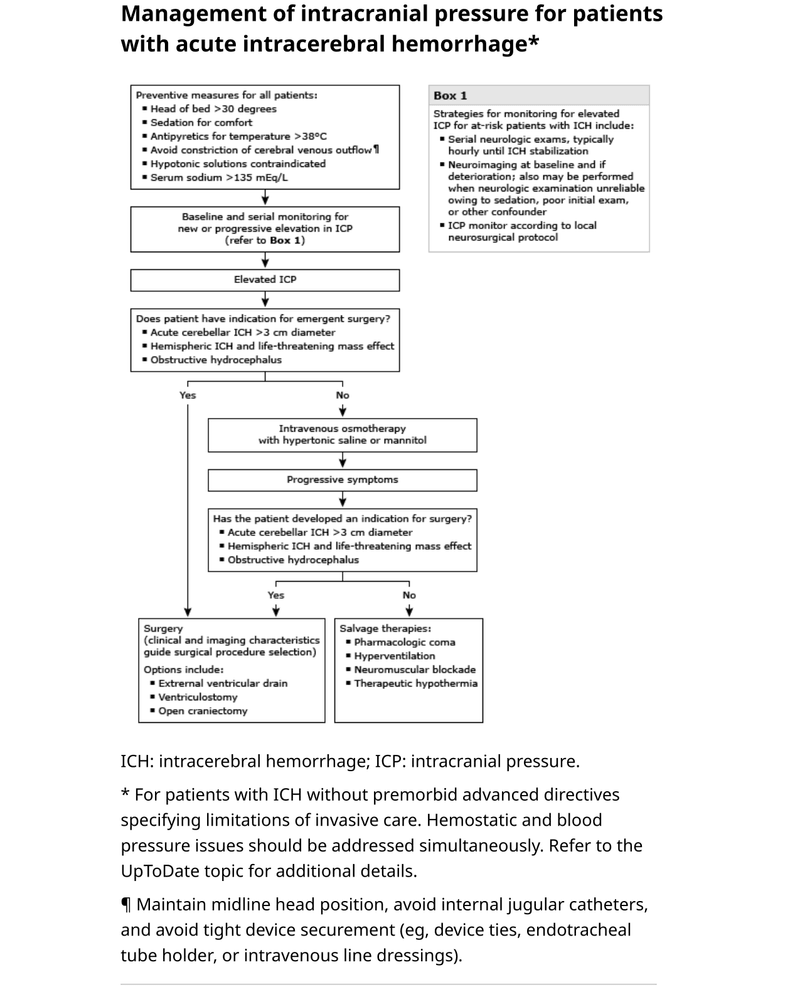
MANAGEMENT OF INTRACRANIAL PRESSURE FOR PATIENTS WITH ACUTE INTRACEREBRAL HEMORRHAGE
Same specialty · Neurology
Standard for Stroke Management
Same specialty · Neurology
Guidelines for Management of Stroke
Same specialty · Neurology
Classification of the Epilepsies
Same specialty · Neurology
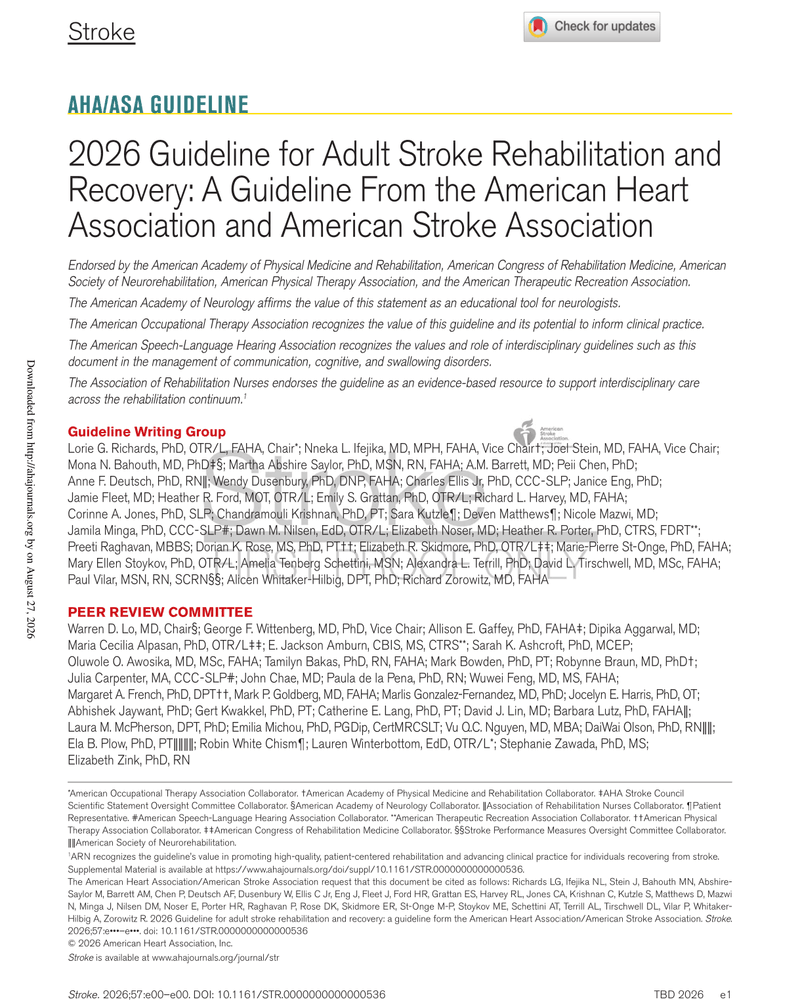
2026 GUIDELINE FOR ADULT STROKE REHABILITATION AND RECOVERY
Same specialty · Neurology
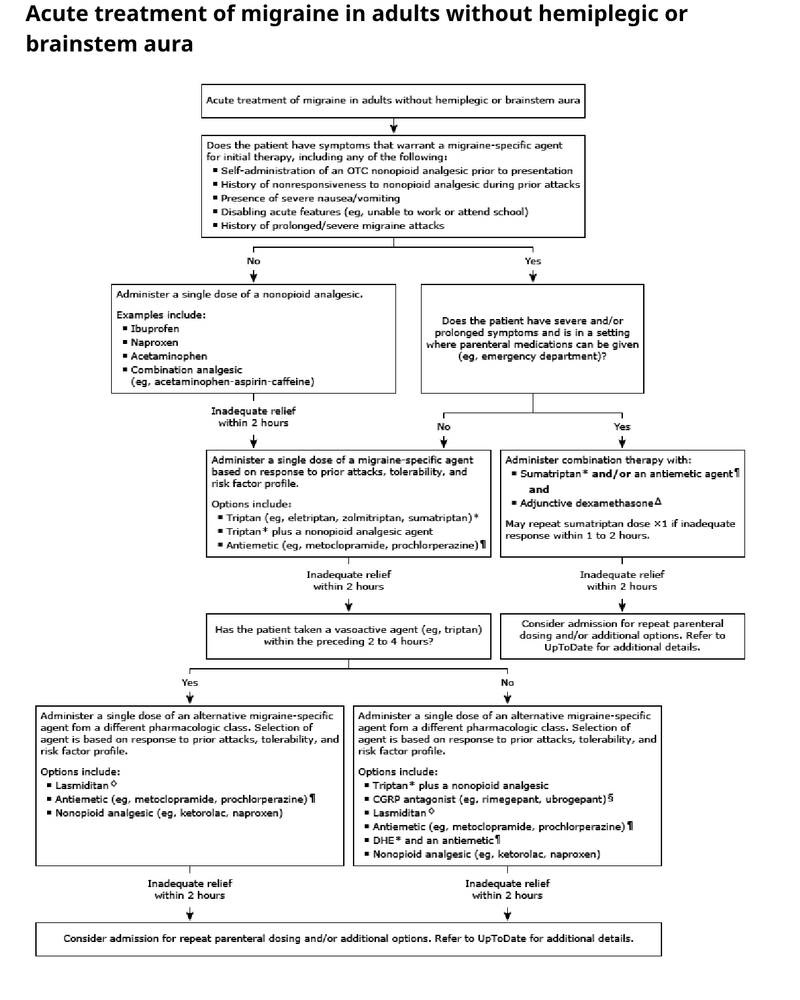
Acute Migraine Treatment in Adults
Same specialty · Neurology