Please wait while we open this resource.


K

Clinical reviews
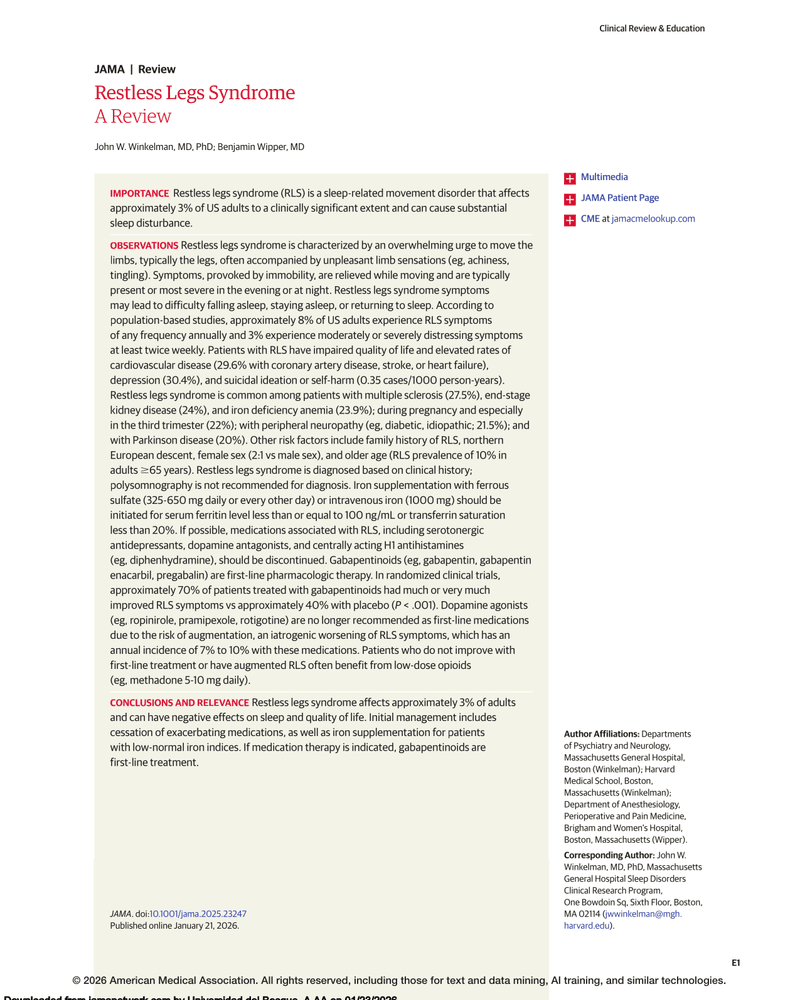
RESTLESS LEGS SYNDROME: A REVIEW
John W. Winkelman, MD, PhD; Benjamin Wipper, MD
PDF12 pages481 KB
Restless legs syndrome (RLS) affects approximately 3% of US adults and can significantly impair quality of life. The disorder is characterized by an urge to move the legs, often leading to sleep disturbances. The review details the prevalence of RLS in various populations, including those with multiple sclerosis, kidney disease, and during pregnancy. It also discusses treatment options, emphasizing the use of gabapentinoids over dopaminergic agents due to the risk of symptom augmentation with long-term use.
Sign in to open
Ask this resource
Answers use this document only.
Your first question is free.
More like this
Resources from the same specialty and type. Curated links will replace these when added.
Clinical Resources
Documents that extend or complement this resource.

Traumatic Brain Injury
Same clinical topic · Neurology
Classification of the Epilepsies
Same clinical topic · Neurology
Neuroimaging Patterns of Intracranial Infections: Meningitis, Cerebritis, and Their Complications
Same clinical topic · Neurology
An update on management of subarachnoid haemorrhage
Same clinical topic · Neurology
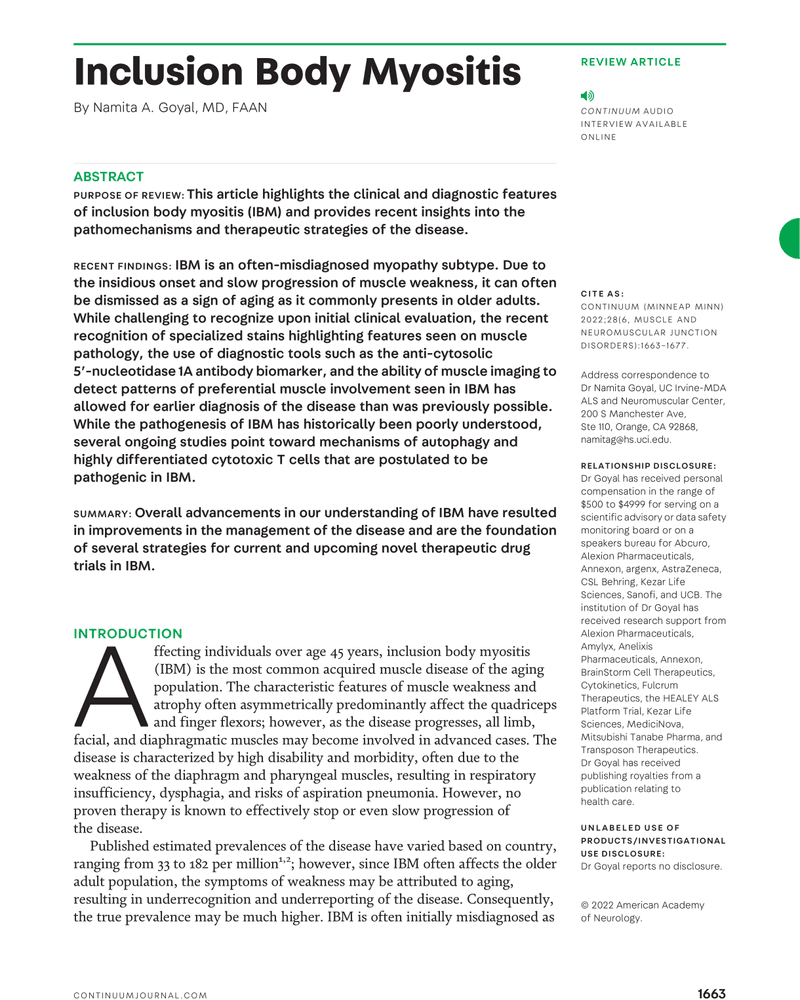
INCLUSION BODY MYOSITIS
Same clinical topic · Neurology
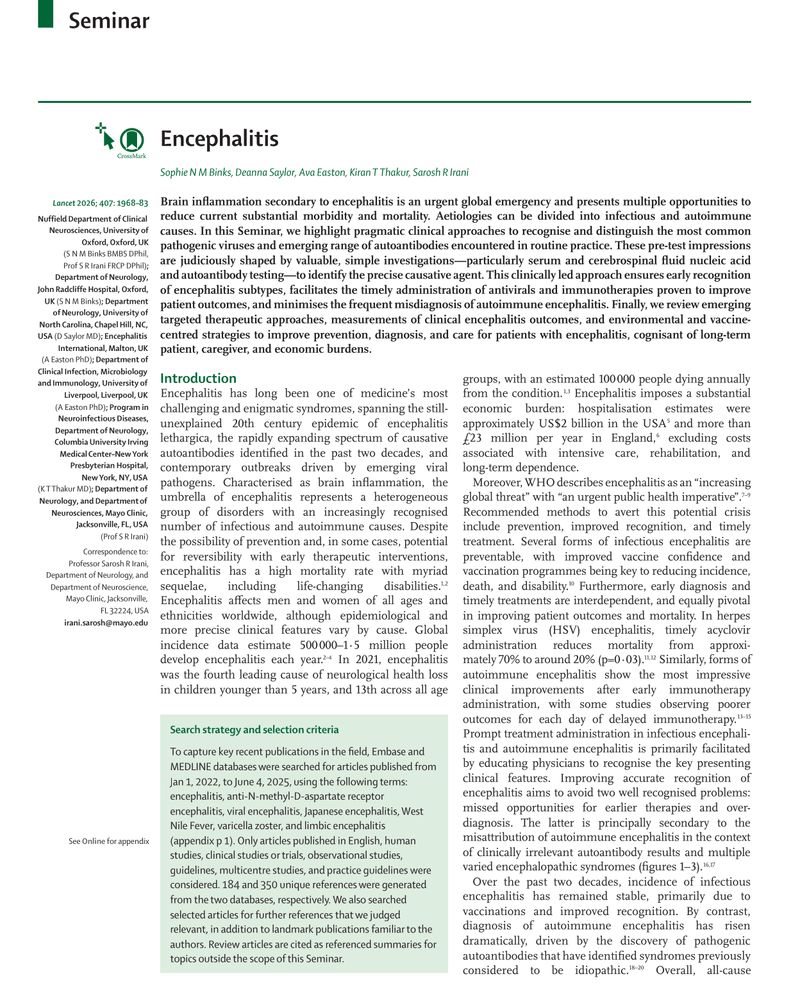
ENCEPHALITIS
Same clinical topic · Neurology
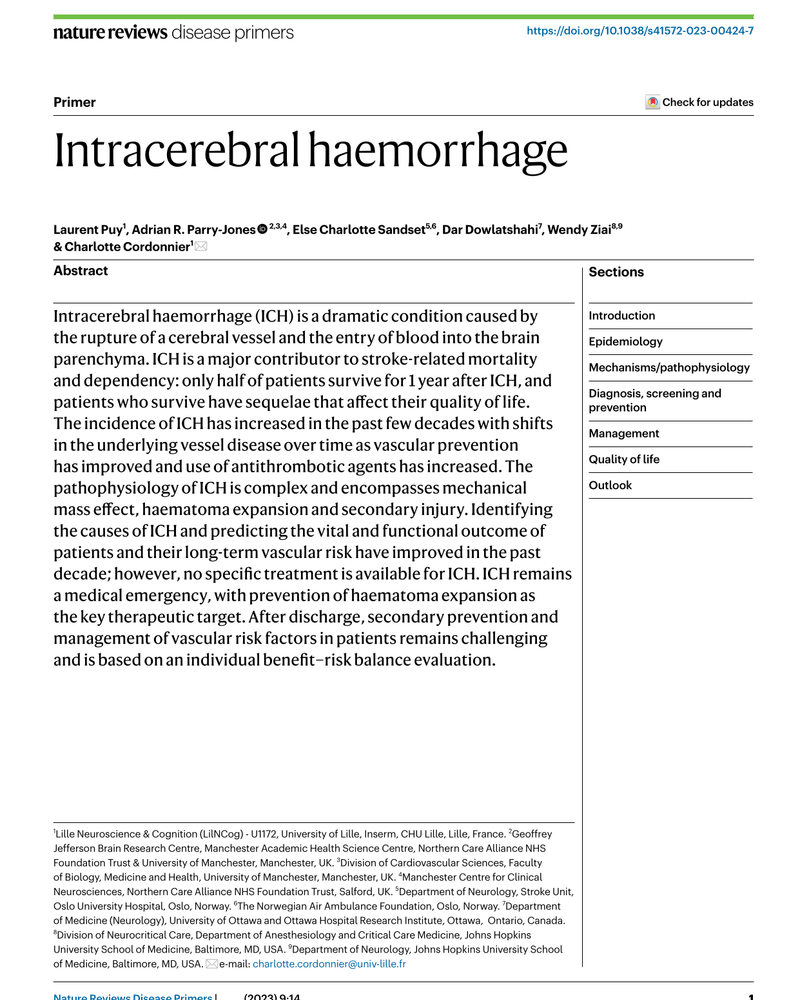
INTRACEREBRAL HAEMORRHAGE
Same clinical topic · Neurology
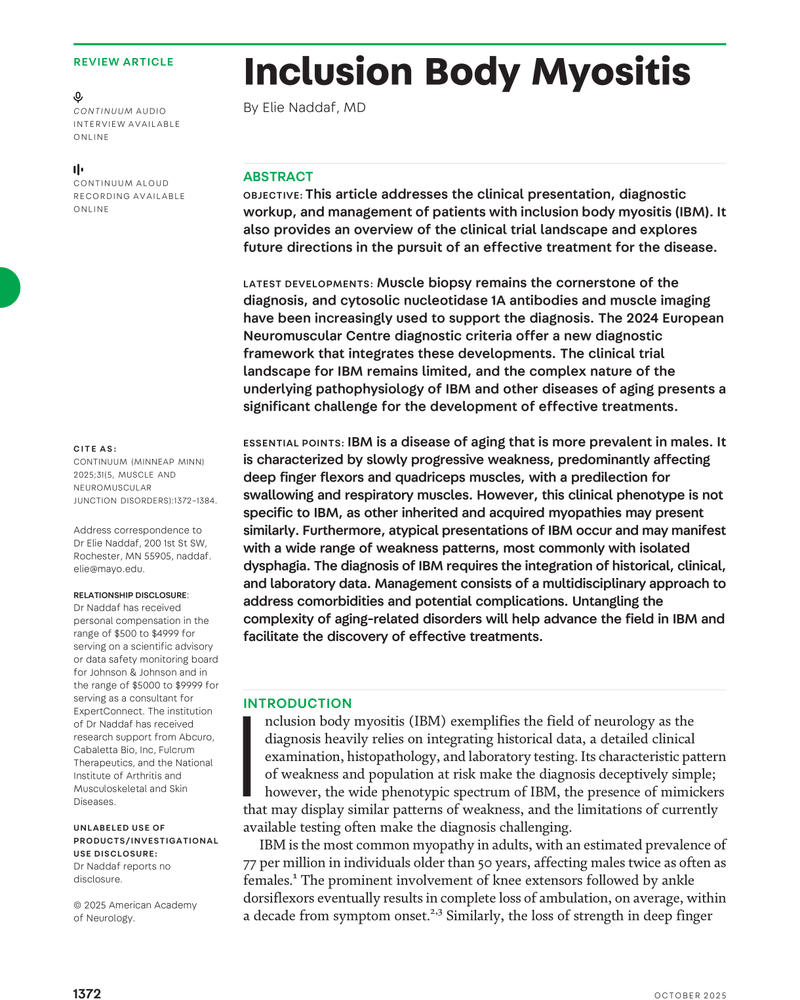
INCLUSION BODY MYOSITIS
Same clinical topic · Neurology
PREVENTION OF STROKE
Same clinical topic · Neurology